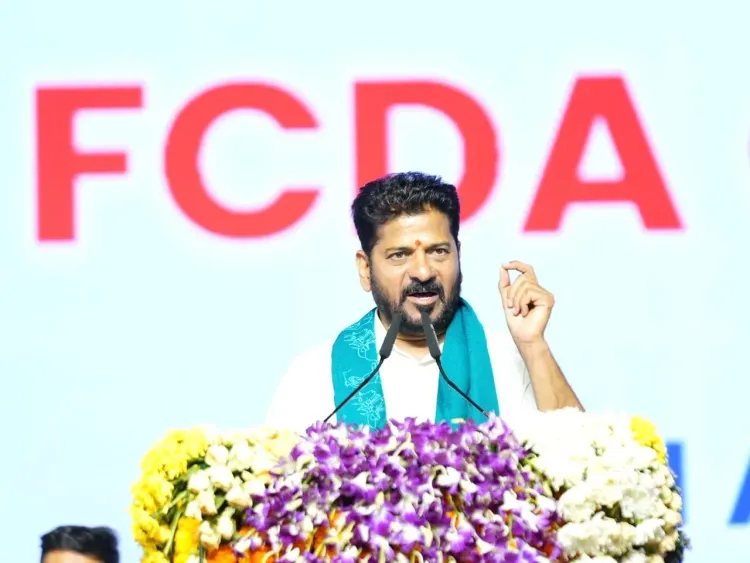
CM Revanth Reddy Launches FCDA Office, Expands Bharat Future City
Synopsis
Chief Minister Revanth Reddy on June 10, 2026 inaugurated the FCDA headquarters and a new portal for Bharat Future City, granted in-principle approval to include more villages, and set a 2034 target of making Telangana a 1 trillion dollar economy anchored by the net-zero greenfield city.
Key Takeaways
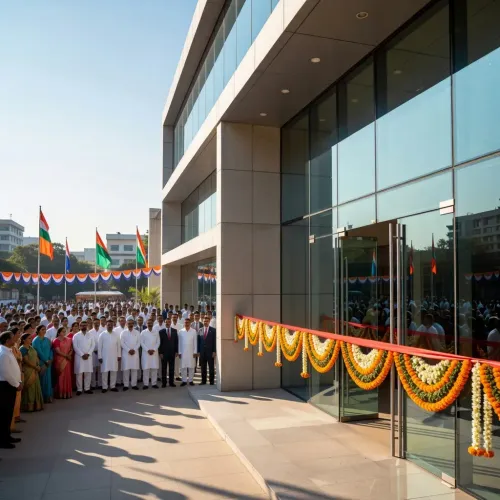
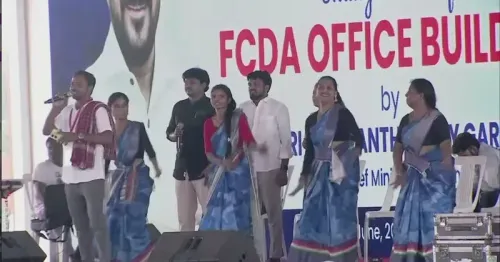
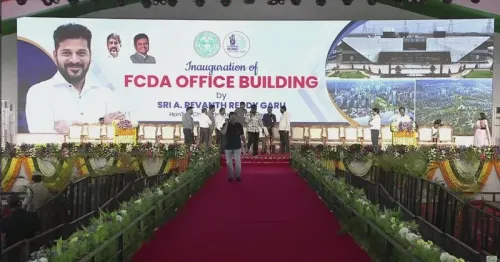
CM Revanth Reddy inaugurated the FCDA headquarters and a new Bharat Future City portal on June 10, 2026 .
The FCDA building was completed in approximately 150 days after work began in December 2025.
In-principle approval granted to include additional villages that petitioned for inclusion in Bharat Future City ; remaining village decisions to follow consultations at the FCDA office.
Deputy CM Bhatti Vikramarka and Minister Sridhar Babu will visit the Future City office once a week to address local residents' concerns.
Telangana targets a 1 trillion dollar economy by 2034 anchored by Bharat Future City, competing with Tokyo, New York and Singapore.
A Global Summit is planned at the site in December 2026 to attract international investment and create jobs for Telangana youth.
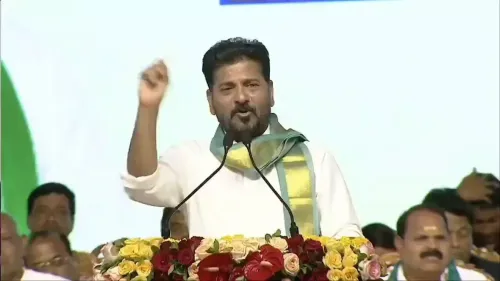
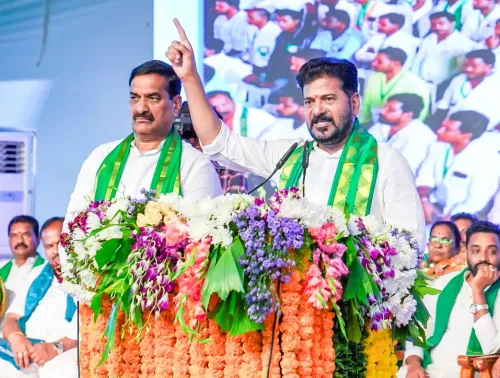
The Chief Minister's Office of Telangana announced on Wednesday, June 10, 2026 that Chief Minister Revanth Reddy inaugurated the Bharat Future City Development Authority (FCDA) headquarters and granted in-principle approval to include additional villages within the Bharat Future City project boundary, acting on petitions submitted by local communities.
Context
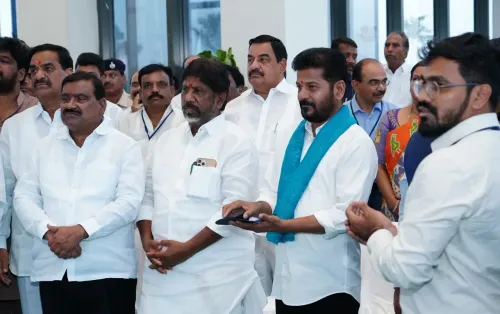
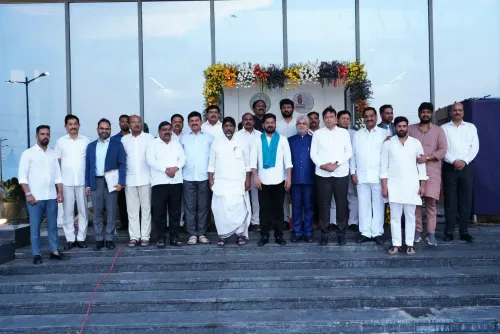
The FCDA office building was completed in a record timeframe, with CM Revanth Reddy noting at the event: 'gata Disambar lo panulu prarambhinchukuni sarigga 150 rojulllo ee roju (June 10n) karyalayanni prarambhimchi prajalaaku ankitam chesham' — 'work began last December and exactly 150 days later, today (June 10), we inaugurate this office and dedicate it to the people.' Following the building inauguration, the Chief Minister also launched a dedicated Bharat Future City portal to streamline project information and stakeholder engagement.
Alongside CM Revanth Reddy, the event was attended by Speaker G. Prakash Rao, Deputy Chief Minister Bhatti Vikramarka Mallu, Ministers D. Sridhar Babu and Ponguleti Srinivas Reddy, Advisor P. Sudarshan Reddy, and several elected representatives and officials.
Policy Backdrop
Bharat Future City is the Telangana government's flagship greenfield urban project, envisioned as a net-zero, pollution-free city to be built over the coming years. The Chief Minister articulated an ambitious target: 'Telangana 2034 naatiki 1 trillion dollar arthika shaktiga edagadaaniki Bharat City ye vedika kaavaali' — 'Bharat City must be the platform for Telangana to grow into a 1 trillion dollar economy by 2034.' He directed officials to prepare plans to make the city competitive with Tokyo, New York, and Singapore within the next eight years.
The project targets sectors including Green Pharma, Sports, Education, Health, AI, Data Centres, GCC Centres, and Global Fortune 500 companies. CM Revanth Reddy declared: 'Today, the foundation has been laid to bring these industries here. June 10, 2026 will be written in golden letters in Telangana's history.' The city's ambition mirrors Hyderabad's own brand evolution — just as Hyderabad became known as the 'City of Pearls' and the 'Lakes and Rocks City', Bharat Future City is intended to earn global recognition as a net-zero urban model.
Stakeholders and Impact
Village communities near the project boundary have been active participants in the expansion process, with several passing resolutions seeking inclusion within the FCDA. The Chief Minister indicated that villages granted in-principle approval will be formally incorporated, while decisions on the remaining villages will be taken through village-wise discussions at the Future City office — a consultative approach intended to address local concerns around land and livelihoods.
CM Revanth Reddy also committed to regular engagement, stating that Deputy Chief Minister Bhatti Vikramarka and Minister Sridhar Babu will visit the Future City office once a week to resolve grievances of local residents. The Chief Minister himself pledged to visit the office whenever possible.
Addressing urban infrastructure concerns, the CM linked the Bharat Future City vision to Hyderabad's current flooding challenges, noting that recent rains had caused severe waterlogging and traffic disruption across Hyderabad roads due to encroachments on lakes, ponds, and drains. He stated the government is 'mercilessly removing illegal structures and restoring' these water bodies as part of a broader urban resilience drive.
What's Next
A Global Summit is planned at the Bharat Future City site in December 2026, following the one held there the previous year, with the aim of attracting international investment and creating employment opportunities for Telangana's youth. Village-wise consultations on remaining inclusion proposals will be conducted through the newly inaugurated FCDA office. Officials have been directed to finalise comprehensive development plans aligned with the 2034 economic target, setting the project on a phased construction trajectory over the next eight years.
Point of View
Countering perceptions of policy drift in large infrastructure projects. The 2034 one-trillion-dollar framing aligns Bharat Future City with a wave of Indian state-level economic branding, placing Telangana in direct competition with Maharashtra and Karnataka for global capital in AI, pharma and GCC sectors. The village-inclusion consultations signal a deliberate attempt to manage the land-assembly friction that has historically derailed greenfield city projects in India. The December Global Summit announcement keeps investor attention live while construction timelines remain aspirational.
NationPress
19 Sept 2026
Frequently Asked Questions
What is Bharat Future City in Telangana?
Bharat Future City is Telangana's flagship greenfield urban development project designed as a net-zero, pollution-free city targeting sectors such as AI, data centres, green pharma, education, health and Global Fortune 500 companies, with a vision to rival cities like Tokyo and Singapore by 2034.
What did CM Revanth Reddy inaugurate on June 10, 2026?
CM Revanth Reddy inaugurated the Bharat Future City Development Authority (FCDA) office building and launched the official Bharat Future City portal on June 10, 2026, marking what he called a historic day for Telangana.
Which villages are being added to Bharat Future City?
CM Revanth Reddy granted in-principle approval to include additional villages that submitted petitions seeking inclusion within the FCDA boundary; decisions on remaining villages that passed resolutions will be taken through village-wise discussions at the FCDA office.
What is the Telangana 1 trillion dollar economy target?
The Telangana government has set a target of growing the state into a 1 trillion dollar economy by 2034, with Bharat Future City positioned as the primary platform to attract the investment and industries needed to achieve that goal.
When is the next Global Summit at Bharat Future City?
The next Global Summit at the Bharat Future City site is planned for December 2026, following the one held there the previous year, with the aim of attracting international investment and generating employment for Telangana's youth.