CM Revanth Reddy Honours Minority Achievers at Hyderabad Summit
Synopsis
Telangana Chief Minister A. Revanth Reddy attended the Minorities Excellence Summit at Komaram Bheem Adivasi Bhavan in Banjara Hills on August 13, 2026, felicitating minority youth who secured government jobs and top ranks in IIT-JEE, NEET and other competitive exams through state-run Minority Gurukuls.
Key Takeaways
Revanth Reddy attended the Minorities Excellence Summit at Komaram Bheem Adivasi Bhavan, Banjara Hills, Hyderabad on August 13, 2026 .
The summit focused on minority community development across education, employment, skill development and economic empowerment.
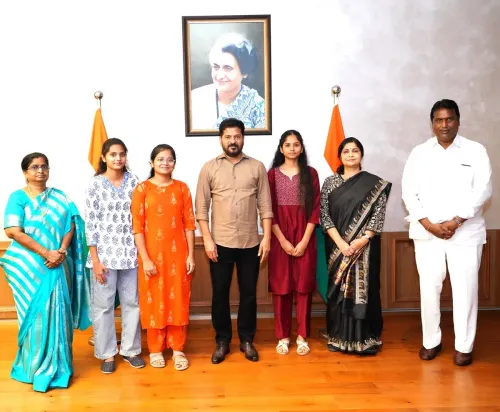
Minority youth who secured government jobs and students who achieved top ranks in IIT-JEE, NEET and other competitive exams were formally felicitated.
Honoured students studied at Telangana's Minority Gurukuls , the state's residential school network for notified minority communities.
Telangana has run dedicated minority education and coaching programmes since state formation in 2014 , continued by the current Congress administration.
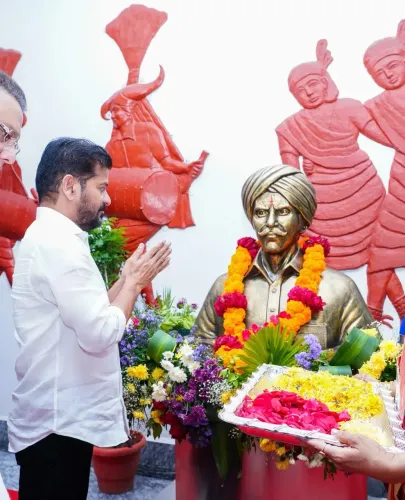
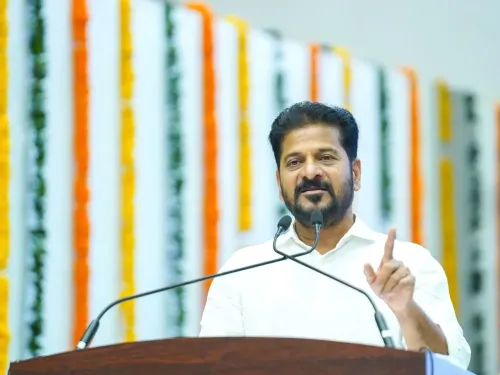
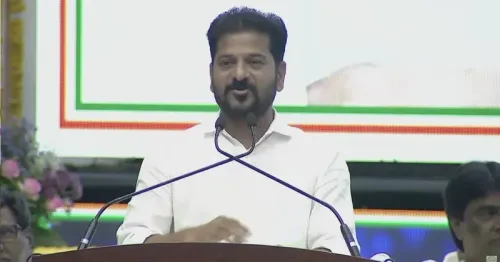
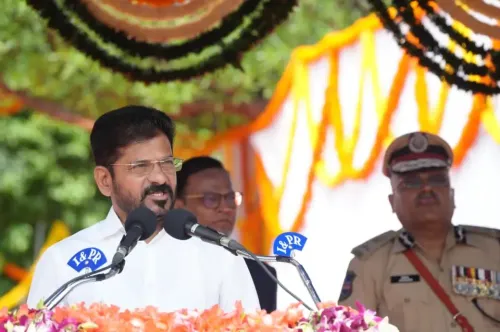
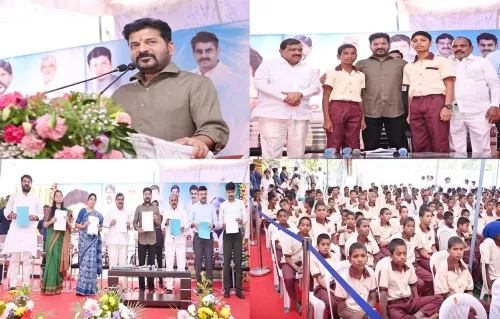
At a packed hall in Banjara Hills, Hyderabad, Telangana Chief Minister A. Revanth Reddy stood alongside minority youth who had cracked government jobs and secured top ranks in IIT-JEE and NEET — and made a point of celebrating every one of them. The Minorities Excellence Summit, held on Thursday, August 13, 2026 at the Komaram Bheem Adivasi Bhavan, brought the state's minority welfare agenda into sharp, public focus.
What the Summit Put on the Table
Revanth Reddy posted in Telugu that the gathering addressed minority community development across four pillars: education, employment, skill development, and economic empowerment. 'We discussed development, education, employment, skill development and economic empowerment of minority communities,' he wrote, adding that students from Minority Gurukuls who achieved top ranks in competitive exams were formally felicitated alongside those who secured government jobs.
The Minority Gurukuls are Telangana's residential school network for students from notified minority communities — a programme that has run through successive state governments since Telangana's formation in 2014. That students from these schools are now clearing IIT-JEE and NEET is the clearest measure of the scheme's reach.
Komaram Bheem Adivasi Bhavan and the Signal It Sends
The choice of venue is not incidental. The Komaram Bheem Adivasi Bhavan in Banjara Hills is named after the Gond tribal leader who fought colonial forest laws — a name that carries unmistakable weight when the state is convening a minority welfare summit. Hosting the event there frames minority advancement as part of a longer, harder struggle for recognition, not just a routine policy review.
The Congress administration, which took office in December 2023, has continued the pattern established by Telangana's earlier governments of using public recognition ceremonies to signal where policy priority sits. The Sachar Committee report of 2006 first mapped the educational and economic deficits among India's minority communities; the summit is, in one sense, a state-level answer to that two-decade-old diagnosis.
The Students Who Earned the Spotlight
The real story of the summit is the achievers themselves. Minority youth who cleared competitive government recruitment, and students who converted Gurukul seats into IIT and NEET ranks, were publicly honoured before the Chief Minister. Recognition ceremonies of this kind serve a dual purpose: they reward individual effort and they make visible, to an entire community, that the path is open.
What comes next matters as much as the ceremony. The next IIT-JEE and NEET cycles will be the real test of whether the momentum from Minority Gurukuls is growing — and whether any new skill or coaching schemes announced in the summit's wake translate into measurable outcomes.
Point of View
Publicly honouring Gurukul students who cracked IIT-JEE and NEET is a way of converting a long-running residential-school scheme into a visible, shareable success story. The event also lands at a moment when minority human-capital development remains a live national debate, two decades after the Sachar Committee mapped the gaps. The real test of this summit's weight will come not in the ceremony, but in whether it is followed by concrete expansions in coaching capacity, scholarship reach, or recruitment support.
NationPress
28 Sept 2026
Frequently Asked Questions
What is the Minorities Excellence Summit in Telangana?
The Minorities Excellence Summit is a state-level event organised by the Telangana government to recognise minority community achievers in education and employment, and to discuss policy priorities around minority welfare, skill development and economic empowerment.
What are Telangana Minority Gurukuls?
Minority Gurukuls are state-run residential schools in Telangana that provide free education to students from notified minority communities. Students from these schools have gone on to secure top ranks in competitive exams such as IIT-JEE and NEET.
Where was the Minorities Excellence Summit held?
The summit was held at Komaram Bheem Adivasi Bhavan in Banjara Hills, Hyderabad, on August 13, 2026.
Who was felicitated at the Minorities Excellence Summit 2026?
Minority youth who secured government jobs and students from Minority Gurukuls who achieved top ranks in IIT-JEE, NEET and other competitive exams were felicitated at the summit by Chief Minister A. Revanth Reddy.
What is Revanth Reddy's role in Telangana?
A. Revanth Reddy is the Chief Minister of Telangana and the president of the Telangana Pradesh Congress Committee, having assumed office in December 2023.