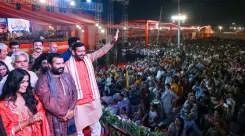
CM Manik Saha Lays Foundation Stone of Taj Pushpavanta Palace

Synopsis
Tripura Chief Minister Dr. Manik Saha laid the foundation stone of the Taj Pushpavanta Palace on June 5, 2026, marking a landmark luxury hospitality investment under the Tata Group's IHCL in the Northeast. The project aligns with India's Act East Policy and BJP-led efforts to diversify the region's tourism economy.
Key Takeaways
Tripura Chief Minister Dr.
Manik Saha laid the foundation stone of Taj Pushpavanta Palace on June 5, 2026 .
The project is associated with Indian Hotels Company Limited (IHCL) , the Tata Group firm that operates the Taj brand.
The initiative aligns with India's Act East Policy (2014) and the Swadesh Darshan scheme (2015), which support tourism infrastructure in the Northeast.
Tripura has been governed by the BJP since 2018, with tourism positioned as a key economic growth driver.
The project is expected to generate local employment and attract higher-spending domestic and international visitors to the state.
Construction milestones and eventual visitor arrival data will be key indicators of the project's economic impact.
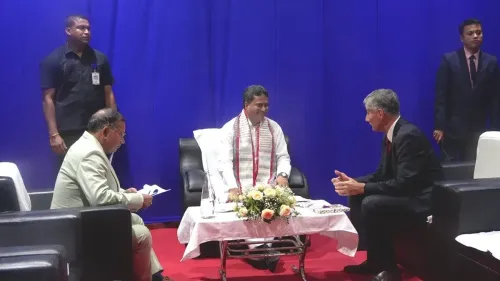
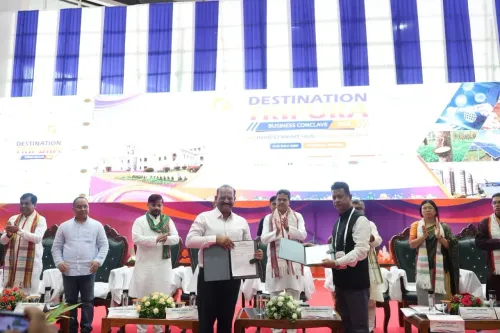
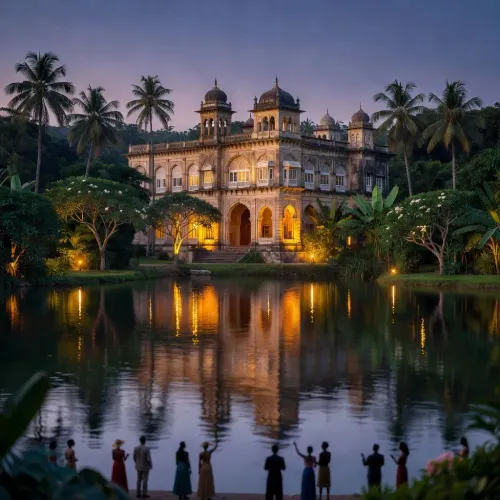
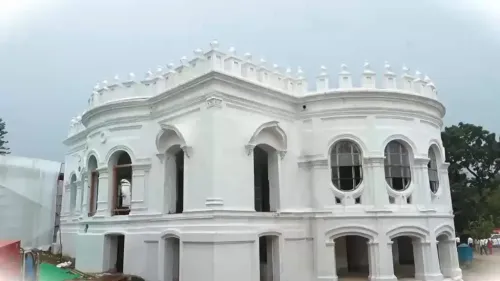
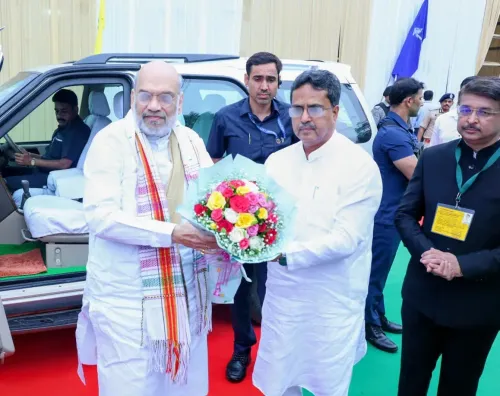
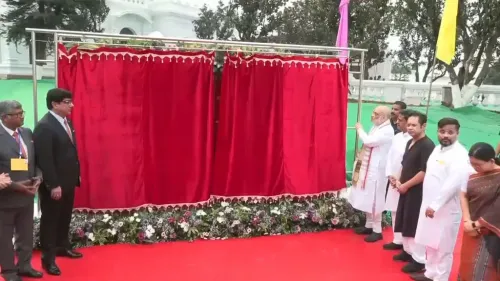
Tripura Chief Minister Dr. Manik Saha on Friday, June 5, 2026, laid the foundation stone of the Taj Pushpavanta Palace, marking a significant step in the state's bid to develop luxury hospitality infrastructure in the Northeast.
Context
The foundation-laying ceremony signals the formal commencement of a proposed luxury heritage hotel project under the Taj brand in Tripura. Dr. Saha, who has served as Chief Minister since 2022, has consistently positioned tourism as a pillar of the state's economic growth agenda. The event represents one of the most prominent hospitality investments the BJP-governed state has publicly announced.
The project is being developed in association with the Indian Hotels Company Limited (IHCL), the Tata Group hospitality firm that operates the globally recognised Taj brand. IHCL has been expanding its footprint across India's Northeastern states as part of a broader national growth strategy.
Policy Backdrop
The initiative draws on the framework of the Act East Policy, articulated in 2014, which placed tourism infrastructure and connectivity at the centre of Northeast India's development roadmap. Central schemes such as Swadesh Darshan, launched in 2015, have provided funding for theme-based tourist circuits including heritage destinations, enabling public-private partnerships of this nature.
Northeast states governed by the BJP have increasingly pursued luxury hospitality projects to diversify their tourism offerings beyond traditional pilgrimage and eco-tourism segments. Hotel development under such partnerships is intended to raise domestic visitor numbers and integrate the region more deeply into national economic corridors.
Stakeholders and Impact
The project is expected to benefit Tripura's tourism industry and local communities by generating employment and attracting higher-spending visitors. A Taj-branded property would place the state on the itinerary of domestic and international travellers who currently bypass the Northeast in favour of more established luxury destinations.
For IHCL, the Pushpavanta Palace project extends the Taj brand's presence into an underserved market, aligning with the company's stated strategy of expanding into emerging leisure and heritage destinations across India. Local artisans, hospitality workers, and ancillary service providers stand to benefit from the eventual operation of the property.
What's Next
Attention will now turn to construction milestones and the timeline for the hotel's operational launch. Tripura's state tourism department will likely track visitor arrival data and revenue figures as indicators of the project's broader economic impact. The foundation-laying also sets a precedent that could encourage further private investment in the state's hospitality and infrastructure sectors.
As the Northeast's connectivity improves through ongoing road, rail, and air projects, a luxury property of this scale could serve as an anchor investment, drawing complementary tourism and hospitality development to the region in the years ahead.
Point of View
The state government is attempting to leapfrog the incremental steps of budget tourism and position itself directly in the premium segment. This fits a broader pattern across BJP-governed Northeastern states of using high-profile private-sector partnerships to demonstrate development momentum ahead of electoral cycles. The real test, however, will be whether construction timelines hold and whether the project catalyses the wider hospitality ecosystem the state needs.
NationPress
21 Oct 2026
Frequently Asked Questions
What is Taj Pushpavanta Palace in Tripura?
Taj Pushpavanta Palace is a proposed luxury heritage hotel project under the Taj brand, being developed in Tripura in association with Indian Hotels Company Limited (IHCL), the Tata Group's hospitality arm. Its foundation stone was laid by Chief Minister Dr. Manik Saha on June 5, 2026.
Who laid the foundation stone of Taj Pushpavanta Palace?
Tripura Chief Minister Dr. Manik Saha laid the foundation stone of Taj Pushpavanta Palace on Friday, June 5, 2026, marking the formal start of the luxury hospitality project.
What is IHCL's role in Northeast India tourism?
Indian Hotels Company Limited (IHCL), which operates the Taj brand, has been expanding into India's Northeastern states as part of a broader national growth strategy, targeting underserved luxury and heritage tourism markets.
How does Taj Pushpavanta Palace relate to India's Act East Policy?
The project aligns with the Act East Policy articulated in 2014, which prioritised tourism infrastructure and connectivity across Northeast India, and with the Swadesh Darshan scheme that funds heritage tourist circuit development.
What impact will Taj Pushpavanta Palace have on Tripura's economy?
The project is expected to generate employment for local communities, attract higher-spending domestic and international tourists, and encourage further private investment in Tripura's hospitality and infrastructure sectors.