CM Sai: 13 Tribal Youth Hostel Students Clear UPSC Prelims
Synopsis
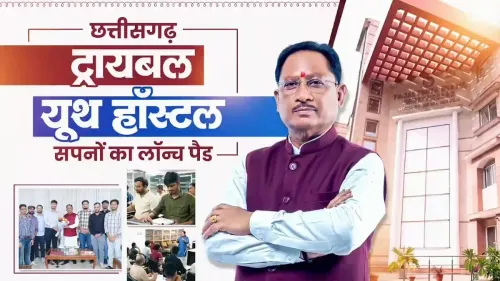
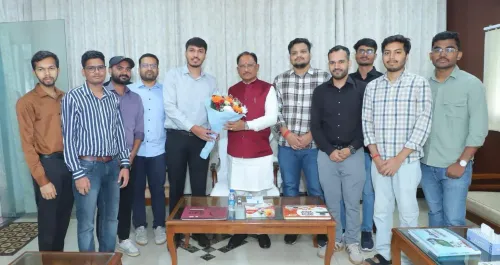
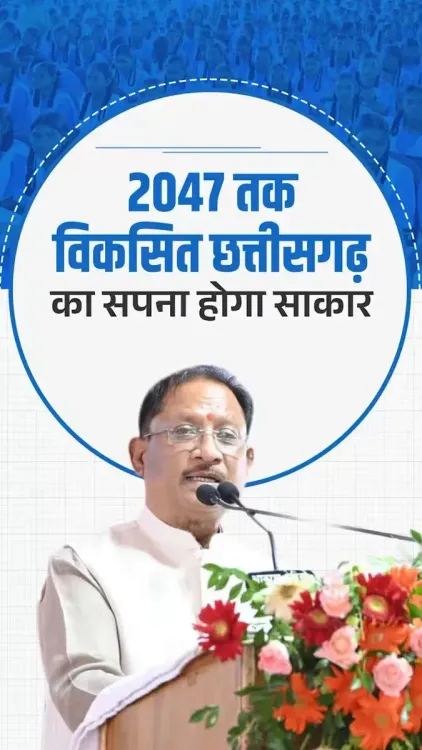
Thirteen students from Delhi's Tribal Youth Hostel have cleared the UPSC Preliminary Examination, Chhattisgarh CM Vishnu Deo Sai announced on 20 July 2026 at the Shala Praveshotsav event in Durg. He framed the result as concrete progress toward PM Modi's Viksit Bharat 2047 development vision.
Key Takeaways
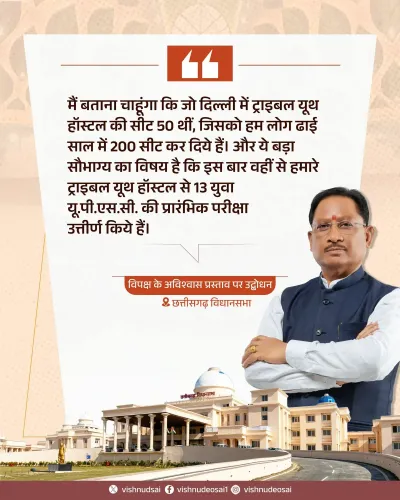
13 students from the Tribal Youth Hostel, Delhi cleared the UPSC Preliminary Examination , as announced on 20 July 2026 .
CM Vishnu Deo Sai made the announcement at the state-level Shala Praveshotsav 2026-27 event in Durg, Chhattisgarh .
The achievement was linked to PM Modi 's Viksit Bharat 2047 national development framework and the state's Viksit Chhattisgarh agenda.
The event was hosted at Swami Atmanand Utkrisht English Medium Vidyalaya, Jamgaon-M , a flagship government school scheme in Chhattisgarh.
The students now advance to the UPSC Civil Services Mains examination as the next stage.
The result reflects a broader national push to improve civil-services representation from Scheduled Tribe communities through dedicated residential and coaching support.
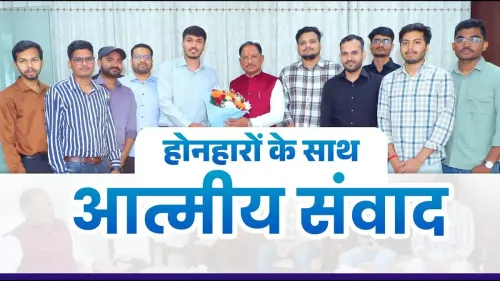
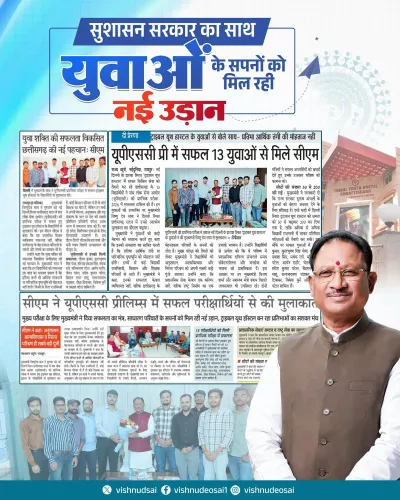
The Chief Minister's Office of Chhattisgarh announced on Monday, 20 July 2026 that 13 students from the Tribal Youth Hostel in Delhi have cleared the UPSC Preliminary Examination, with Chief Minister Vishnu Deo Sai hailing the achievement as proof of the state's progress toward Prime Minister Narendra Modi's Viksit Bharat 2047 vision. The announcement was made at the state-level Shala Praveshotsav 2026-27 (School Enrolment Festival) held at Swami Atmanand Utkrisht English Medium Vidyalaya, Jamgaon-M, Durg.
Context
Speaking at the event, CM Vishnu Deo Sai said, in translation: 'We are working with full commitment toward building a Viksit Chhattisgarh to realise the resolve that Prime Minister Shri Narendra Modi has taken for a Viksit Bharat by 2047.' He described the UPSC success of the 13 tribal students as evidence of 'the talent, hard work, and bright future of our youth.' The statement underlines the state government's effort to link grassroots educational investment with national development benchmarks.
Policy Backdrop
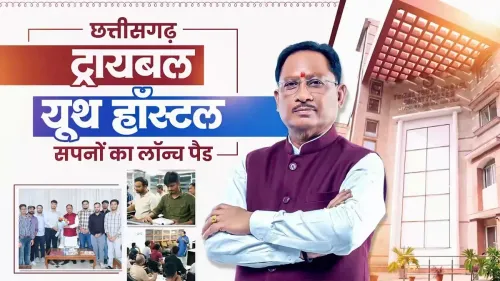
The Viksit Bharat 2047 framework, articulated by PM Modi during the Amrit Kaal period following India's 75th Independence anniversary, sets a target of transforming India into a developed nation by the centenary of Independence. State governments with large tribal populations — Chhattisgarh's Scheduled Tribe population is among the highest in India — have been aligning welfare and education schemes to this national arc. The Tribal Youth Hostel in Delhi is a government-supported residential facility providing accommodation and coaching support specifically for tribal students competing in national-level examinations.
The Swami Atmanand Utkrisht English Medium Vidyalaya scheme, launched by the Chhattisgarh government, is a flagship initiative that converts government schools into high-quality English-medium institutions to bridge the access gap between private and public education, particularly for students from tribal and economically weaker backgrounds.
Stakeholders and Impact
The immediate beneficiaries are the 13 tribal students who have qualified for the UPSC Mains, a significant milestone in the civil services pathway. More broadly, the result is being positioned as a signal to tribal youth across Chhattisgarh that state-supported infrastructure can translate into top-tier administrative careers. State governments across India with large Scheduled Tribe populations have increasingly expanded dedicated hostels and coaching facilities to improve competitive-exam outcomes, and this result adds a measurable data point to those efforts.
The Shala Praveshotsav event itself targets school enrolment for the 2026-27 academic year, making the venue choice deliberate: tying UPSC success stories to the beginning of the school calendar reinforces the message that the pipeline from primary enrolment to civil service is achievable.
What's Next
The next milestone for the 13 successful candidates is the UPSC Civil Services Mains examination, followed by the personality test round. Their final placement on the merit list will determine whether they enter the Indian Administrative Service, Indian Police Service, or allied services. Observers will also watch whether the Chhattisgarh government announces further budgetary expansion of tribal coaching hostels and English-medium schools as it builds toward its Viksit Chhattisgarh targets ahead of 2047.
Point of View
Civil-service placements carry outsized symbolic weight as markers of inclusion in India's administrative mainstream. CM Sai's framing of the result within the Viksit Bharat 2047 arc is also notable: it allows a state-level welfare outcome to be read as part of the national development story, tightening political alignment between Raipur and Delhi ahead of future electoral cycles. The real test will be how many of these 13 candidates clear the Mains and ultimately join the services — that number will determine whether the hostel model earns deeper budgetary commitment.
NationPress
21 Jul 2026
Frequently Asked Questions
Which students cleared the UPSC Prelims from Chhattisgarh in 2026?
13 students residing at the Tribal Youth Hostel in Delhi , who are from Chhattisgarh , cleared the UPSC Preliminary Examination , as announced by CM Vishnu Deo Sai on 20 July 2026 .
What is the Tribal Youth Hostel in Delhi?
The Tribal Youth Hostel in Delhi is a government-supported residential facility that provides accommodation and support to tribal students from states like Chhattisgarh who are preparing for national competitive examinations such as the UPSC Civil Services .
What is Viksit Bharat 2047?
Viksit Bharat 2047 is Prime Minister Narendra Modi 's national vision to transform India into a fully developed nation by 2047 , the centenary of Independence, covering goals in infrastructure, education, governance, and economic growth.
What is Shala Praveshotsav in Chhattisgarh?
Shala Praveshotsav is an annual school enrolment festival organised by the Chhattisgarh government to drive enrolment at the start of each academic year. The 2026-27 state-level event was held at Swami Atmanand Utkrisht English Medium Vidyalaya, Jamgaon-M, Durg .
What is the Swami Atmanand Utkrisht English Medium Vidyalaya scheme?
The Swami Atmanand Utkrisht English Medium Vidyalaya scheme converts government schools in Chhattisgarh into high-quality English-medium institutions, aimed at providing tribal and economically weaker students access to education comparable to private schools.