CM Sai Highlights Farmer Welfare Push in Chhattisgarh
Synopsis
Chhattisgarh Chief Minister Vishnu Deo Sai on 15 June 2026 reaffirmed his government's farmer welfare agenda, citing PM-KISAN, Krushak Unnati Yojana, crop insurance and irrigation expansion as key drivers of rural economic empowerment under the BJP's 'double engine' model.
Key Takeaways
CM Vishnu Deo Sai on 15 June 2026 declared empowered farmers the 'greatest strength' of a prosperous Chhattisgarh .
The post highlights four policy pillars: PM-KISAN , Krushak Unnati Yojana , crop insurance and irrigation expansion.
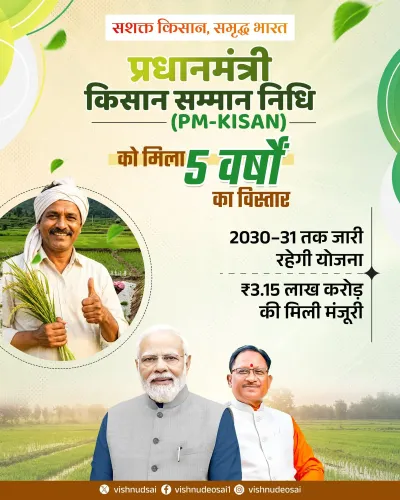
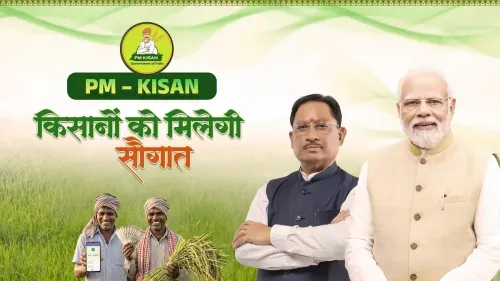
PM-KISAN , launched in February 2019 , provides ₹6,000 per year to eligible farmer families as direct income support.
The Krushak Unnati Yojana is a state-level scheme introduced by the BJP government after the 2023 Chhattisgarh assembly elections .
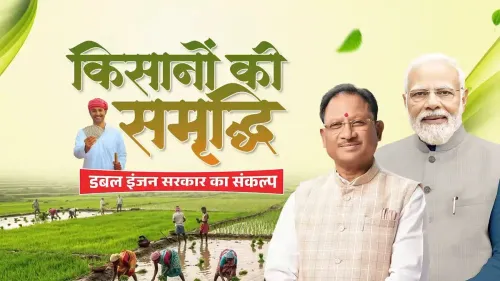
The 'double engine' framing emphasises coordination between central government schemes and Chhattisgarh state programmes under BJP rule.
Budget allocations for 2026-27 and PM-KISAN beneficiary data will be key indicators of on-ground progress.
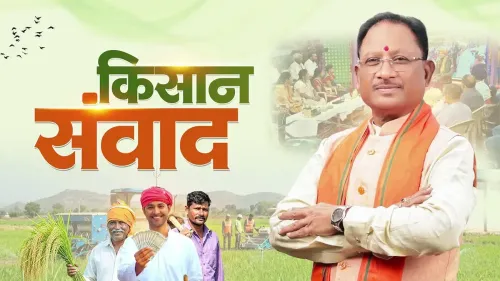
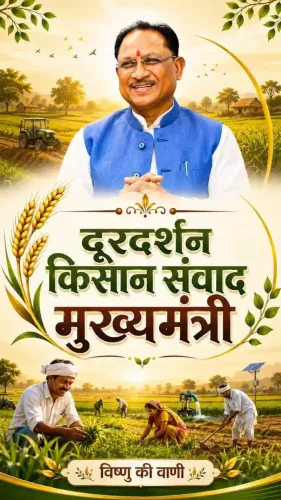
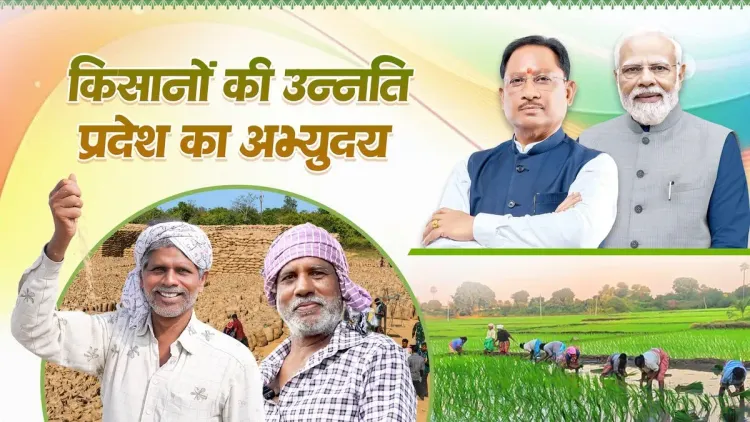
Chhattisgarh Chief Minister Vishnu Deo Sai on Monday, 15 June 2026, reaffirmed his government's commitment to agricultural welfare, stating that empowered farmers are the greatest strength of a prosperous Chhattisgarh. In a post on X, the BJP leader outlined a cluster of central and state schemes he said are making farming more secure, profitable and modern for the state's rural population.
Context
Writing in Hindi, Chief Minister Sai declared: 'सशक्त किसान ही समृद्ध छत्तीसगढ़ की सबसे बड़ी ताकत हैं' ('Empowered farmers are the greatest strength of a prosperous Chhattisgarh'). He credited what he called the 'double engine government' — a term the BJP uses to describe policy alignment between its central government in New Delhi and its state government in Raipur — for driving economic empowerment among the farming community.
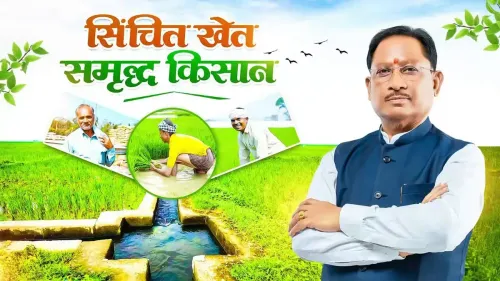
The post specifically names four policy instruments: the Pradhan Mantri Kisan Samman Nidhi (PM-KISAN), the state-level Krushak Unnati Yojana, crop insurance, and the expansion of irrigation infrastructure alongside modern agricultural technology.
Policy Backdrop
PM-KISAN, launched nationally in February 2019, provides eligible landholding farmer families with ₹6,000 per year in three equal instalments as direct income support. The scheme is one of the central government's flagship agricultural welfare programmes and operates in all states, including Chhattisgarh.
The Krushak Unnati Yojana is a state-level initiative introduced by the BJP government in Chhattisgarh after it came to power following the 2023 assembly elections. The state government has also expanded irrigation projects as part of its broader effort to reduce dependence on rainfall and lower crop risk for small and marginal farmers. The Pradhan Mantri Fasal Bima Yojana, the central crop insurance scheme launched in 2016, complements these efforts by protecting farmers against losses from natural calamities and pest attacks.
Stakeholders and Impact
Chhattisgarh is a predominantly agrarian state in central India, where a significant share of the rural population depends on farming for its livelihood. Small and marginal farmers — the primary beneficiaries of direct transfer schemes like PM-KISAN — stand to gain most from the convergence of central income support and state-level productivity programmes.
CM Sai framed the rural economy as the foundation of the state's development vision, stating that 'अन्नदाता की खुशहाली ही विकसित और आत्मनिर्भर छत्तीसगढ़ की आधारशिला है' ('The prosperity of the farmer is the cornerstone of a developed and self-reliant Chhattisgarh'). The messaging aligns with the BJP's broader national narrative of raising farm incomes and modernising agriculture across party-governed states.
What's Next
Observers will watch the Chhattisgarh state budget allocations for 2026-27 to assess the fiscal weight behind these commitments, particularly for irrigation expansion and the Krushak Unnati Yojana. Periodic updates on PM-KISAN beneficiary numbers for Chhattisgarh will also serve as a measurable indicator of scheme penetration. The government's ability to translate policy announcements into verifiable income gains for small farmers will ultimately determine the credibility of the 'double engine' agricultural agenda in the state.
Point of View
Bundling central flagship schemes with state-level initiatives to project seamless governance continuity. By invoking annadata (provider of grain) alongside the self-reliant Chhattisgarh vision, the messaging ties agrarian welfare directly to the party's broader 'Viksit Bharat' development arc. The emphasis on modern technology and irrigation — rather than just cash transfers — signals an attempt to shift the narrative from relief to structural transformation. How effectively these commitments translate into measurable income gains for small farmers will be the real test of the 'double engine' model ahead of the next electoral cycle.
NationPress
18 Sept 2026
Frequently Asked Questions
What is the Krushak Unnati Yojana in Chhattisgarh?
The Krushak Unnati Yojana is a state-level agricultural welfare scheme introduced by the BJP government in Chhattisgarh after it came to power following the 2023 assembly elections, aimed at boosting farmer incomes alongside central schemes like PM-KISAN.
How much money do farmers get under PM-KISAN?
Under the Pradhan Mantri Kisan Samman Nidhi (PM-KISAN), eligible landholding farmer families receive ₹6,000 per year, paid in three equal instalments of ₹2,000 directly into their bank accounts.
What did Chhattisgarh CM Vishnu Deo Sai say about farmers?
On 15 June 2026, CM Vishnu Deo Sai stated that empowered farmers are the greatest strength of a prosperous Chhattisgarh, and highlighted PM-KISAN, Krushak Unnati Yojana, crop insurance and irrigation expansion as key tools for raising farm incomes.
What is the 'double engine government' in Chhattisgarh?
The 'double engine government' is a BJP phrase describing the policy alignment between the BJP-led central government and BJP-governed state governments like Chhattisgarh, implying faster and more coordinated delivery of welfare schemes.
What crop insurance scheme is available for Chhattisgarh farmers?
Chhattisgarh farmers can avail the Pradhan Mantri Fasal Bima Yojana, a central crop insurance scheme launched in 2016 that protects farmers against financial losses due to natural calamities, pests and crop failure.