CM Sai salutes Chhattisgarh's Kosa silk on Handloom Day
Synopsis
On National Handloom Day, Chhattisgarh CM Vishnu Dev Sai praised the state's Kosa silk weavers as carriers of cultural heritage and global identity, linking the craft to Vocal for Local and Atmanirbhar Bharat goals.
Key Takeaways
National Handloom Day is observed on 7 August every year since 2015 , marking the centenary of the 1905 Swadeshi movement .
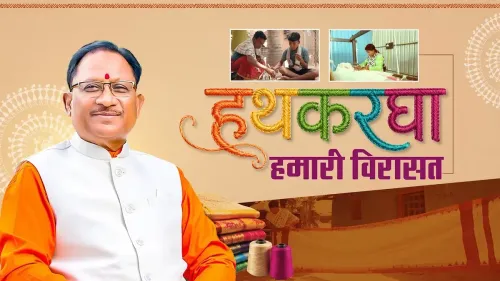
CM Vishnu Dev Sai called handloom 'an invaluable heritage' that unites tradition, art, and Indian life values.
Kosa silk , woven in Chhattisgarh's tribal belts from forest silkworm cocoons, is the state's signature textile and a key export identity marker.
The post aligns with the Vocal for Local and Atmanirbhar Bharat campaigns promoting indigenous textiles domestically and globally.
Chhattisgarh's Culture Department is the nodal body linking cultural preservation with rural artisan livelihoods in tribal regions.
On National Handloom Day, 7 August, Chhattisgarh Chief Minister Vishnu Dev Sai placed the state's famed Kosa silk at the centre of a national conversation — calling handloom an invaluable thread that binds tradition, art, and Indian life values into one.
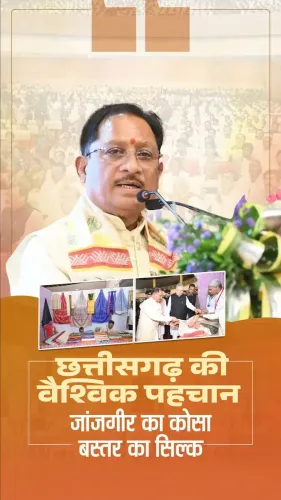
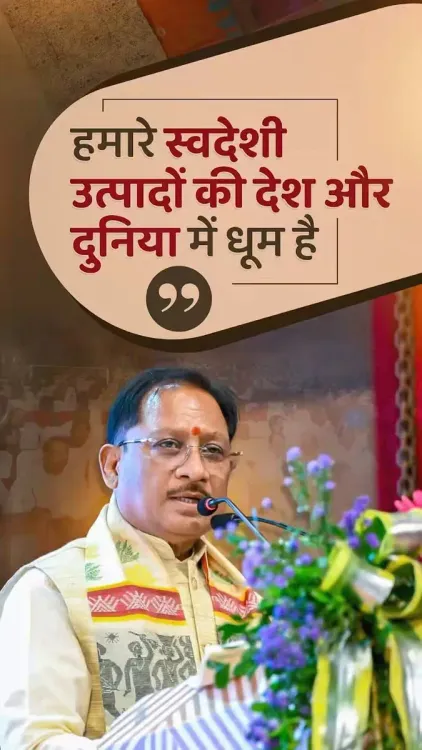
In a statement shared by the Chief Minister's Office of Chhattisgarh, CM Sai said: 'Hathkarghā hamāri sānskritik virasat ki vah amūlya dharohar hai' — 'Handloom is that priceless heritage of our cultural legacy.' He added that Kosa products crafted by the state's skilled artisans are 'carrying Chhattisgarh's identity to new heights across the country and the world' through their quality and distinctiveness.
What makes Kosa silk Chhattisgarh's calling card
Kosa silk — spun from the cocoons of the Antheraea mylitta silkworm found abundantly in Chhattisgarh's forests — is woven almost exclusively in the state's tribal belts. Its natural gold-brown sheen and coarse, durable texture set it apart from Banarasi or Mysore silk, giving it a niche that luxury and export markets have increasingly recognised. The craft is not just an aesthetic tradition; for thousands of tribal weavers and their families, it is a livelihood.
National Handloom Day and the Swadeshi thread running through it
National Handloom Day has been observed every 7 August since 2015, when it was instituted to mark the centenary of the 1905 Swadeshi movement — the mass campaign that asked Indians to shun foreign cloth and revive indigenous weaving. That historical resonance gives CM Sai's message a deliberate weight: the Vocal for Local and Atmanirbhar Bharat campaigns of today are, in spirit, a 21st-century continuation of that same impulse.
Chhattisgarh's Culture Department — tagged in the post — has been tasked with bridging cultural preservation and rural economic development, particularly in tribal regions where handloom weaving is both heritage and household income.
Where Chhattisgarh's weavers go from here
The broader policy arc points toward linking artisan clusters to national and international handloom expos, e-commerce platforms, and GI-tag enforcement that protects Kosa's brand integrity abroad. Whether the state follows this occasion with concrete scheme announcements — silk cluster upgrades, direct-to-market support, or export facilitation — will determine whether the tribute translates into tangible uplift for the weavers CM Sai honoured today.
A craft that survived colonial-era suppression and decades of industrial competition is now being asked to carry a state's global identity. The looms are ready. The policy scaffolding is the next test.
Point of View
Championing weaver livelihoods carries both cultural and political logic. The real test is whether this occasion generates policy follow-through — cluster investment, GI-tag enforcement, export linkages — or remains a well-crafted tribute. The gap between tribute and action is where Chhattisgarh's handloom story will actually be written.
NationPress
22 Sept 2026
Frequently Asked Questions
What is National Handloom Day and why is it on 7 August?
National Handloom Day is observed on 7 August every year since 2015 to commemorate the 1905 Swadeshi movement , which urged Indians to adopt indigenous cloth and revive traditional weaving. The date marks the launch of that mass campaign in Calcutta.
What is Kosa silk and where is it made?
Kosa silk is a textured, naturally gold-brown silk spun from the cocoons of the Antheraea mylitta silkworm found in Chhattisgarh's forests. It is woven primarily by tribal artisans in the state and is recognised for its durability and distinctive sheen.
What did CM Vishnu Dev Sai say on National Handloom Day 2026?
CM Vishnu Dev Sai called handloom 'an invaluable heritage of our cultural legacy' and said Kosa products crafted by Chhattisgarh's artisans are 'carrying the state's identity to new heights across the country and the world' through their quality and uniqueness.
How does Kosa silk connect to Atmanirbhar Bharat?
Kosa silk is promoted under the Vocal for Local and Atmanirbhar Bharat campaigns as a premium indigenous textile that can substitute imports and generate rural income. Chhattisgarh's state government has positioned the craft as both a cultural and economic asset in tribal regions.
Who is Vishnu Dev Sai?
Vishnu Dev Sai is the Chief Minister of Chhattisgarh , in office since December 2023 , representing the Bharatiya Janata Party . He is a tribal leader from the state and has emphasised cultural heritage and tribal welfare in his administration.