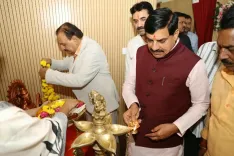
CM Sai Honours Bastar Martyrs at Shauryaanjali Event
Synopsis
Chief Minister Vishnu Deo Sai paid tribute to martyrs at the Shauryaanjali programme on 18 October 2026, pledging that building a peaceful, secure, and prosperous Bastar — in line with the fallen heroes' dreams — is the collective responsibility of all citizens.
Key Takeaways
CM Vishnu Deo Sai attended the Shauryaanjali tribute programme on 18 October 2026 to honour security personnel martyred in Bastar.
He declared that building a 'peaceful, secure, and prosperous Bastar' is the collective responsibility of all citizens.
The #ViksitBastar hashtag frames the tribute within the broader Viksit Bharat 2047 development vision applied at state level.
Support for martyr families was a central theme, reaffirming the government's welfare commitments to the next-of-kin of fallen personnel.
Bastar has faced left-wing extremist violence for decades; Chhattisgarh's BJP government has pursued a combined security and development strategy since December 2023 .
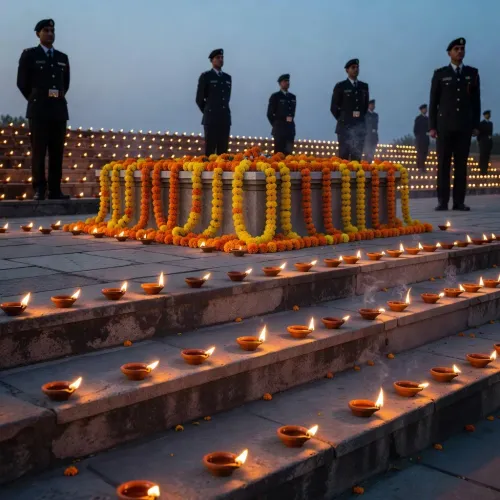
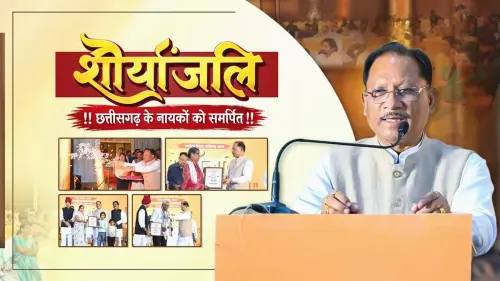
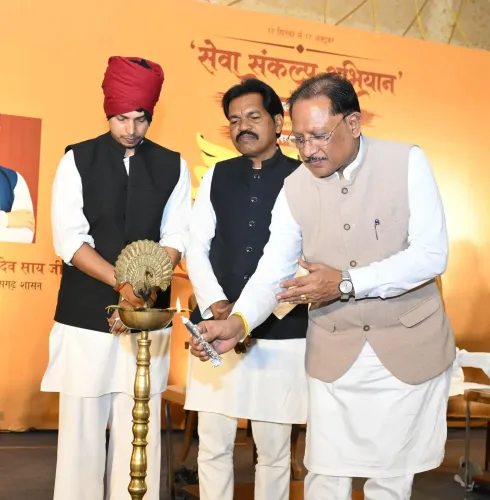
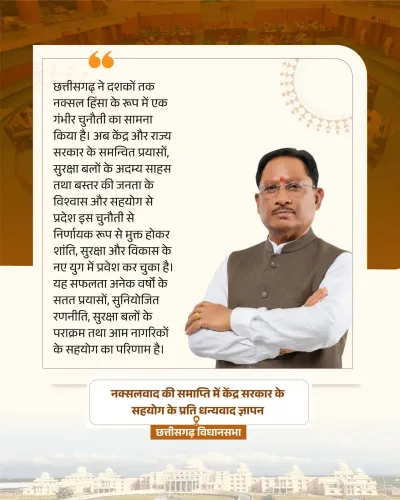
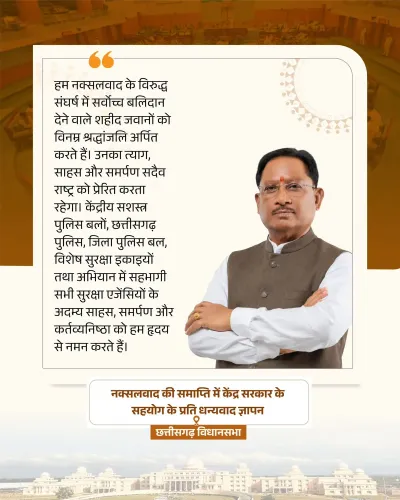
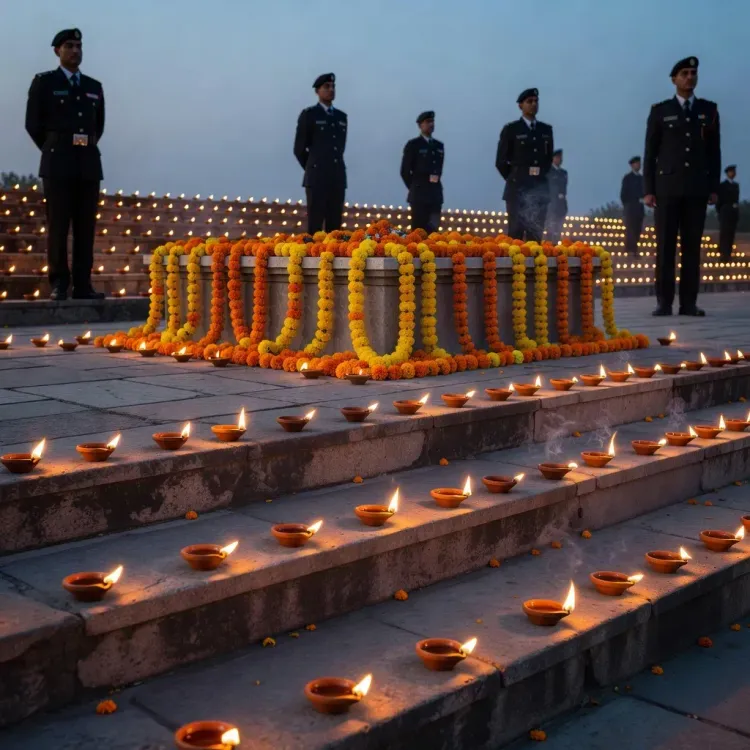
In the forests and foothills of Bastar, security personnel have paid the ultimate price for decades. On Sunday, 18 October 2026, Chief Minister Vishnu Deo Sai stood before their memory at the Shauryaanjali programme — a solemn tribute event — and made a collective promise: that their sacrifice would be answered with a peaceful, secure, and prosperous Bastar.
The Chief Minister's Office of Chhattisgarh shared the moment on X, quoting CM Sai as saying that building a Bastar aligned with the dreams of the fallen heroes is 'the collective responsibility of all of us.' The post carried the hashtags #ViksitBastar and #ViksitChhattisgarh — signalling that the tribute was not only an act of mourning, but a declaration of direction.
Why Bastar Remains a Wound Chhattisgarh Must Heal
Bastar, the vast southern division of Chhattisgarh, has been the epicentre of left-wing extremist violence for over four decades. Its predominantly tribal population has lived at the intersection of insurgency, counter-insurgency operations, and chronic underdevelopment. Successive state governments — regardless of party — have lost hundreds of security personnel in the region.
The human cost is not abstract: every name honoured at events like Shauryaanjali represents a family left behind. The programme's very name — roughly translating to 'a tribute of valour' — reflects the state's effort to institutionalise grief into purpose, and to sustain the morale of forces still operating in difficult terrain.
The 'Viksit Bastar' Frame: Security and Development as One Strategy
CM Sai, who took office in December 2023 after the BJP's return to power in Chhattisgarh, has consistently positioned security operations and infrastructure investment as two sides of the same coin. The #ViksitBastar framing is a deliberate local echo of Prime Minister Modi's national Viksit Bharat 2047 vision — applying the same development-first language to India's most conflict-affected forests.
State governments in Chhattisgarh have long pursued this dual approach: targeted anti-Naxal policing paired with roads, schools, and welfare schemes in Bastar's interior. The theory is straightforward — deprive extremism of the socio-economic grievance that feeds it. The execution, in terrain this demanding, is far harder.
Families of Martyrs at the Centre of the Promise
A key theme of CM Sai's remarks was support for the families of martyrs — a constituency that sits at the moral centre of any government's credibility on security. Welfare measures for the next-of-kin of fallen personnel — pensions, employment, housing, children's education — have been recurring commitments across administrations. Sunday's tribute renews that implicit contract.
What the families and Bastar residents will now watch for is whether the sentiment translates into concrete budget allocations and scheme launches in the weeks ahead.
The fallen dreamed of a Bastar at peace. The state has taken the vow. The distance between those two points is where governance will be judged.
Point of View
Safety, prosperity — rather than process. The Viksit Bastar framing is strategically significant, anchoring a conflict-management agenda within the electorally resonant Viksit Bharat 2047 narrative. For the BJP in Chhattisgarh, visible respect for martyrs and their families is both a moral duty and a force-morale tool in a region where recruitment and retention of security personnel depend on trust in state commitment. The critical test will come in budget cycles: whether welfare for martyr families and Bastar infrastructure receive sustained allocations, or whether Sunday's pledge remains an emotional marker without fiscal follow-through.
NationPress
18 Oct 2026
Frequently Asked Questions
What is the Shauryaanjali programme in Chhattisgarh?
Shauryaanjali is a tribute event organised to honour security personnel and others who were martyred, particularly in anti-Naxal operations in the Bastar region of Chhattisgarh.
What did CM Vishnu Deo Sai say at Shauryaanjali 2026?
CM Sai said that building a peaceful, secure, and prosperous Bastar — in keeping with the dreams of the fallen heroes — is the collective responsibility of all citizens.
What is Viksit Bastar?
Viksit Bastar is a development vision for the Bastar region of southern Chhattisgarh, mirroring the national Viksit Bharat 2047 framework, aimed at combining security operations with infrastructure, welfare, and tribal development.
Who is Vishnu Deo Sai and when did he become Chief Minister of Chhattisgarh?
Vishnu Deo Sai is the Chief Minister of Chhattisgarh, representing the BJP. He assumed office in December 2023 after the party's victory in the Chhattisgarh assembly elections.
Why is Bastar significant in the context of Naxalism in India?
Bastar is the epicentre of left-wing extremist activity in India. Decades of insurgency have claimed hundreds of security personnel and civilians, making it the primary theatre for Chhattisgarh's combined counter-insurgency and development strategy.