CM Sai Honours Police, Innovators at Raipur Cyber-Safety Conclave
Synopsis
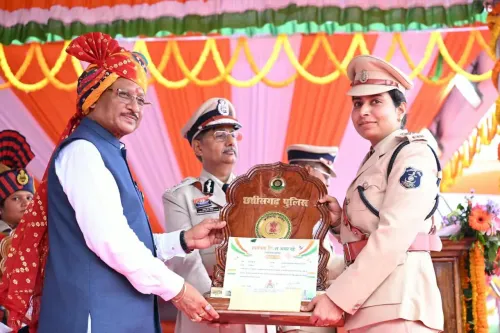
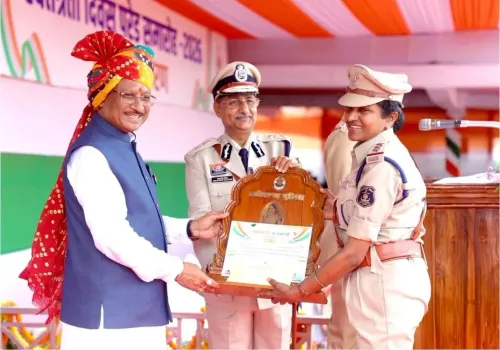
Chhattisgarh CM Vishnu Deo Sai felicitated police officers, hackathon winners, and partner organisations in Raipur on 9 October 2026, pledging to build a 'Cyber-Secure Chhattisgarh' through public awareness, vigilance, and modern technology.
Key Takeaways
CM Vishnu Deo Sai attended the 'Cyber Jagriti Abhiyan and Traffic Hackathon-2026' felicitation in Raipur on 9 October 2026 .
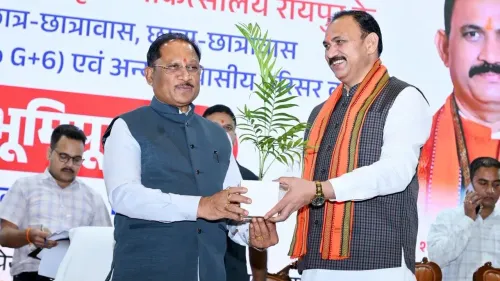
Police personnel, competition winners, and supporting institutions were formally honoured at the ceremony.
The initiative combined a public cyber-awareness drive with a traffic-management hackathon , targeting both civic education and tech-led governance.
Sai articulated a three-pillar strategy : public awareness ( jan-jagrukta ), vigilance ( satarkta ), and modern technology integration.
The stated goal is a 'Cyber Surakshit Chhattisgarh' — recognising that cybercrime threats evolve alongside technology. @CGPoliceDept was tagged, underscoring the state police's central operational role in the campaign.
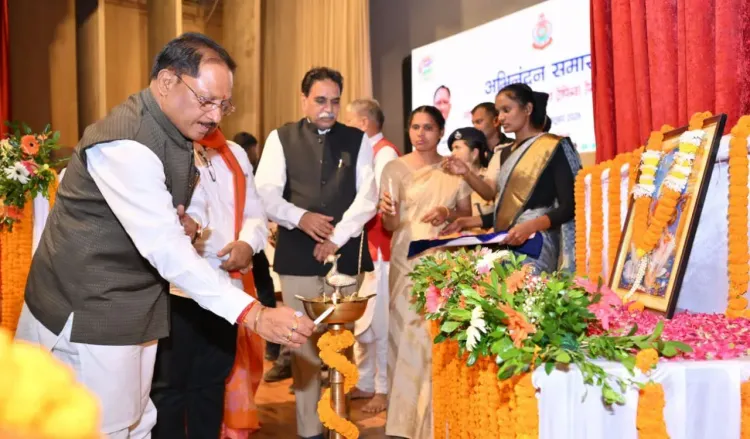
Cyber fraud does not wait — and Chhattisgarh Chief Minister Vishnu Deo Sai made clear on Friday, 9 October 2026, that the state is not waiting either. At a felicitation ceremony in Raipur, Sai personally honoured police personnel, competition winners, and partner organisations who excelled at the 'Cyber Jagriti Abhiyan and Traffic Hackathon-2026' — a twin-track initiative pairing public-awareness drives with technology-led problem solving.
What the Hackathon Set Out to Solve
The Cyber Jagriti Abhiyan (Cyber Awareness Campaign) and the Traffic Hackathon ran as a combined effort to tackle two of the most pressing technology-governance challenges in urban Chhattisgarh: rising cybercrime targeting ordinary citizens, and traffic-management bottlenecks that increasingly demand algorithmic solutions. Contestants — students, technologists, and civic volunteers — competed to build practical tools, while police units ran ground-level awareness drives across the state.
Sai, tagging @CGPoliceDept in his post, noted that 'badlati takneek ke saath cyber chunautiyan bhi naye roop le rahi hain' — 'as technology evolves, cyber challenges are taking new forms.' The acknowledgement signals that the state views this as a continuous, escalating contest rather than a one-time fix.
The Three-Pillar Strategy for a 'Cyber-Safe Chhattisgarh'
Speaking at the ceremony, the Chief Minister outlined a three-pillar approach: jan-jagrukta (public awareness), satarkta (vigilance), and aadhunik takneek ka samanvay (integration of modern technology). Together, he said, these would translate the state's declared vision of a 'Cyber Surakshit Chhattisgarh' — a Cyber-Secure Chhattisgarh — from aspiration to reality.
Honouring frontline police personnel alongside hackathon winners and institutional partners was a deliberate choice. It signals that the state sees cybersecurity as a full-stack problem: grassroots awareness, skilled law enforcement, and cutting-edge civic technology must advance together, not in silos.
Why It Matters Beyond the Stage
India as a whole has recorded sharp increases in cybercrime complaints over recent years, with financial fraud — UPI scams, phishing, impersonation calls — hitting semi-urban and rural populations hardest. A state-level initiative that pairs police capacity-building with community education and technological innovation offers a replicable model. The hackathon format, in particular, invites non-government problem-solvers into governance — a small but meaningful shift in how public-safety challenges get addressed.
The felicitation of partner organisations alongside individual winners also suggests an ecosystem approach: civil society bodies, academic institutions, and tech groups who supported the campaign are being formally recognised, incentivising continued collaboration.
Chhattisgarh has now placed its cyber-security ambition on public record — and the clock is ticking to show results that match the resolve.
Point of View
Civic-tech competitors, and institutional partners, CM Sai is constructing a visible governance narrative around technology-led public safety — a space increasingly contested across BJP-ruled states. The 'Cyber Surakshit Chhattisgarh' branding mirrors similar digital-safety pledges at the national level, suggesting an attempt to localise central government priorities into a state-specific deliverable. Pairing a traditional awareness campaign with a hackathon is particularly notable: it invites non-state actors into the security apparatus in a legitimised, competition-driven format. Whether the initiative produces durable institutional capacity — rather than a single-cycle event — will determine its long-term policy significance.
NationPress
9 Oct 2026
Frequently Asked Questions
What is the Cyber Jagriti Abhiyan in Chhattisgarh?
The Cyber Jagriti Abhiyan is a state-run cyber-awareness campaign in Chhattisgarh aimed at educating citizens about online threats such as financial fraud, phishing, and impersonation scams, run in coordination with the Chhattisgarh Police.
What was the Traffic Hackathon-2026 in Raipur?
The Traffic Hackathon-2026 was a technology competition held in Raipur alongside the Cyber Jagriti Abhiyan, inviting participants to develop innovative solutions for traffic-management challenges faced by the state.
Who was felicitated at the Raipur cyber ceremony on 9 October 2026?
Police personnel who performed outstanding work, competition winners from the hackathon, and partner organisations that supported the Cyber Jagriti Abhiyan were all honoured at the ceremony presided over by CM Vishnu Deo Sai.
What is CM Vishnu Deo Sai's vision for cyber security in Chhattisgarh?
CM Sai has pledged to build a 'Cyber Surakshit Chhattisgarh' (Cyber-Secure Chhattisgarh) through a combination of public awareness, citizen vigilance, and the integration of modern technology — a three-pillar strategy he outlined at the Raipur ceremony.
How is the Chhattisgarh Police involved in cybercrime prevention?
The Chhattisgarh Police (@CGPoliceDept) is the primary operational body behind the Cyber Jagriti Abhiyan, running ground-level awareness drives and receiving state recognition for their work at events such as the October 2026 felicitation ceremony in Raipur.