CM Sai Inaugurates Nursing College in Jashpur, Cites 25-Year Health Leap
Synopsis
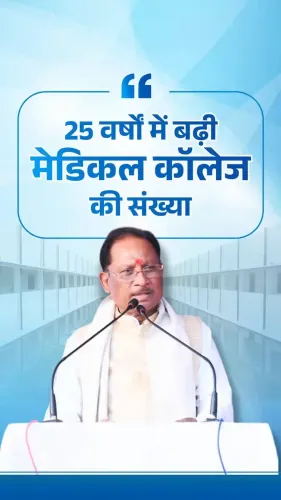
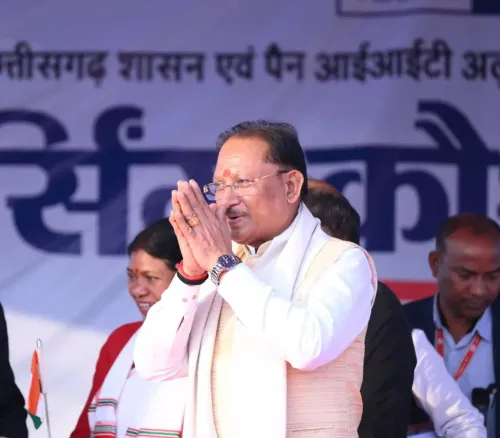
Chief Minister Vishnu Dev Sai inaugurated the Prachet Nursing Skill College at ITI Ara, Jashpur on November 15, 2026, highlighting that Chhattisgarh has grown from one medical college at its 2000 founding to more than 15 today, as the state marks 25 years of health infrastructure expansion.
Key Takeaways
Prachet Nursing Skill College was inaugurated at ITI Ara, Jashpur on 15 November 2026 .
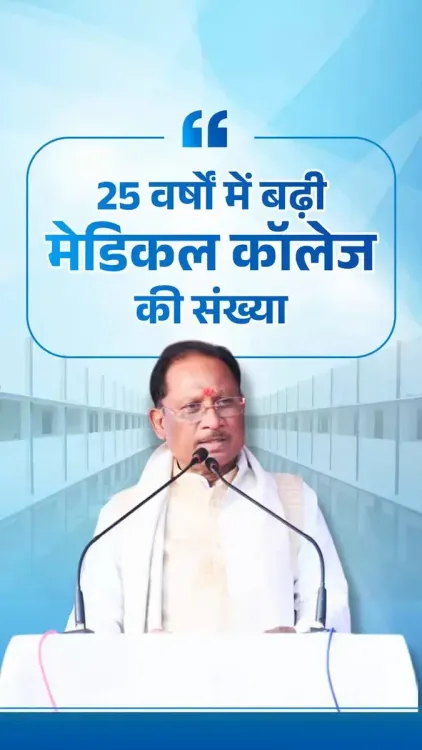
At Chhattisgarh's formation in 2000 , the state had only one medical college ; that figure now exceeds 15 .
CM Vishnu Dev Sai cited the milestone as evidence of 25 years of health-infrastructure growth.
The new college targets nursing and healthcare skill development in Jashpur , a tribal-majority district in northern Chhattisgarh.
The institution is housed within an existing ITI (Industrial Training Institute) campus, leveraging established vocational infrastructure.
From a single medical college at the time of statehood to more than 15 medical colleges today — Chhattisgarh is using its silver-jubilee milestone to benchmark how far it has come, and to push further. Chief Minister Vishnu Dev Sai made that case in sharp terms on Sunday, 15 November 2026, inaugurating the Prachet Nursing Skill College at ITI Ara, Jashpur, and laying out the state's healthcare ambitions in a single, arresting statistic.
One college in 2000, fifteen-plus in 2026
Speaking at the inauguration, CM Sai framed the expansion in human terms: 'Health is Wealth' — if Chhattisgarh is to be healthy and prosperous, every resident must be healthy. When the state was carved out of Madhya Pradesh on 1 November 2000, it inherited a threadbare health infrastructure — a single medical college for a population dispersed across forests, plateaus, and tribal belts. Twenty-five years on, that number has crossed 15 medical colleges, a multiplication that tracks closely with the broader national push to seed medical education in historically underserved regions.
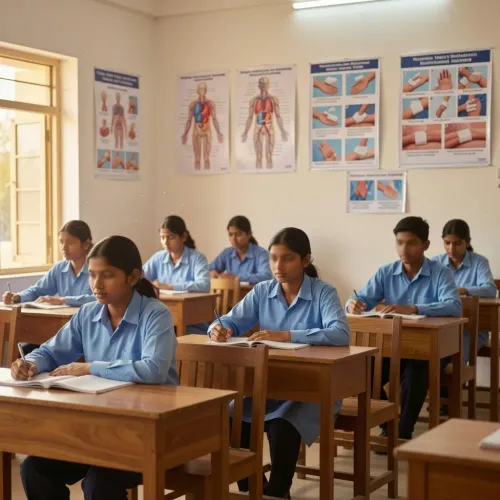
The new Prachet Nursing Skill College in Jashpur — a district in northern Chhattisgarh with a predominantly tribal demographic — is designed precisely for the last mile of that expansion: training nurses and skilling healthcare workers where they are most needed. Skill-based nursing education addresses a gap that doctor-count metrics often miss; a district can have a referral hospital yet lack trained nursing staff to run it effectively.
Why Jashpur, and why nursing skills
Jashpur sits at the edge of Chhattisgarh's tribal heartland, bordering Jharkhand. Its geography has historically made specialist healthcare hard to access. Opening a nursing skill college at ITI Ara — an existing industrial training campus — signals a strategy of layering health-workforce development onto established vocational infrastructure rather than building from scratch. It is a cost-efficient model, and one that can be replicated across similarly positioned districts.
India's broader national health architecture has increasingly stressed that doctor supply alone cannot bridge the rural health gap — trained paramedics, nurses, and community health workers are the connective tissue. Chhattisgarh's move aligns with that logic, extending it into one of the state's more geographically isolated corners.
A 25-year arc, still in motion
CM Sai, who took charge in December 2023 after the BJP's return to power in the state, has consistently positioned healthcare infrastructure as a governance deliverable rather than just a welfare promise. The silver-jubilee framing — measuring progress from 2000 to 2025 — gives the government a clear narrative baseline. One medical college to fifteen-plus is a verifiable, concrete marker that is difficult to argue with politically.
The next pressure points will be staffing and accreditation: expanding the number of institutions matters less if faculty shortages or regulatory delays slow their operationalisation. How the state budget and health department address those bottlenecks will determine whether the expansion in brick-and-mortar translates into an equal expansion in trained healthcare workers on the ground.
In a state where geography has long been destiny for health outcomes, Jashpur's new nursing college is a small but pointed answer to a very old problem.
Point of View
Geographically remote district is also deliberate: it signals a 'last-mile' focus that addresses historical criticism of development bypassing Chhattisgarh's interior. The real test, however, lies downstream — whether nursing colleges translate into deployed workers, or become institutions on paper.
NationPress
15 Nov 2026
Frequently Asked Questions
What is the Prachet Nursing Skill College in Jashpur?
Prachet Nursing Skill College is a newly inaugurated nursing and healthcare skill-development institution located at ITI Ara in Jashpur district, Chhattisgarh, opened by Chief Minister Vishnu Dev Sai on 15 November 2026.
How many medical colleges does Chhattisgarh have in 2026?
According to CM Vishnu Dev Sai, Chhattisgarh now has more than 15 medical colleges, up from just one when the state was formed in 2000.
When was Chhattisgarh formed as a state?
Chhattisgarh was formed on 1 November 2000, carved out of Madhya Pradesh, and in 2025 completed 25 years as a state.
Who is the Chief Minister of Chhattisgarh?
Vishnu Dev Sai is the Chief Minister of Chhattisgarh, in office since December 2023, representing the BJP.
Why is a nursing college being opened in Jashpur?
Jashpur is a predominantly tribal district in northern Chhattisgarh where specialist healthcare access has historically been limited; the new nursing skill college aims to train local healthcare workers and address the shortage of nursing staff in the region.