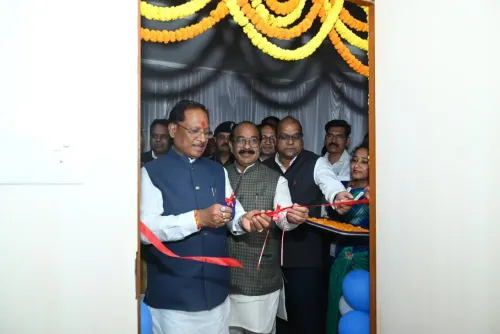
CM Sai Launches AI & Cyber Training Centre for Govt Staff in Bilaspur
Synopsis
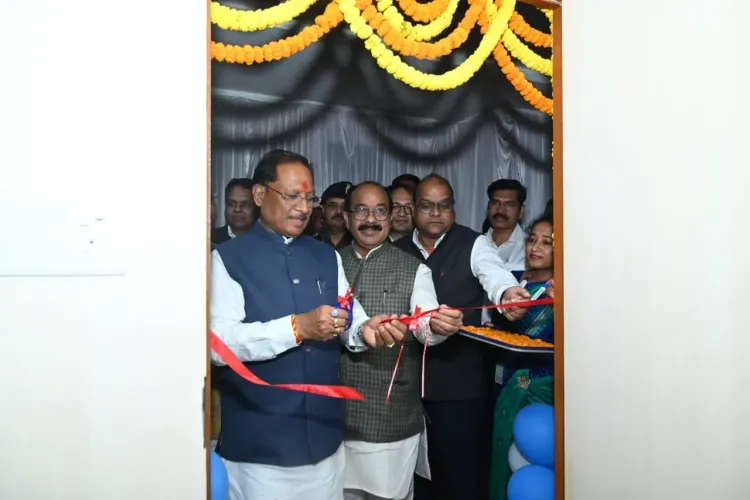
Chief Minister Vishnu Deo Sai inaugurated a modern computer training centre in Bilaspur on 16 November 2026, funded by SBI under CSR, to train state government employees in AI, computer operations, and cyber security — aiming to sharpen service delivery across Chhattisgarh.
Key Takeaways
Chief Minister Vishnu Deo Sai inaugurated the centre during his Bilaspur visit on 16 November 2026 .
The facility was funded by State Bank of India's Bilaspur regional office under its CSR programme — no state budget expenditure.
Training covers computer operations, Artificial Intelligence (AI), and cyber security for state government employees.
CM Sai described modern technology as essential to realising the concept of good governance (sushasan) .
The initiative aligns with India's Digital India programme (launched 2015) to embed digital skills at every administrative tier.
Replication of similar centres across other Chhattisgarh districts is a key development to watch.
A district office in Bilaspur quietly became a frontline of Chhattisgarh's governance ambitions on Monday, 16 November 2026 — when Chief Minister Vishnu Deo Sai inaugurated a modern computer training centre built specifically for state government employees. The Chief Minister's Office of Chhattisgarh announced the launch, framing it as a direct investment in faster, smarter public service delivery.
SBI's CSR money, Chhattisgarh's civil servants
The centre was not built from the state budget. State Bank of India's Bilaspur regional office funded it entirely through its Corporate Social Responsibility (CSR) programme — a model that several Indian states have quietly adopted to modernise administration without straining public finances. The arrangement puts a proven national institution's resources directly in service of local governance reform.
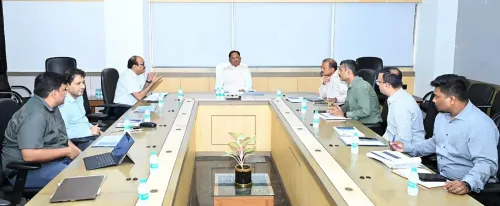
Employees at the facility will receive hands-on training in computer operations, Artificial Intelligence (AI), and cyber security. That combination is deliberate: AI expands what a civil servant can do; cyber security training ensures they do it without exposing citizen data or government systems to digital threats.
CM Sai's argument: technology as the engine of good governance
Speaking at the inauguration, CM Sai made the case plainly. 'Sushasan ki avdharna ko sakar karne mein aadhunik takneek ki mahatvpurn bhumika hai' — 'Modern technology plays a crucial role in realising the vision of good governance,' he said. He added that responsible use of tools like computers and AI can make administrative work 'simpler, easier, and more effective.'
The word 'responsible' is doing real work in that statement. National guidelines on government technology adoption have consistently stressed that AI tools in public administration must be deployed with accountability guardrails — a concern the cyber security component of this curriculum directly addresses.
Where Bilaspur fits in India's digital governance push
India's Digital India programme, launched in 2015, set the original ambition: e-governance infrastructure and digital skills woven into every tier of administration. More than a decade later, the gap between policy intent and ground-level capability in district offices remains a persistent challenge. A training centre in a district headquarters — not a state capital, not a metro — is a small but pointed attempt to close that gap where citizens actually queue for services.
The Bilaspur centre fits a broader pattern visible across Indian states: targeted AI and digital upskilling for civil servants, often bankrolled through bank or corporate CSR funds, designed to lift service delivery quality without large new budget lines. Whether Chhattisgarh replicates the model across its other districts will be the real test of ambition.
Point of View
Side-stepping the budget constraints that have historically slowed such initiatives. Embedding cyber security training alongside AI reflects a maturing awareness — after years of data-breach incidents in state portals — that digital capability without security literacy is a liability, not an asset. If the model scales to other districts, it could meaningfully shift citizen experience at the counter level, which is exactly where Digital India's promises have been hardest to feel. The political upside for the government is real: visibly improving front-line service delivery is among the most durable forms of electoral goodwill.
NationPress
16 Nov 2026
Frequently Asked Questions
What was inaugurated by CM Vishnu Deo Sai in Bilaspur on 16 November 2026?
CM Vishnu Deo Sai inaugurated a modern computer training centre for state government employees at the district office in Bilaspur, funded by the State Bank of India under its CSR programme.
Who funded the computer training centre in Bilaspur, Chhattisgarh?
The State Bank of India's Bilaspur regional office funded the centre entirely through its Corporate Social Responsibility (CSR) programme, with no state budget allocation.
What will government employees learn at the new Bilaspur training centre?
Employees will receive hands-on training in computer operations, Artificial Intelligence (AI), and cyber security.
How does this initiative connect to Digital India?
India's Digital India programme, launched in 2015, aims to build e-governance infrastructure and digital skills across all administrative levels. The Bilaspur centre directly advances that goal at the district level.
Will similar AI training centres open in other Chhattisgarh districts?
The government has not made a formal announcement yet, but the rollout of similar centres in other districts is flagged as a key development to watch, given the CSR-funded model is replicable.