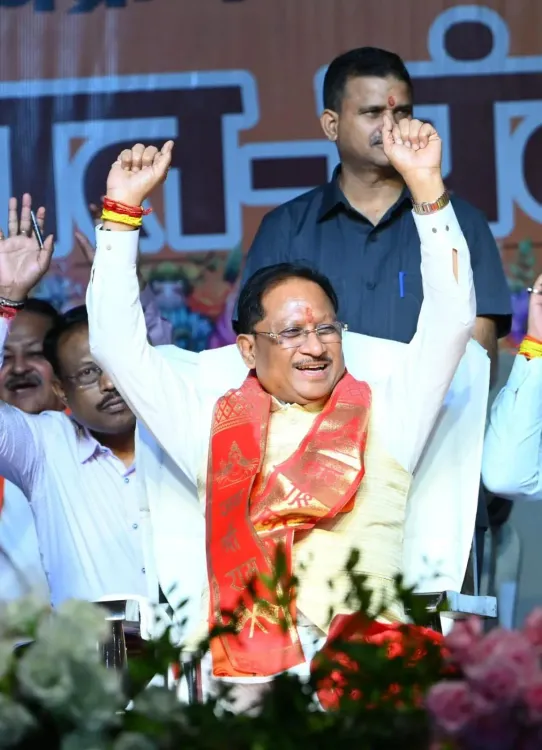
CM Vishnu Deo Sai joins Dussehra celebrations at Raipur's WRS Maidan
Synopsis
Chhattisgarh Chief Minister Vishnu Deo Sai attended the Shriram Vijayadashami Utsav at Raipur's WRS Maidan on 20 October 2026, invoking a Ramcharitmanas couplet to link the festival's ideals of dharma and truth to his vision for a prosperous Chhattisgarh.
Key Takeaways
Vishnu Deo Sai , Chief Minister of Chhattisgarh, attended the Shriram Vijayadashami Utsav at Raipur's WRS Maidan on 20 October 2026 .
He opened his post with a couplet from the Ramcharitmanas by Tulsidas, emphasising the Lord's intervention whenever righteousness declines.
Sai described Vijayadashami as a festival of the victory of dharma over adharma, truth over falsehood, and justice over injustice.
He held up Lord Ram as the supreme ideal of sacrifice, dignity, patience, courage, and duty for citizens of Chhattisgarh.
The Chief Minister called on residents to internalise those values in their conduct to help build a 'strong and prosperous Chhattisgarh '.
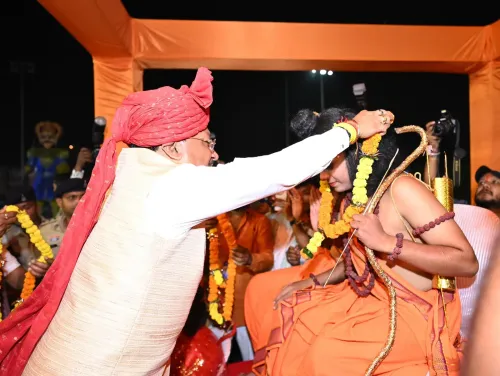
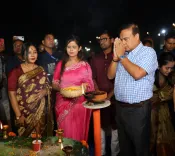
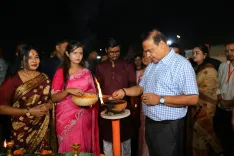
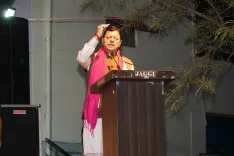
On the evening of Vijayadashami 2026, Chhattisgarh Chief Minister Vishnu Deo Sai stepped onto the grounds of Raipur's historic WRS Maidan to be part of the Shriram Vijayadashami Utsav — invoking a centuries-old verse from the Ramcharitmanas to frame the festival's meaning for the state he governs.
Posting on X on Tuesday, 20 October 2026, the Chief Minister opened with the Tulsidas couplet: 'Jab-jab hoi dharam ke haani, baarhahi asur adham abhimaani. Tab-tab Prabhu dhari vividh shareera, harahi kripaanidhi sajjan peera' — 'Whenever righteousness declines and the arrogant and ignoble flourish, the Lord takes form and, in his mercy, relieves the suffering of the virtuous.' The verse, drawn from the Ramcharitmanas, set the philosophical register for the evening.
What the festival commemorates — and what Sai said
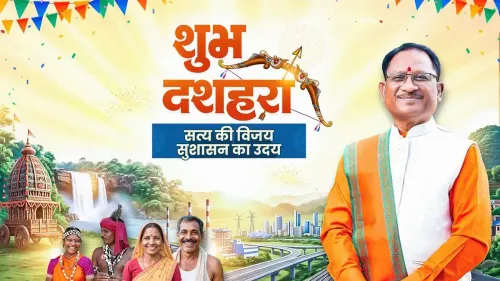
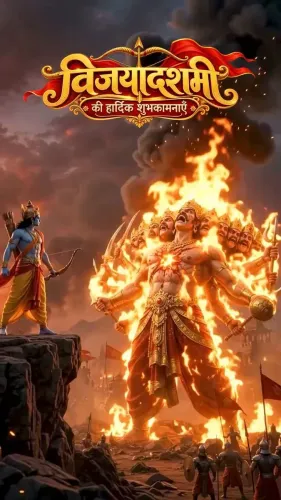
Vijayadashami, celebrated on the tenth day of the Shukla Paksha of Ashwin, marks Lord Rama's victory over Ravana — the triumph of dharma over adharma, truth over falsehood, justice over injustice. CM Sai described the occasion as a reminder that 'however arduous the path of truth may be, victory always belongs to truth and righteousness.'
He held up Lord Ram — Maryada Purushottam, the supreme exemplar of virtue — as a model of sacrifice, dignity, patience, courage, and duty. His message to residents of Chhattisgarh: absorb those values into daily conduct and channel them toward building a 'strong and prosperous Chhattisgarh' (sashakt aur samriddh Chhattisgarh).
WRS Maidan and the tradition behind the event
Raipur's WRS Maidan is one of the city's established open grounds for large public gatherings, and the Shriram Vijayadashami Utsav held there carries the weight of a civic tradition. Dussehra celebrations in state capitals across India typically feature Ravana effigy burnings, Ram Lila performances, and public addresses by elected officials — a format that fuses religious observance with civic messaging.
Chief Ministers attending and speaking at such events is standard practice in Indian political culture, with leaders from across party lines using the occasion to draw parallels between mythological themes and contemporary governance goals. For Sai, the link was explicit: Ramayana values as the foundation for Chhattisgarh's development.
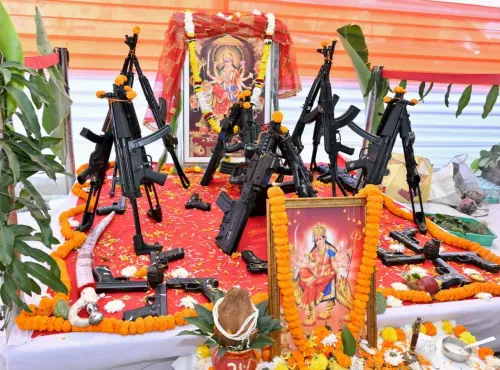
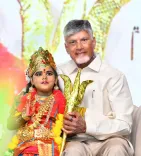
The post concluded with greetings to all residents of the state — 'Pradeshvasiyon ko Vijayadashami ki hardik badhai evam shubhkamnayen. Jai Shriram!' — and was accompanied by four images from the event.
As the smoke from Raipur's Ravana effigies cleared on Tuesday night, the Chief Minister's message carried a simple, durable point: the oldest story in the culture still has instructions for the present. Chhattisgarh, he said, is meant to be built in that spirit.
Point of View
Invoking Tulsidas at a public festival reinforces both religious identity and the party's 'Ram rajya' developmental vocabulary. The move is unlikely to generate political controversy, but it signals how festival occasions continue to serve as soft-power platforms for state leaders. The explicit link between mythological virtue and the 'sashakt Chhattisgarh' agenda is the kind of message-architecture that doubles as brand-building for an incumbent government.
NationPress
20 Oct 2026
Frequently Asked Questions
Where did CM Vishnu Deo Sai celebrate Dussehra 2026?
Chief Minister Vishnu Deo Sai attended the Shriram Vijayadashami Utsav at Raipur's historic WRS Maidan on 20 October 2026.
What is WRS Maidan in Raipur?
WRS Maidan is a prominent open ground in Raipur, the capital of Chhattisgarh, commonly used for large public and civic gatherings including festival events.
What verse did CM Sai quote on Dussehra?
CM Sai quoted a couplet from the Ramcharitmanas — 'Jab-jab hoi dharam ke haani...' — which describes how the Lord takes form to protect the virtuous whenever righteousness declines.
What is the significance of Vijayadashami?
Vijayadashami, also called Dussehra, is an annual Hindu festival that marks Lord Rama's victory over Ravana, symbolising the triumph of dharma over adharma, truth over falsehood, and justice over injustice.
What message did Vishnu Deo Sai give to Chhattisgarh residents on Dussehra?
CM Sai urged Chhattisgarh residents to absorb the values of Lord Ram — sacrifice, dignity, patience, courage, and duty — into their daily conduct and contribute to building a strong and prosperous Chhattisgarh.