CM Sai receives thanks as Chhattisgarh renames Kunra to Kunwargarh
Synopsis
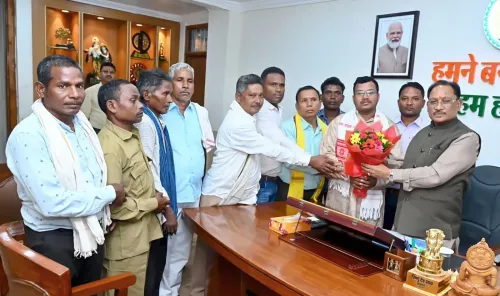
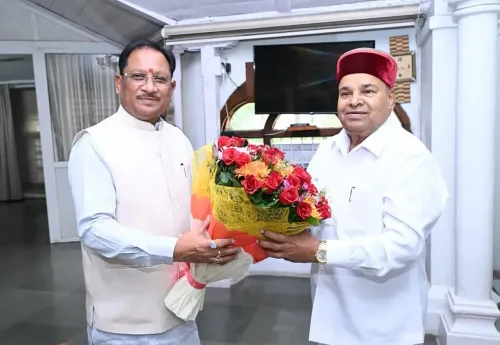
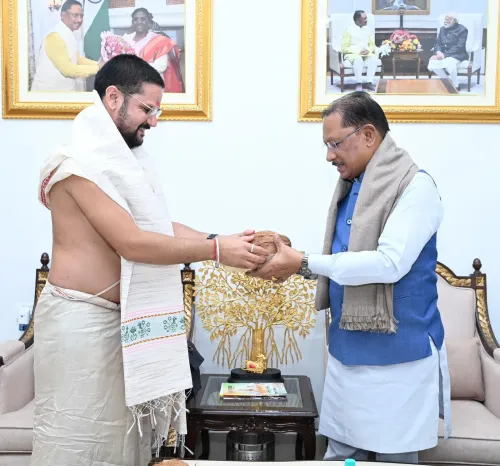
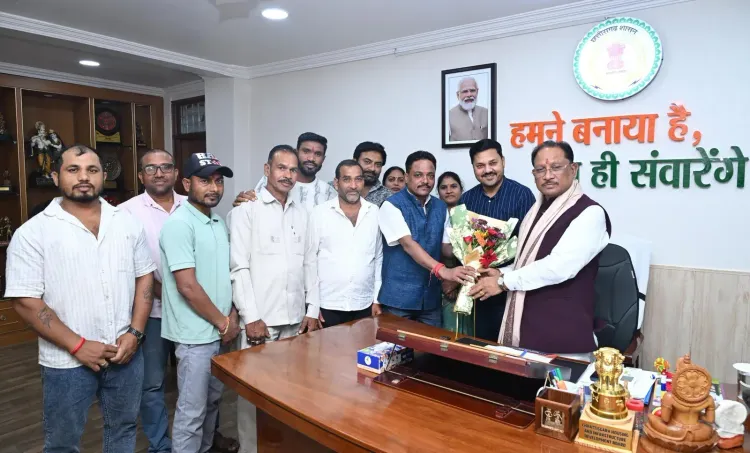
Chhattisgarh CM Vishnu Deo Sai met a delegation from Nagar Panchayat Kunwargarh at his Raipur residence after the state cabinet approved renaming Nagar Panchayat Kunra to Kunwargarh, citing cultural heritage and public sentiment.
Key Takeaways
The Chhattisgarh Cabinet approved renaming Nagar Panchayat Kunra to Kunwargarh , reflecting local cultural heritage.
CM Vishnu Deo Sai received a delegation from Kunwargarh at his Raipur residence on October 29, 2026 .
The delegation was led by Dharsiwa MLA Anuj Sharma , who championed the name-change effort.
The government framed the decision as part of its commitment to preserving ancestral cultural identity while driving development.
The next step is official gazette notification and updates to revenue records, signage, and public services.
A delegation from Nagar Panchayat Kunwargarh walked into the Chief Minister's residence in Raipur on Thursday, October 29, 2026, carrying not a petition but a thank-you — and that distinction matters. Chhattisgarh Chief Minister Vishnu Deo Sai received the group, led by Dharsiwa MLA Anuj Sharma, after the state cabinet formally approved renaming Nagar Panchayat Kunra to Kunwargarh, a decision locals called a long-awaited act of cultural restoration.
CM Sai shared the moment on X, writing: 'Sushasan sarkar purkhon ki virasat aur janbhavnaon ka samman karte hue, sanskritik pahchan ko sanrakshit karne aur vikas ko nayi gati dene ke liye pratibaddh hai' — 'The good-governance government is committed to preserving cultural identity and giving new momentum to development while respecting the legacy of ancestors and public sentiment.'
Why Kunra became Kunwargarh
Renaming a nagar panchayat is not just an administrative act — it is a statement about whose memory a place carries. The name Kunwargarh reflects a locally rooted identity that residents and elected representatives had sought to formally restore, aligning the settlement's official designation with its cultural and historical resonance. The Chhattisgarh Cabinet's approval of the change gave that sentiment the weight of state policy.
MLA Anuj Sharma, who represents the Dharsiwa constituency and led the delegation, has been a visible face of the push to bring the issue to the government's table. His presence at the courtesy call underscored the ground-level political momentum behind what might look, on paper, like a routine nomenclature update.
Renaming as governance — the broader pattern
Chhattisgarh is not alone in this. Across Indian states, renaming towns, railway stations, and panchayats to reflect pre-colonial or locally significant names has become a recurring act of cultural governance — part heritage, part politics, entirely symbolic in impact. What follows a cabinet nod, though, is the harder work: official gazette notification, updates to revenue records, new signage, and alignment across public services. That administrative chain is now the one to watch for Kunwargarh.
For CM Sai's government, the episode fits a broader sushasan (good governance) narrative — one that pairs infrastructure and development pledges with visible gestures toward cultural pride. The delegation's courtesy call served as a public affirmation that such gestures are landing with constituents.
A name changed on paper still needs to live on every signboard, every document, every map — that is the work that turns a cabinet decision into a community's reality.
Point of View
High in symbolic return. For CM Sai, the public thank-you visit from local representatives reinforces his administration's 'sushasan' brand at the grassroots level. The move also rewards MLA Anuj Sharma's constituency-level advocacy, tightening the party's local organisational loop. Whether the gesture translates into durable goodwill depends on how swiftly the administrative machinery — gazette, records, signage — catches up to the cabinet decision.
NationPress
30 Oct 2026
Frequently Asked Questions
Why was Nagar Panchayat Kunra renamed to Kunwargarh?
The Chhattisgarh Cabinet approved the renaming to reflect the area's local cultural heritage and honour public sentiment that the name Kunwargarh better represents the community's ancestral identity.
Who is Anuj Sharma and what role did he play in the Kunwargarh renaming?
Anuj Sharma is the MLA representing the Dharsiwa constituency in Chhattisgarh. He led the delegation from Nagar Panchayat Kunwargarh that called on CM Vishnu Deo Sai to express gratitude for the cabinet's name-change decision.
What happens after the Chhattisgarh Cabinet approves a name change?
Following cabinet approval, an official gazette notification must be issued, and the new name must be updated across revenue records, public signage, and all government services.
Where is Nagar Panchayat Kunwargarh located?
Kunwargarh is a Nagar Panchayat in Chhattisgarh, India.
Is renaming of towns common in Indian states?
Yes. Renaming towns, railway stations, and panchayats to reflect historical or cultural significance has been a recurring practice across Indian states, often driven by public sentiment and local political representation.