CM Sai Reviews Chhattisgarh's 1076 Helpline Accountability
Synopsis
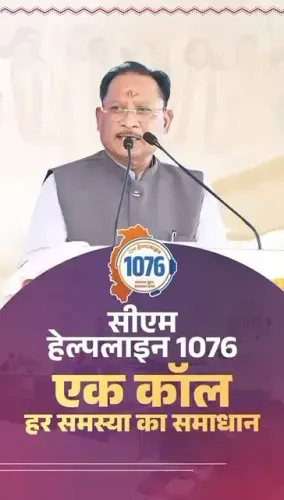
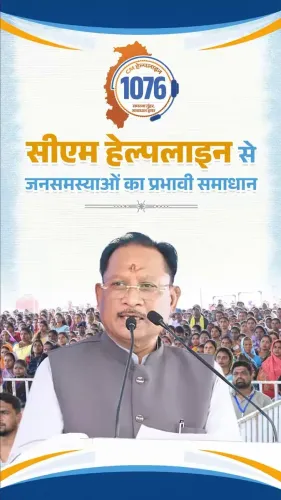
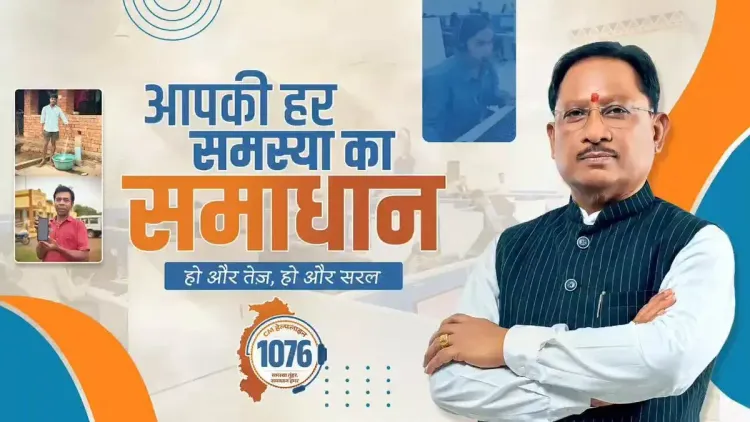
Chief Minister Vishnu Deo Sai reviewed CM Helpline 1076 at the Mantralaya on October 17, 2026, reaffirming his government's commitment to complaint resolution with fixed accountability so no citizen has to wander the bureaucracy for a hearing.
Key Takeaways
CM Vishnu Deo Sai chaired a review meeting on CM Helpline 1076 at the Mantralaya on October 17, 2026 .
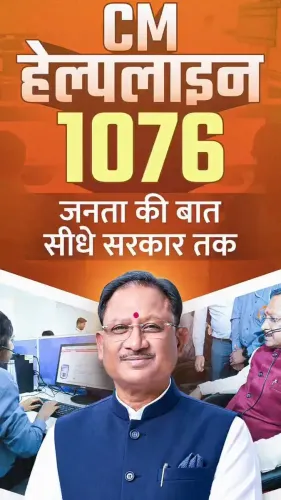
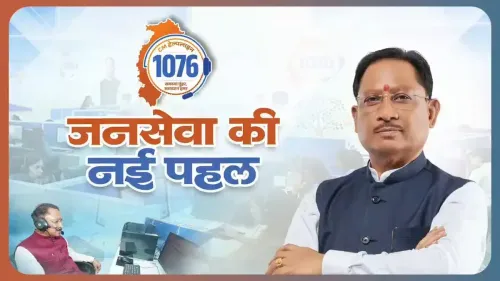
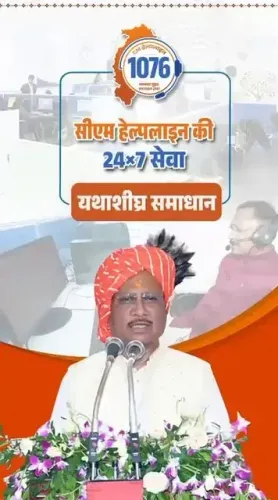
CM Helpline 1076 is Chhattisgarh's direct citizen grievance redressal channel, removing the need for intermediaries.
Sai's stated goal: ensure complaints are heard, resolved, and backed by fixed accountability at every level.
He described the mission in his post as a 'Bhaagirathi uddeshy' — a hundred-per-cent target, not a partial one.
The review aligns with a wider BJP-led state pattern of direct-access e-governance mechanisms active since the early 2010s.
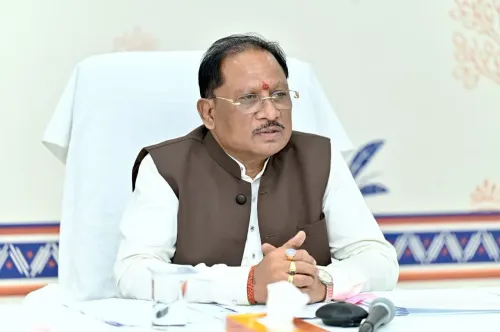
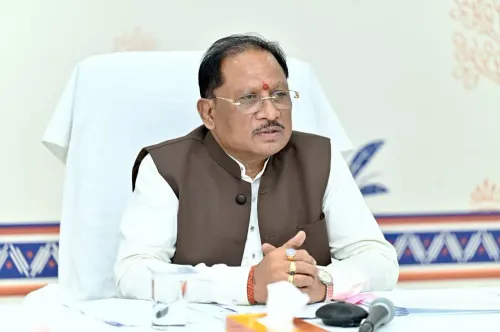
A citizen should never have to wander from office to office just to be heard. That is the principle driving Chhattisgarh Chief Minister Vishnu Deo Sai's push to strengthen CM Helpline 1076 — the state's direct-access grievance channel — and on Saturday, October 17, 2026, he chaired a dedicated review meeting at the Mantralaya (state secretariat) to make sure the promise is kept.
Posting on X after the meeting, CM Sai said the helpline's purpose is to ensure that 'aam nagrik ko apni baat shaasan tak pahunchane ke liye bhatakna na pade' — that an ordinary citizen does not have to wander to get their voice to the government — and that complaints are not merely registered but resolved, with clear accountability fixed at every level. He described the goal as a 'Bhaagirathi uddeshy' — a mission as purposeful and determined as the legendary sage Bhagirath's quest — one that must be fulfilled one hundred per cent.
What CM Helpline 1076 is designed to do
CM Helpline 1076 is Chhattisgarh's state-level citizen grievance redressal system, built to let residents dial in complaints directly to the administration without needing an intermediary — no local fixer, no middleman, no queue at a district office. The idea is to flatten the bureaucratic distance between a complaint and its resolution, and to attach a name and a deadline to every pending case.
The concept of dedicated chief-minister helplines has roots in the e-governance reforms that spread across Indian states from the early 2010s onward. Since 2014, BJP-led state governments have placed particular emphasis on such direct-access mechanisms as a way of projecting responsive administration, with similar numbers operational in several large states.
Accountability at the Mantralaya table
Saturday's review meeting was explicitly about measuring whether the helpline's lofty intent is translating into on-the-ground outcomes. CM Sai has framed the session not as a routine check but as a course-correction exercise — a signal that the state leadership is watching resolution rates, not just registration numbers.
The emphasis on 'jawabdehi' (accountability) in his post is pointed: it is a public commitment that departments cannot simply log a complaint and move on. Resolution, and the officer responsible for it, must both be on record.
Point of View
Not just registration. This fits a broader BJP governance playbook that treats direct citizen-to-government channels as both an administrative tool and an electoral asset — proof of a responsive state delivered without middlemen. The emphasis on accountability at the officer level, rather than at the helpline itself, suggests the government is trying to close the gap between a complaint being logged and it actually being resolved. Watch for any public release of resolution statistics, which would either validate or test that claim.
NationPress
17 Oct 2026
Frequently Asked Questions
What is CM Helpline 1076 in Chhattisgarh?
CM Helpline 1076 is Chhattisgarh's state-level citizen grievance redressal number that lets residents submit complaints directly to the administration without needing an intermediary or visiting a government office.
Why did CM Vishnu Deo Sai review the 1076 helpline on October 17?
Chief Minister Vishnu Deo Sai chaired the review meeting at the Mantralaya to assess whether complaint resolution is actually happening with accountability, not just whether complaints are being registered.
What does 'Bhaagirathi uddeshy' mean in CM Sai's post?
'Bhaagirathi uddeshy' refers to a goal pursued with the determined, unwavering resolve of the legendary sage Bhagirath — CM Sai used it to describe a hundred-per-cent commitment to resolving citizen grievances.
How do CM helplines in Indian states work?
State CM helplines allow citizens to log complaints by phone, which are then forwarded to the relevant department with a tracking number; the accountable officer is expected to resolve and close the complaint within a set timeframe.
Is CM Helpline 1076 specific to Chhattisgarh?
Yes, 1076 is Chhattisgarh's dedicated number, though several other Indian states run similar dedicated CM helpline numbers under their own e-governance frameworks.