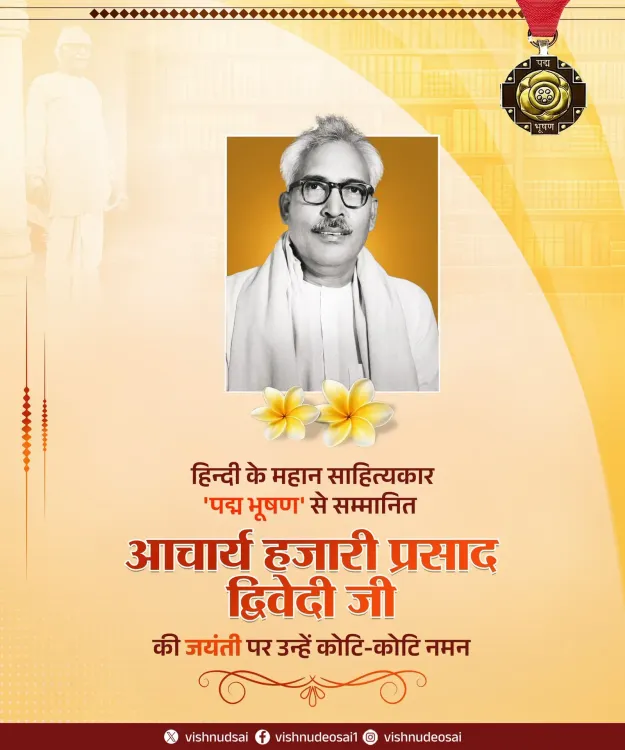
CM Sai pays tribute to Acharya Hazari Prasad Dwivedi on birth anniversary
Synopsis
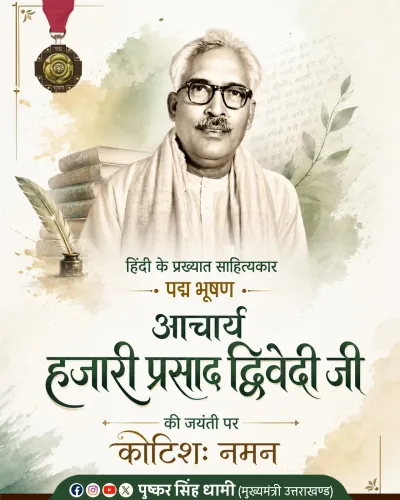
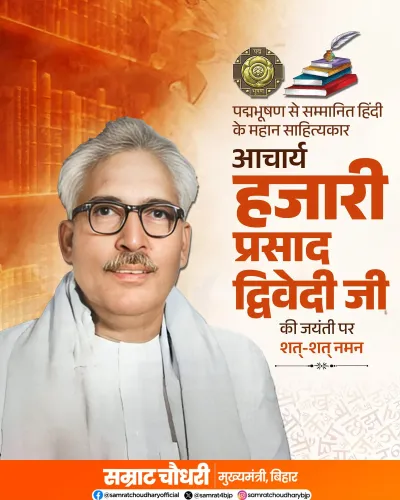
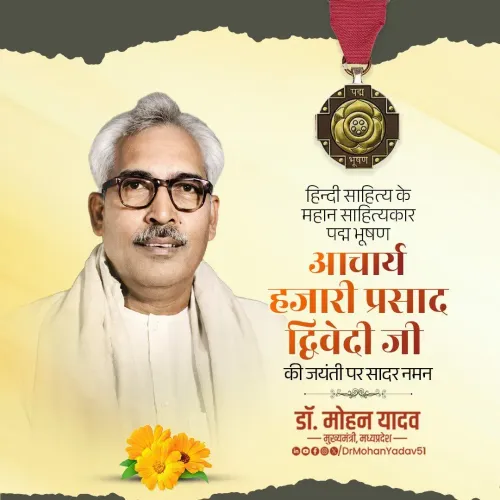
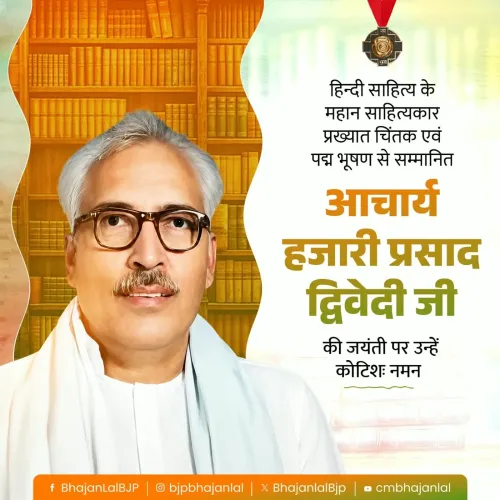
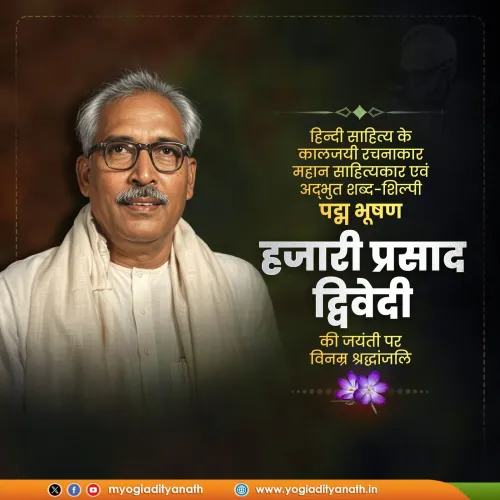
Chhattisgarh Chief Minister Vishnu Deo Sai paid tribute to Padma Bhushan-awarded Hindi scholar Acharya Hazari Prasad Dwivedi on his birth anniversary, praising his timeless contributions to Indian literature, culture, and history.
Key Takeaways
CM Vishnu Deo Sai posted a tribute to Acharya Hazari Prasad Dwivedi on his birth anniversary on 19 August .
Dwivedi (1907–1979) was awarded the Padma Bhushan for his contributions to Hindi literature and Indian cultural history.
CM Sai credited Dwivedi with giving Hindi literature 'a new vision and richness' through his scholarship and writings.
Dwivedi is celebrated for landmark novels and critical works on the Bhakti movement and medieval Indian literature.
His writings remain part of university curricula across India and are regarded as foundational to modern Hindi literary criticism.
On the birth anniversary of one of Hindi literature's most towering intellects, Chhattisgarh Chief Minister Vishnu Deo Sai offered his respects to Acharya Hazari Prasad Dwivedi, the Padma Bhushan-decorated scholar whose writings reshaped how India understands its own literary and cultural heritage.
In his tribute posted on 19 August, CM Sai wrote that Acharya Dwivedi — a 'marmajña' (deep connoisseur) of Indian culture, history, and literature — gave Hindi literature 'a new vision and richness' through his scholarship and timeless works. He added that Dwivedi's 'sharp pen and thought continue to inspire connection with knowledge, creation, and culture even today.'
A scholar who bridged medieval India and the modern reader
Acharya Hazari Prasad Dwivedi (1907–1979) was among the foremost Hindi prose stylists and literary historians of the twentieth century. Born in the Ballia district of what is now Uttar Pradesh, he spent formative years at Kashi (Varanasi), where immersion in Sanskrit, Apabhramsha, and Bhakti literature gave his scholarship its distinctive depth. His novels — most famously Bânabhatta ki Âtmakathâ and Anamdas kâ Potha — are celebrated for weaving rigorous historical research into vivid narrative fiction, a genre he virtually invented in Hindi.
His critical essays and cultural histories, including landmark studies of the Bhakti movement, remain standard references in university curricula across India. The Government of India recognised his contributions with the Padma Bhushan, one of the country's highest civilian honours.
Political tributes and the public memory of literature
Indian political leaders regularly mark the birth and death anniversaries of canonical literary figures on social media — a practice that keeps these names in public circulation and signals cultural priorities. For Chhattisgarh, a state with a rich oral and folk-literary tradition of its own, a tribute to a Hindi literary giant carries both national resonance and regional pride in the broader Hindi-belt heritage.
Acharya Dwivedi's insistence that Indian literature cannot be understood without its philosophical and devotional roots — the Bhakti saints, the Nath tradition, the Sanskrit commentarial lineage — remains as relevant as ever in debates about the shape of the national literary canon.
Decades after his passing, his prose still sets the standard for what rigorous, humane literary criticism in Hindi can look like. That standard, CM Sai's tribute suggests, is worth honouring aloud.
Point of View
Invoking a Padma Bhushan Hindi scholar aligns neatly with the broader emphasis on reclaiming and celebrating India's classical and medieval heritage. Acharya Dwivedi's deep engagement with Bhakti literature and Sanskrit traditions also makes him a figure whose legacy cuts across ideological lines, lending the tribute a wider appeal. The gesture is routine in form but deliberate in the cultural signal it sends.
NationPress
3 Oct 2026
Frequently Asked Questions
Who was Acharya Hazari Prasad Dwivedi?
Acharya Hazari Prasad Dwivedi (1907–1979) was a pre-eminent Hindi writer, literary historian, and cultural scholar, best known for his novels and critical studies of the Bhakti movement. He was awarded the Padma Bhushan by the Government of India.
Why is Hazari Prasad Dwivedi important to Hindi literature?
Dwivedi is credited with giving Hindi literature a new scholarly and creative direction through his historical novels, essays, and studies of medieval Indian culture and the Bhakti tradition. His works remain part of university curricula across India.
What did CM Vishnu Deo Sai say about Hazari Prasad Dwivedi?
CM Sai said that Dwivedi gave Hindi literature 'a new vision and richness' through his scholarship and timeless works, and that his sharp pen and thought continue to inspire connection with knowledge, creation, and culture today.
When is Hazari Prasad Dwivedi's birth anniversary?
Acharya Hazari Prasad Dwivedi was born on 19 August 1907, and his birth anniversary is observed on 19 August each year.
What is the Padma Bhushan award?
The Padma Bhushan is the third-highest civilian honour in India, awarded by the Government of India for distinguished service of a high order to the nation in any field.