CM Saini Hails Lok Sabha Nod to Exam Cheating Amendment Bill

Synopsis
The Lok Sabha passed the Public Examinations (Prevention of Unfair Means) Amendment Bill, 2026, tightening India's legal framework against paper leaks and organised exam fraud. Haryana CM Nayab Singh Saini praised PM Modi's leadership, calling it a historic step to protect the merit and hard work of millions of young aspirants.
Key Takeaways
The Public Examinations (Prevention of Unfair Means) Amendment Bill, 2026 was passed in the Lok Sabha on 29 July 2026 .
Haryana Chief Minister Nayab Singh Saini welcomed the passage, crediting Prime Minister Narendra Modi's leadership.
The bill targets paper leaks, exam mafia, and organised cheating in public competitive examinations.
It amends the original Public Examinations (Prevention of Unfair Means) Act, 2024 , adding stricter provisions against organised criminal networks.
The bill must still clear the Rajya Sabha before becoming law; implementation rules are yet to be issued.
The legislation directly impacts crores of students appearing in government recruitment and higher education entrance exams across India.
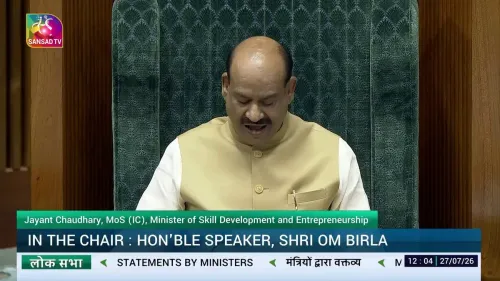
Millions of young Indians preparing for competitive exams — spending years, sacrificing sleep, betting their futures on a single answer sheet — have watched that bet get stolen by paper leaks and organised cheating rings. On Wednesday, 29 July 2026, Haryana Chief Minister Nayab Singh Saini welcomed the passage of the Public Examinations (Prevention of Unfair Means) Amendment Bill, 2026 in the Lok Sabha, calling it an unbreakable commitment by the central government to protect the dreams of crores of youth.
Posting in Hindi on X, CM Saini wrote that the bill, brought under the visionary leadership of Prime Minister Narendra Modi, 'will play an important role in imposing strict and effective curbs on crimes like paper leaks, exam mafia, and organised cheating.' He extended his heartfelt congratulations and gratitude to the Prime Minister and the central government for what he called 'this historic step taken to honour the hard work of youth and secure their bright future.'
A 2024 Law That Needed Sharper Teeth
The amendment does not emerge in a vacuum. Parliament enacted the Public Examinations (Prevention of Unfair Means) Act in 2024 — the original legislative response to a wave of high-profile paper leak scandals that had shaken public trust in recruitment exams for government jobs and higher education. That law penalised unfair practices and leaks, but repeated incidents of mafia involvement in competitive examinations signalled that the framework needed reinforcing. The 2026 amendment extends those provisions with stricter measures, targeting the organised networks — not just individual cheaters — that have turned examination fraud into a criminal enterprise.What the Bill Targets: Mafia, Not Just Malpractice
The legislation's framing is deliberate. By naming 'exam mafia' and 'organised cheating' alongside paper leaks, the bill signals a shift from treating exam fraud as an administrative failure to treating it as a criminal conspiracy. For aspiring students and young job seekers across India — the primary stakeholders in every UPSC, SSC, state PSC, and entrance exam cycle — this distinction matters enormously. A student caught copying faces consequences; a syndicate that prints and sells question papers before exam day has, until now, operated in a softer legal grey zone. The amendment aims to close that gap.Next Stop: Rajya Sabha and the Rule Book
Passage in the Lok Sabha is the first legislative gate. The bill must now clear the Rajya Sabha before it can receive Presidential assent and become law. After that, the real test begins in implementation — the Ministry of Personnel or Ministry of Education will need to issue detailed rules governing enforcement, investigation procedures, and penalties. How swiftly those rules are drafted and enforced will determine whether this law changes outcomes on the ground or joins the shelf of well-intentioned legislation that outpaced its own execution. For every student who has ever walked into an exam hall wondering whether the question paper was already circulating on Telegram, this bill is a direct answer. The question now is whether the answer holds.Point of View
Signalling that the 2024 Act was seen as insufficient against entrenched exam mafias. For CM Saini, endorsing the bill publicly is also a politically resonant move in Haryana, a state with a large population of government-job aspirants for whom paper leaks are a lived grievance. The real policy test will come in the Rajya Sabha and, more critically, in enforcement — past anti-cheating laws have often foundered at the implementation stage. If the rules are robust and prosecutions follow, this could mark a genuine shift in how India protects merit; if not, it risks becoming another law that reassures on paper but changes little on the ground.
NationPress
29 Jul 2026
Frequently Asked Questions
What is the Public Examinations Amendment Bill 2026?
The Public Examinations (Prevention of Unfair Means) Amendment Bill, 2026 is a legislation passed by the Lok Sabha that strengthens India's legal framework against paper leaks, exam mafia, and organised cheating in public competitive examinations. It builds on the original 2024 Act with stricter provisions.
What was wrong with the 2024 Public Examinations Act?
The Public Examinations (Prevention of Unfair Means) Act, 2024 penalised unfair practices and leaks but was considered insufficient against organised criminal networks running exam fraud syndicates. The 2026 amendment aims to address those gaps with tougher measures.
Has the exam cheating bill become law yet?
No. As of 29 July 2026, the bill has passed the Lok Sabha but must still be approved by the Rajya Sabha and receive Presidential assent before it becomes law. Implementation rules also need to be issued by the relevant ministry.
Why did Haryana CM Nayab Singh Saini comment on this bill?
CM Saini praised the bill as a historic step to protect the hard work and future of India's youth. Haryana has a large number of competitive exam aspirants, making exam integrity a significant political and social issue in the state.
What crimes does the 2026 exam amendment bill target?
The bill specifically targets paper leaks, the 'exam mafia' — organised criminal networks that trade in stolen question papers — and systematic or organised cheating in public examinations used for government recruitment and higher education admissions.