CM Saini Congratulates Navi Pillay on 2026 Nobel Peace Prize
Synopsis
Haryana Chief Minister Nayab Singh Saini congratulated Navanethem 'Navi' Pillay on winning the 2026 Nobel Peace Prize, calling it a historic moment for Indian-origin personalities and praising her decades of work in peace, justice, and international law.
Key Takeaways
Navanethem 'Navi' Pillay has been selected for the 2026 Nobel Peace Prize for her contributions to peace, justice, and international law.
Pillay is of Indian Tamil origin , born in Durban, South Africa, and is a former UN High Commissioner for Human Rights ( 2008–2014 ).
Haryana CM Nayab Singh Saini posted congratulations on 9 October 2026 , calling it 'one of the most memorable moments in history' for India-connected personalities.
Saini praised Pillay's achievement as 'an important step toward promoting peace and harmony in the world.' The Nobel Peace Prize is announced annually on the second Friday of October in Oslo .
A daughter of Indian heritage has claimed the world's most prestigious honour — and Haryana Chief Minister Nayab Singh Saini was among the first Indian leaders to mark the moment. On Friday, 9 October 2026, CM Saini extended warm congratulations to Navanethem 'Navi' Pillay on her selection for the 2026 Nobel Peace Prize, calling it one of the most memorable moments in history for those connected to India's great land.
What Saini Said — And Why He Said It
Posting in Hindi on X, CM Saini described seeing personalities of Indian origin honoured with the Nobel Prize as 'itihas ka sabse yadgar pal' — 'the most memorable moment in history.' He specifically cited Pillay's contributions to peace, justice, and international law as deserving of this global recognition, adding that her achievement 'strengthens the values of humanity and is an important step toward promoting peace and harmony in the world.'
Who Is Navi Pillay?
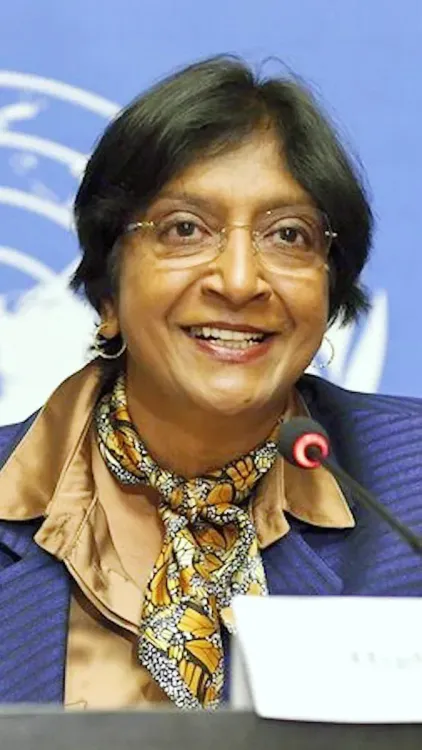
Navanethem 'Navi' Pillay is a jurist of Indian Tamil origin, born in Durban, South Africa. She rose to international prominence through decades of work in human rights law — serving as a judge and later President of the International Criminal Tribunal for Rwanda, then as a judge on the International Criminal Court, and most prominently as the United Nations High Commissioner for Human Rights from 2008 to 2014. Her career has been defined by unflinching advocacy for accountability, the rule of international law, and the protection of civilians in conflict zones. The Nobel Committee's choice of Pillay underscores the prize's continued focus on individuals who reshape global norms rather than merely broker political agreements.
The Indian-Origin Thread in Global Honours
For Indian leaders and the Indian diaspora, Pillay's Nobel is a moment of reflected pride. While she is a South African national and has built her career through international institutions, her Tamil Indian heritage connects her to a broader story of the Indian diaspora shaping global governance. CM Saini's congratulatory post taps into that pride — framing Pillay's recognition not just as an individual triumph but as an affirmation of values the subcontinent has long claimed as its own: ahimsa, dialogue, and the pursuit of justice.
The Nobel Peace Prize, announced every year on the second Friday of October in Oslo, carries both a gold medal and a prize sum — and, more than either, the weight of the international community's attention. Pillay's selection sends a signal about what the Nobel Committee regards as indispensable work in 2026: the patient, structural defence of human rights law in an era of mounting geopolitical strain.
For a prize that has at times courted controversy over its choices, honouring a career prosecutor and human rights commissioner is a statement of institutional faith in the architecture of international accountability. That work, quiet and procedural as it often appears, now wears the Nobel's gold.
Point of View
The moment is largely celebratory, though Pillay's record of scrutinising state conduct in conflict zones is one that cuts across political alignments.
NationPress
9 Oct 2026
Frequently Asked Questions
Who is Navi Pillay and why did she win the Nobel Peace Prize 2026?
Navanethem 'Navi' Pillay is a jurist of Indian Tamil origin from South Africa who won the 2026 Nobel Peace Prize for her lifelong contributions to peace, justice, and international law — including serving as UN High Commissioner for Human Rights from 2008 to 2014.
What did Haryana CM Nayab Singh Saini say about Navi Pillay?
CM Saini congratulated Pillay on 9 October 2026, calling her Nobel recognition 'one of the most memorable moments in history' and praising her work in strengthening humanity's values and promoting global peace and harmony.
Is Navi Pillay of Indian origin?
Yes. Navi Pillay is of Indian Tamil origin, born in Durban, South Africa — making her part of the broader Indian diaspora that has shaped international institutions.
When is the Nobel Peace Prize announced every year?
The Nobel Peace Prize is announced on the second Friday of October each year, with the award ceremony held in Oslo, Norway.
What was Navi Pillay's role at the United Nations?
Navi Pillay served as the United Nations High Commissioner for Human Rights from 2008 to 2014, and previously as a judge and President of the International Criminal Tribunal for Rwanda, as well as a judge on the International Criminal Court.