CM Saini Says Haryana Jobs Now Merit-Based, No Bribes
Synopsis
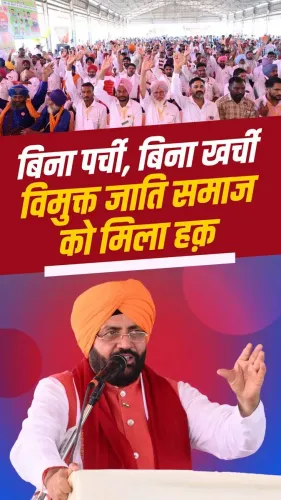
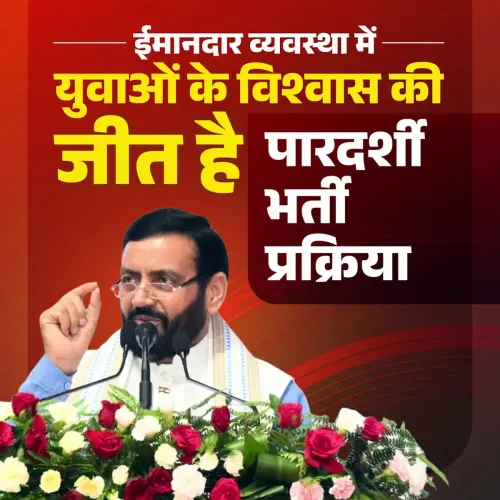
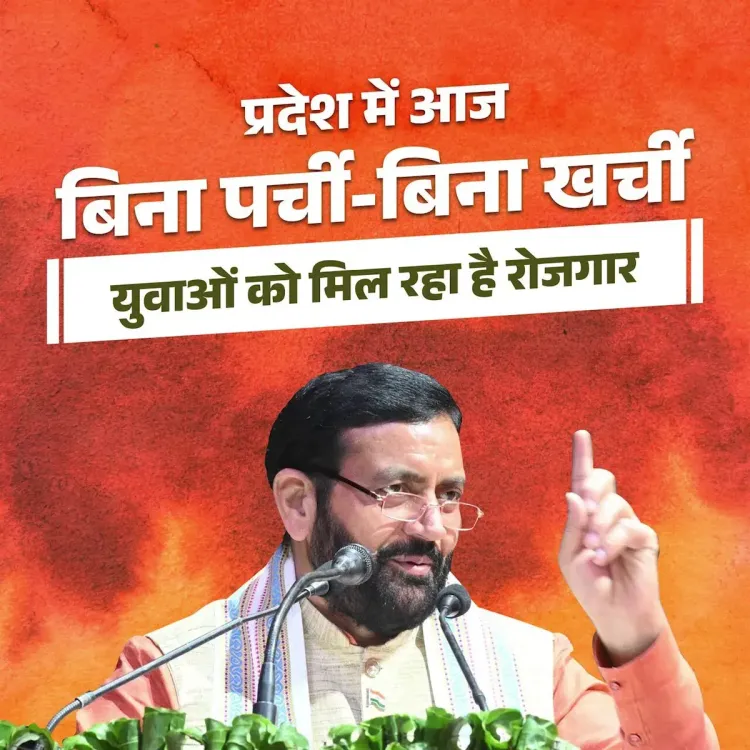
Haryana Chief Minister Nayab Singh Saini declared on June 9, 2026 that citizens' trust in the state's recruitment process has deepened, reiterating his government's 'bina parchi, bina kharchi' pledge — that public jobs are being awarded on merit, free of middlemen and payments.
Key Takeaways
CM Nayab Singh Saini posted on June 9, 2026 that Haryana residents' trust in clean government recruitment has grown stronger.
The phrase bina parchi, bina kharchi ('without a chit, without spending') is the BJP-led state government's signature anti-corruption hiring pledge.
The Haryana Staff Selection Commission (HSSC) had faced multiple paper-leak scandals in prior years, making recruitment credibility a sensitive political issue.
BJP first committed to eliminating recruitment middlemen in Haryana in its 2014 manifesto; the current government frames this as an ongoing, measurable reform.
Similar transparent-hiring narratives have been deployed by BJP administrations in Uttar Pradesh and Madhya Pradesh , reflecting a national party-level pattern.
Future HSSC notifications and any judicial oversight of pending leak cases will serve as independent benchmarks for the administration's claims.
Haryana Chief Minister Nayab Singh Saini on Tuesday, June 9, 2026, declared that public trust in the state's recruitment process has deepened, asserting that government jobs in Haryana are now being awarded without middlemen and without payment — a direct reference to the state's ongoing push for transparent, merit-based hiring.
Posting on X in Hindi, CM Saini wrote: 'हरियाणा के लोगों का ये विश्वास प्रढ़ हुआ कि प्रदेश में बिना पर्ची, बिना खर्ची के नौकरियां मिल रही हैं' — ('The people of Haryana have developed a deeper trust that jobs in the state are being given without a chit, without spending a penny'). The post was accompanied by a video, the contents of which could not be independently verified.
Context
Nayab Singh Saini became Chief Minister of Haryana in March 2024, succeeding Manohar Lal Khattar with a stated mandate to deepen administrative reforms. The phrase 'bina parchi, bina kharchi' — literally 'without a slip, without spending' — has become a signature slogan of the BJP-led state government, signalling zero tolerance for recommendation-based or paid appointments in public sector roles.
The slogan directly addresses a long-standing grievance among Haryana's educated youth: that access to government employment had historically required either a recommendation letter ('parchi') from an influential person or an outright payment ('kharchi') to a middleman.
Policy Backdrop
The Haryana Staff Selection Commission (HSSC), the state body responsible for recruiting candidates to Group C and D posts, faced multiple paper leak investigations in prior years that severely eroded public confidence. Those scandals prompted calls for structural reforms in how examinations are conducted, monitored, and audited.
When BJP first came to power in Haryana in 2014, its manifesto included explicit commitments to eliminate middlemen from the recruitment pipeline. The 'bina parchi, bina kharchi' framing has since evolved into a recurring governance benchmark against which successive BJP administrations in the state measure and communicate progress.
Similar anti-corruption messaging around public-sector hiring has featured prominently in BJP-governed states including Uttar Pradesh and Madhya Pradesh, reflecting a broader party-level strategy to appeal to aspirational, educated youth who view a government job as a pathway to economic stability.
Stakeholders and Impact
Haryana has a large population of young job aspirants competing for a limited number of state government posts. Any credible improvement in recruitment transparency directly affects this demographic, which has historically been politically mobilised around employment grievances.
For the ruling BJP, demonstrating clean hiring practices carries electoral significance: youth unemployment and recruitment fraud were prominent issues in recent state assembly cycles. A visible shift in public perception — as CM Saini claims — would represent a meaningful governance dividend ahead of future electoral contests.
What's Next
Observers will watch for fresh recruitment notifications from the HSSC and any related assembly floor discussions or judicial monitoring of pending paper-leak cases to gauge whether institutional reforms match the political messaging. Court oversight of ongoing cases remains a key external check on the administration's claims of a cleaner process.
If the trend of transparent recruitment is sustained and verifiably documented, it could set a replicable model for other states grappling with similar credibility deficits in their public employment machinery.
Point of View
Bina kharchi' frame, he is simultaneously claiming a policy win and reinforcing a brand identity that BJP has cultivated in Haryana since 2014. The timing matters — periodic restatements of clean-recruitment messaging serve to counter residual public scepticism left by the HSSC paper-leak era and to pre-empt opposition lines ahead of any upcoming electoral cycle. Across BJP-governed states, this pattern of youth-focused, anti-corruption employment messaging has proven electorally durable, suggesting it is as much a political strategy as a governance report card. Whether the claim holds up will depend on verifiable recruitment data and the outcome of pending legal proceedings around past irregularities.
NationPress
23 Sept 2026
Frequently Asked Questions
What does 'bina parchi bina kharchi' mean in Haryana?
'Bina parchi, bina kharchi' is a Hindi phrase meaning 'without a recommendation slip, without paying money.' It is the Haryana BJP government's slogan for merit-based, corruption-free public sector recruitment, pledging that no middleman or bribe is needed to secure a government job.
What did CM Nayab Singh Saini say about Haryana jobs on June 9, 2026?
CM Nayab Singh Saini said that the people of Haryana have developed deeper trust that government jobs in the state are now being given without any recommendation or payment, reaffirming his administration's commitment to transparent hiring.
What is the Haryana Staff Selection Commission (HSSC)?
The Haryana Staff Selection Commission is the state government body responsible for recruiting candidates to Group C and D government posts in Haryana. It faced credibility challenges in prior years due to multiple examination paper-leak investigations.
Has Haryana's recruitment process actually improved under BJP?
The Haryana BJP government has consistently claimed improvements in recruitment transparency since 2014, citing the 'bina parchi, bina kharchi' framework. Independent verification depends on ongoing HSSC recruitment cycles and the resolution of pending paper-leak cases under judicial oversight.
Why is transparent government recruitment important for Haryana's youth?
Haryana has a large population of educated young people competing for limited government posts. Recruitment fraud and middlemen had historically disadvantaged merit candidates; a credibly clean process directly affects their economic prospects and shapes their political choices.