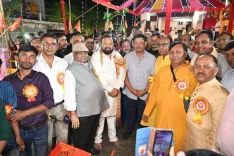
CM Saini joins Yamunanagar Chhath, flags Rs 4.48 cr Karnal ghat
Synopsis
Haryana CM Nayab Singh Saini attended the state-level Chhath Puja in Yamunanagar on November 15, prayed for residents' well-being, and announced a ₹4.48 crore bathing ghat in Karnal plus ghats in Panchkula, Panipat, and Sonipat for the Purvanchal community.
Key Takeaways
CM Nayab Singh Saini attended the state-level Chhath Puja ceremony in Yamunanagar on November 15, 2026 .
He prayed to Chhathi Maiya and the Sun God for the happiness, peace, and prosperity of all Haryana residents.
The Haryana government built a snan ghat in Karnal at a cost of ₹4.48 crore for Chhath observance.
Additional Chhath ghats have been constructed in Panchkula, Panipat, and Sonipat .
Saini credited migrants from Bihar, Jharkhand, and eastern Uttar Pradesh with significant contributions to Haryana's progress.
The state-level event format signals official recognition of the Purvanchal community's cultural traditions.
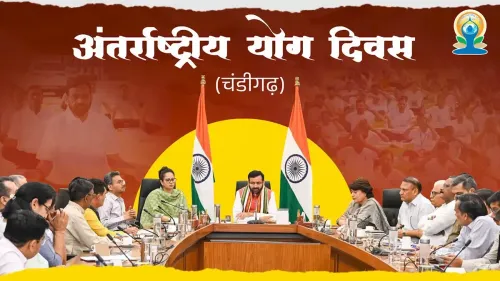
Faith, culture, and infrastructure converged in Yamunanagar on Sunday, November 15, 2026, as Haryana Chief Minister Nayab Singh Saini attended the state-level Chhath Puja ceremony and announced that his government had built a dedicated bathing ghat in Karnal at a cost of ₹4.48 crore — a concrete signal to the state's large Purvanchal migrant community that their traditions have official backing.
Prayers for every Haryanvi at the Yamunanagar ghat
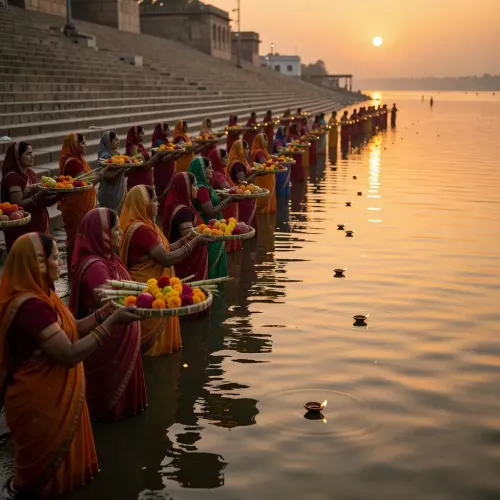
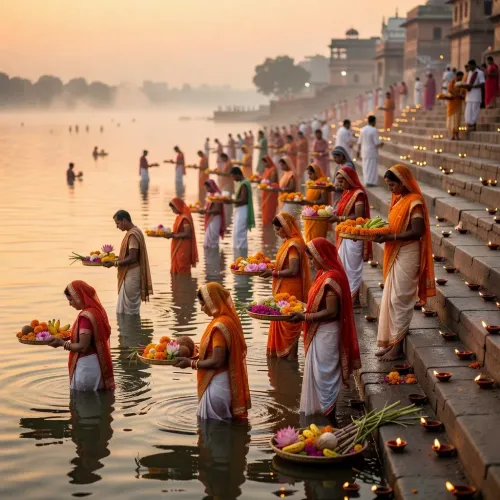
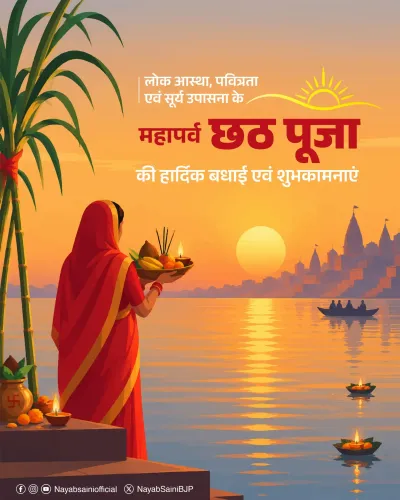
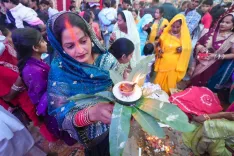
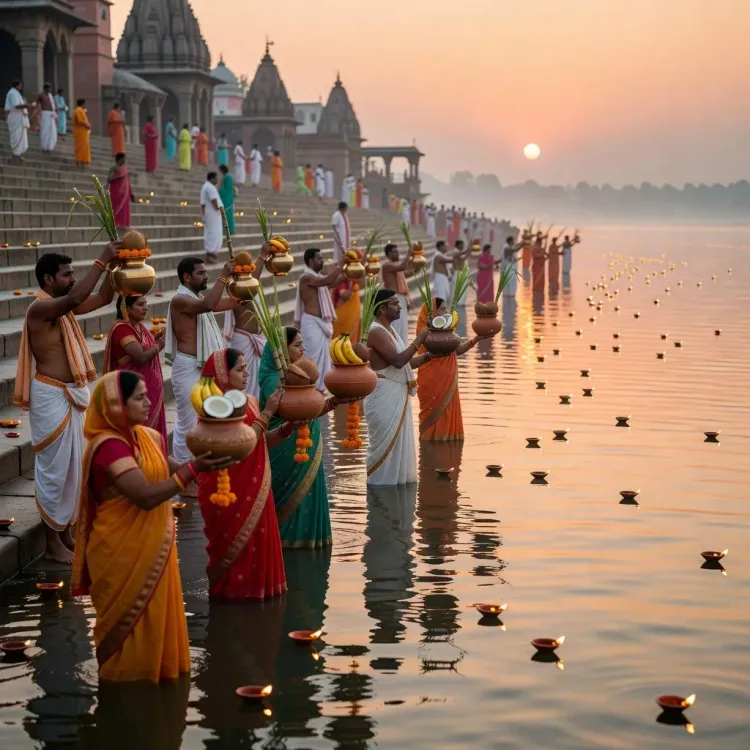
Standing at the state-level celebration, CM Saini offered prayers to Chhathi Maiya and the Sun God, seeking 'happiness, peace, prosperity and well-being' for all residents of Haryana. The gathering drew devotees who observe one of the most demanding Hindu fasts in the calendar — a 36-hour waterless vrat that bookends sunset and sunrise arghya (offerings to the sun) over four days. Saini described the festival as 'prakriti, aastha aur sanskriti ka adbhut sangam' — 'a wondrous confluence of nature, faith and culture' — that connects people to their roots.
Who Haryana's Purvanchal community is — and what they built
Haryana's industrial belt, agricultural fields, and construction sector run significantly on the labour of migrants from Bihar, Jharkhand, and eastern Uttar Pradesh — collectively referred to as the Purvanchal community. Saini acknowledged this directly, noting that these men and women have made 'an important contribution to the state's progress through their hard work and dedication.' That acknowledgment is not merely ceremonial: successive Haryana governments have periodically upgraded river ghats and community infrastructure to ease the observance of Chhath, which requires clean, accessible waterfronts at specific astronomical moments.
Four new ghats and the ₹4.48 crore Karnal project
The headline infrastructure announcement is the new snan ghat (bathing ghat) in Karnal, built at a declared cost of ₹4.48 crore. Beyond Karnal, the CM stated that ghats for Chhath Puja observance have also been constructed in Panchkula, Panipat, and Sonipat — four districts that together cover a wide arc of Haryana's industrial and urban geography. The spread of these sites tracks closely with where the Purvanchal workforce is most concentrated, from the NCR-adjacent towns of Sonipat and Panipat to the foothills city of Panchkula.
The state-level event format — hosting Chhath as an official government ceremony rather than leaving it to community self-organisation — is itself a marker of how much political weight the festival now carries in a state where Purvanchal voters are a meaningful constituency. As diyas glow along freshly built ghats this week, the government's message is clear: Haryana's growth story belongs to everyone who built it.
Point of View
The Saini government is making a calculated cultural outreach to Haryana's substantial Purvanchal migrant workforce — a community whose numbers translate into electoral weight in several assembly segments. The move fits a broader BJP pattern of folding eastern Indian cultural markers into governance rather than leaving them to community self-organisation, blurring the line between welfare delivery and identity politics. The four-district spread of ghat construction — Karnal, Panchkula, Panipat, Sonipat — maps neatly onto Haryana's industrial belt, reinforcing the message that the government sees migrant labour as a constituency deserving visible recognition. Whether the infrastructure investments translate into durable political loyalty among first- and second-generation Purvanchal settlers in Haryana will be a question worth watching through the next electoral cycle.
NationPress
15 Nov 2026
Frequently Asked Questions
Where was the Haryana state-level Chhath Puja 2026 held?
The state-level Chhath Puja ceremony in 2026 was held in Yamunanagar , Haryana, where Chief Minister Nayab Singh Saini was the chief guest.
How much did the Karnal Chhath ghat cost?
The Haryana government constructed a bathing ghat in Karnal at a declared cost of ₹4.48 crore for Chhath Puja observance.
Which cities in Haryana have new Chhath ghats?
CM Saini stated that Chhath ghats have been built in Karnal, Panchkula, Panipat, and Sonipat to facilitate festival observance across the state.
Why does Haryana celebrate Chhath Puja?
Haryana hosts a large population of migrants from Bihar, Jharkhand, and eastern Uttar Pradesh who observe Chhath. The state government recognises their cultural traditions and their economic contribution to the state.
What is Chhath Puja and who celebrates it?
Chhath Puja is a major Hindu festival dedicated to the Sun God and Chhathi Maiya , primarily observed by communities from Bihar, Jharkhand, and eastern Uttar Pradesh. It involves a 36-hour waterless fast and offerings to the sun at sunrise and sunset.