CM Nayab Saini launches HTAS 2.0 to drive Haryana Vision-2047
Synopsis
Chief Minister Nayab Saini on 11 July 2026 launched the HTAS 2.0 Track and Trace Module to boost transparency and revenue collection, anchoring the initiative within Haryana's long-term Vision-2047 development roadmap aligned with national Viksit Bharat goals.
Key Takeaways
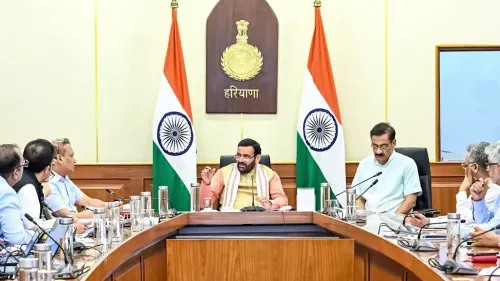
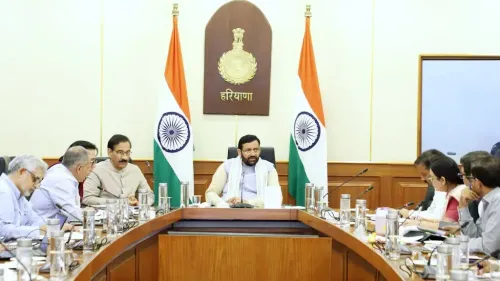
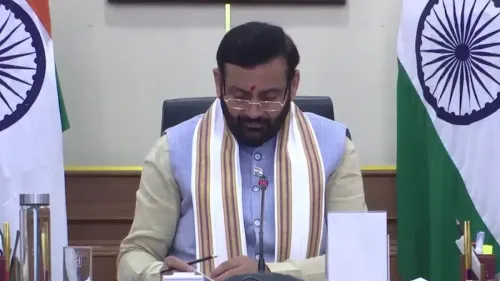
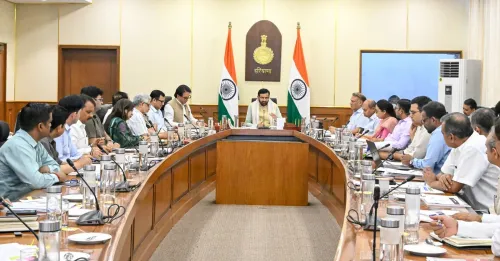
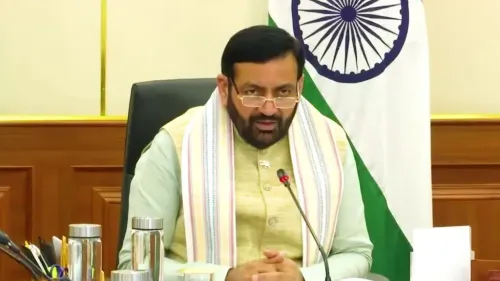
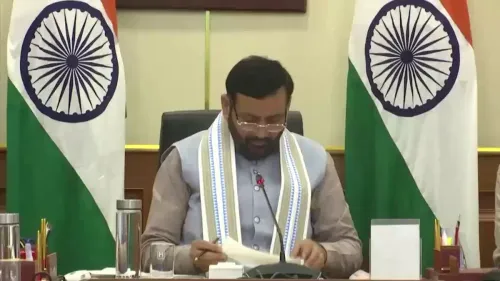
Chief Minister Nayab Saini chaired a high-level meeting on 11 July 2026 to advance Haryana Vision-2047 goals.
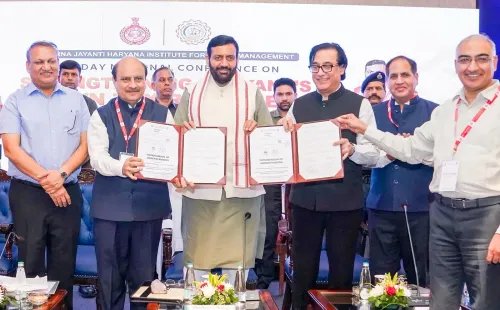
The meeting saw the formal launch of the HTAS 2.0 Track and Trace Module by the Excise and Taxation Department .
The system is designed to enhance transparency, strengthen tax administration, and improve revenue collection efficiency.
Haryana Vision-2047 is the state's development blueprint aligned with India's national Viksit Bharat 2047 framework.
Track-and-trace digital tools have been adopted by multiple Indian states to curb tax evasion following the GST rollout.
Phased implementation updates and Vision-2047 milestone reviews are expected to feature in upcoming state budget sessions.
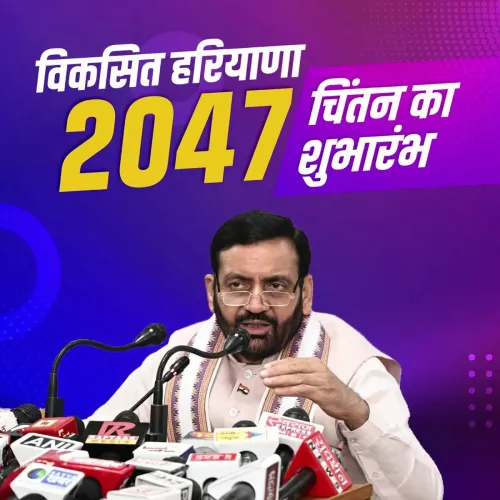
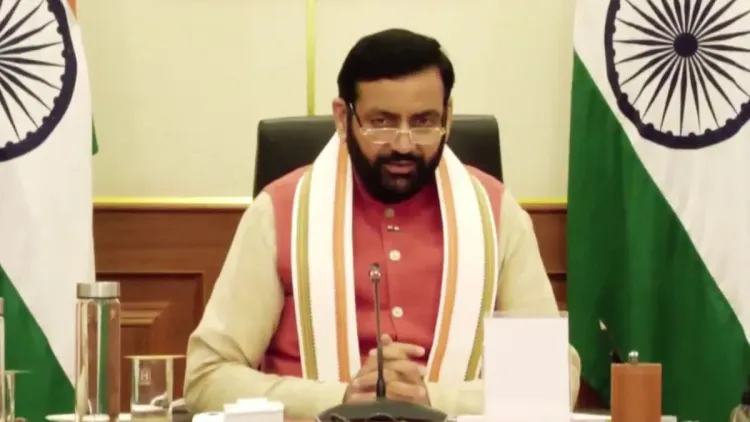
The Chief Minister's Office of Haryana announced on Saturday, 11 July 2026 that Chief Minister Nayab Saini chaired a high-level meeting aimed at translating the goals of Haryana Vision-2047 into time-bound, ground-level outcomes. During the same session, CM Saini formally launched the HTAS 2.0 Track and Trace Module of the state's Excise and Taxation Department.
Context
The official post from the Chief Minister's Office stated that the meeting was convened 'हरियाणा विजन-2047 के लक्ष्यों को समयबद्ध एवं प्रभावी रूप से धरातल पर उतारने के उद्देश्य से' — that is, 'with the objective of implementing the goals of Haryana Vision-2047 in a time-bound and effective manner on the ground.' The launch of HTAS 2.0 was described as a significant step toward increasing transparency, strengthening tax administration, and making revenue collection more effective.
Haryana Vision-2047 is the state's long-term development roadmap, aligned with the national Viksit Bharat 2047 framework that the central government outlined in 2023. Like other Indian states, Haryana has been building a state-level blueprint to meet development benchmarks by the centenary of Indian independence.
Policy Backdrop
The HTAS 2.0 Track and Trace Module is a digital system designed to monitor supply chains within the excise and taxation ecosystem, improve compliance, and curb revenue leakage. It builds on earlier digitisation efforts that followed the nationwide rollout of the Goods and Services Tax (GST) and successive state e-governance programmes.
Several Indian states have adopted similar track-and-trace mechanisms in recent years to reduce evasion and boost collections. Haryana's move situates the state within a broader national pattern of data-driven governance reform, where real-time monitoring of goods movement and tax compliance is increasingly central to fiscal management.
CM Nayab Saini, a BJP leader who assumed office as Chief Minister of Haryana in 2024, has positioned administrative modernisation and revenue efficiency as priorities of his government. The Excise and Taxation Department is responsible for excise policy, VAT and GST administration, and overall revenue collection for the state.
Stakeholders and Impact
The primary stakeholders of the HTAS 2.0 launch are Haryana's taxpayers and the state's revenue officials, who will interact with the new system on a daily basis. For businesses operating in the excise and taxation space, the module introduces a layer of supply-chain visibility that the government says will reduce compliance ambiguity.
For the state exchequer, improved tracking is expected to tighten the gap between assessable and collected revenue — a persistent challenge for state finance departments across India. A more robust revenue base, in turn, has direct implications for the state's capacity to fund the infrastructure and social-sector programmes envisaged under Haryana Vision-2047.
What's Next
The phased implementation of HTAS 2.0 and its integration with existing state tax platforms will be closely watched by revenue administrators and industry bodies. Periodic reviews of Haryana Vision-2047 milestones are expected to feature in forthcoming state budget sessions, where the government will likely present early performance indicators.
The broader test for the initiative will be whether digital monitoring translates into measurable gains in compliance rates and revenue collections — metrics that will determine how central HTAS 2.0 becomes to Haryana's fiscal strategy in the years leading to 2047.
Point of View
Rather than separate from, the state's development ambitions. Track-and-trace systems have a mixed record across Indian states, with gains heavily dependent on last-mile enforcement and inter-departmental data sharing. The real measure of this initiative will emerge in revenue figures and compliance data over the next two to three budget cycles.
NationPress
10 Oct 2026
Frequently Asked Questions
What is HTAS 2.0 in Haryana?
HTAS 2.0 is the Haryana Tax Administration System version 2.0, specifically its Track and Trace Module launched by the Excise and Taxation Department to monitor supply chains, improve tax compliance, and enhance revenue collection in the state.
What is Haryana Vision-2047?
Haryana Vision-2047 is the state government's long-term development roadmap, aligned with India's national Viksit Bharat 2047 framework, aimed at achieving comprehensive development benchmarks by the centenary of Indian independence in 2047.
Who launched the HTAS 2.0 Track and Trace Module?
Chief Minister Nayab Saini launched the HTAS 2.0 Track and Trace Module on 11 July 2026 during a high-level meeting convened to review the implementation of Haryana Vision-2047 goals.
How does the HTAS 2.0 module help taxpayers and businesses in Haryana?
The HTAS 2.0 module introduces digital supply-chain monitoring that is intended to reduce compliance ambiguity for businesses and help revenue officials track goods movement more accurately, thereby curbing tax evasion and improving overall transparency.
Is Haryana the only state using a track-and-trace system for taxation?
No. Several Indian states have adopted similar track-and-trace mechanisms following the nationwide GST rollout as part of broader e-governance and revenue-efficiency drives. Haryana's HTAS 2.0 is part of this wider national pattern.