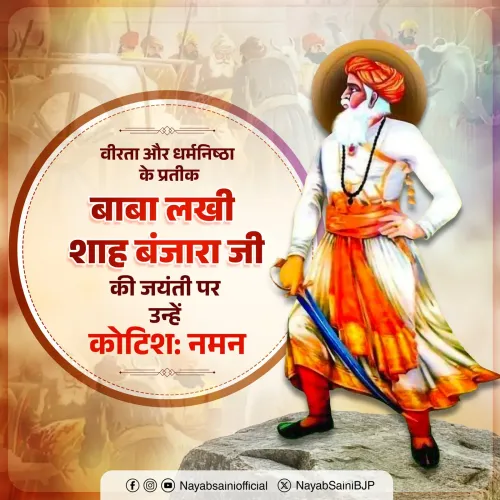
CM Saini pays floral tribute to Baba Lakhi Shah Banjara
Synopsis
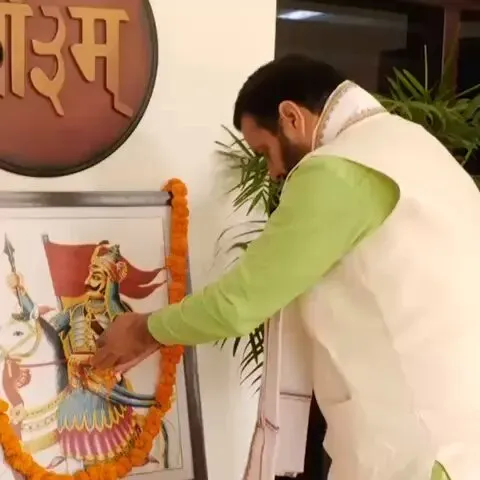
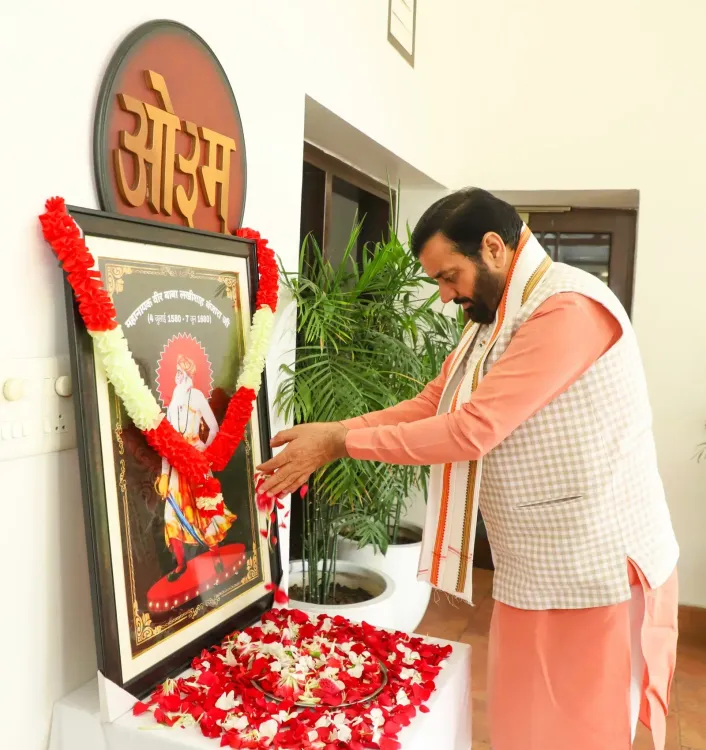
Haryana Chief Minister Nayab Singh Saini paid floral tribute to Baba Lakhi Shah Banjara on his birth anniversary at Sant Kabir Kutir, Chandigarh on 4 July 2026, honouring the 17th-century devotee who risked his life to cremate Guru Tegh Bahadur after the Guru's 1675 execution in Delhi.
Key Takeaways
CM Nayab Singh Saini offered floral tribute to Baba Lakhi Shah Banjara at Sant Kabir Kutir, Chandigarh on 4 July 2026 .
Baba Lakhi Shah Banjara was a 17th-century Banjara trader who cremated the body of Guru Tegh Bahadur in defiance of Mughal orders after the Guru's 1675 execution in Delhi.
CM Saini described Baba Lakhi Shah as a symbol of 'guru-devotion and indomitable courage' whose legacy inspires service to the nation guided by truth, dharma and dedication.
The event reflects Haryana BJP 's consistent pattern of marking anniversaries tied to Sikh and Banjara heritage, underscoring the state's cultural proximity to Punjab.
Both the Sikh community and the Banjara community regard Baba Lakhi Shah as a figure of exceptional moral and historical significance.
Focus will shift to Guru Tegh Bahadur's martyrdom anniversary in November for the next major round of state-level commemorations.
Haryana Chief Minister Nayab Singh Saini paid floral tribute to Baba Lakhi Shah Banjara on his birth anniversary at Sant Kabir Kutir in Chandigarh on Saturday, 4 July 2026, honouring the 17th-century devotee as a symbol of guru-devotion and indomitable courage.
Context
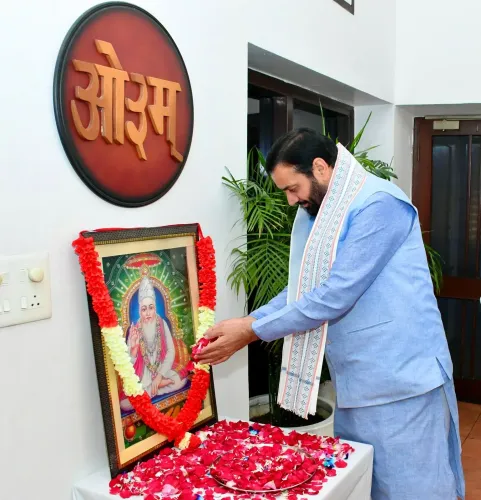
Posting on X, CM Saini wrote: 'गुरुभक्ति और अदम्य साहस के प्रतीक बाबा लखी शाह बंजारा जी की जयंती पर... उन्हें श्रद्धापूर्वक स्मरण किया' — 'On the birth anniversary of Baba Lakhi Shah Banjara, a symbol of guru-devotion and indomitable courage, I reverently remembered him by offering floral tribute to his portrait at Sant Kabir Kutir in Chandigarh.' He added that Indian history would forever bear witness to Baba Lakhi Shah's 'unparalleled valour, sacrifice and dedication', and that his inspiring personality would continue to motivate all to work in the national interest while following the ideals of truth, dharma and service.
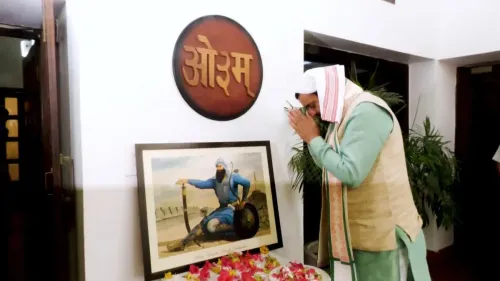
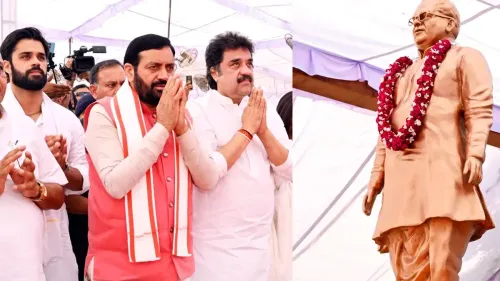
The post was accompanied by two images from the commemoration at Sant Kabir Kutir, a memorial site in Chandigarh associated with devotional and social reform traditions.
Who Was Baba Lakhi Shah Banjara
Baba Lakhi Shah Banjara was a 17th-century Banjara trader and devout follower who is historically remembered for a singular act of courage: he risked his life to cremate the body of Guru Tegh Bahadur, the Ninth Sikh Guru, after the Guru's execution in Delhi in 1675. The Mughal authorities had forbidden public last rites for the martyred Guru, making Baba Lakhi Shah's act an extraordinary assertion of faith and defiance. He subsequently established a site of remembrance to honour the Guru's martyrdom.
Guru Tegh Bahadur's execution remains one of the most significant events in Sikh history, widely remembered as a sacrifice for the defence of religious freedom. Baba Lakhi Shah's role in preserving the Guru's dignity after death has made him a revered figure for both the Sikh community and the Banjara community.
Policy Backdrop
State-level BJP leaders in northern India have maintained a consistent pattern of marking anniversaries linked to Sikh martyrs and devotees, underscoring themes of courage, religious pluralism and national service. Haryana, which shares deep cultural and demographic ties with Punjab, has seen successive state governments participate in public tributes at sites connected to 17th-century Sikh history.
These commemorations form part of a broader administrative effort to project engagement with shared regional heritage, reflecting the significance of both Sikh and Banjara community sentiment in the state's social fabric. CM Saini, who assumed office in 2024, has regularly participated in such cultural and religious events since taking charge.
Stakeholders and Impact
The tribute holds resonance for two distinct communities: the Sikh community, for whom Baba Lakhi Shah's act is inseparable from the memory of Guru Tegh Bahadur's martyrdom, and the Banjara community, which regards him as an ancestor of great moral stature. Public acknowledgement by the Chief Minister at a formal venue lends institutional weight to the commemoration.
Such events also serve as visible affirmations of the state government's commitment to preserving and celebrating the region's composite devotional heritage, reaching communities whose historical contributions are often situated outside mainstream political narratives.
What's Next
Attention will now turn to commemorations around Guru Tegh Bahadur's martyrdom anniversary in November, when state-level events in Haryana and across northern India typically intensify. Any announcements on cultural heritage site development or community welfare programmes linked to the Sikh or Banjara communities in Haryana will be closely watched as indicators of the government's follow-through beyond ceremonial tributes.
Point of View
The event signals institutional recognition that extends beyond electoral optics, touching communities whose historical contributions rarely receive formal state acknowledgement. The framing of Baba Lakhi Shah's courage as a model for 'national interest' work is a recurring rhetorical device that links pre-modern acts of sacrifice to contemporary governance ideals. With Guru Tegh Bahadur's martyrdom anniversary approaching in November, this July commemoration sets an early tone for the state government's engagement with both Sikh and Banjara community sentiment ahead of that more prominent occasion.
NationPress
4 Jul 2026
Frequently Asked Questions
Who was Baba Lakhi Shah Banjara?
Baba Lakhi Shah Banjara was a 17th-century Banjara trader and devout follower who cremated the body of Guru Tegh Bahadur, the Ninth Sikh Guru, after the Guru's execution in Delhi in 1675, defying Mughal authorities who had forbidden public last rites for the martyred Guru.
Why did CM Nayab Singh Saini pay tribute to Baba Lakhi Shah Banjara?
CM Saini paid tribute on Baba Lakhi Shah Banjara's birth anniversary, honouring him as a symbol of guru-devotion, indomitable courage, and selfless sacrifice, and to affirm Haryana's connection to this shared Sikh and Banjara heritage.
Where is Sant Kabir Kutir located?
Sant Kabir Kutir is a memorial site located in Chandigarh, used for events honouring saints and historical figures associated with devotional and social reform traditions.
What is the connection between Baba Lakhi Shah Banjara and Guru Tegh Bahadur?
Baba Lakhi Shah Banjara is remembered for performing the last rites of Guru Tegh Bahadur, the Ninth Sikh Guru, after the Guru was executed by Mughal authorities in Delhi in 1675, an act considered one of extraordinary faith and bravery.
Why does Haryana commemorate Sikh historical figures?
Haryana shares deep cultural and demographic ties with Punjab and has a history of state-level tributes to Sikh martyrs and devotees, reflecting both the region's heritage and the political significance of Sikh and Banjara community sentiment within the state.