CM Nayab Saini Pays Tribute to 'Surya Kavi' Pandit Lakhmichand
Synopsis
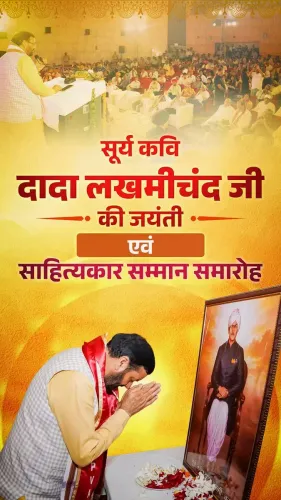
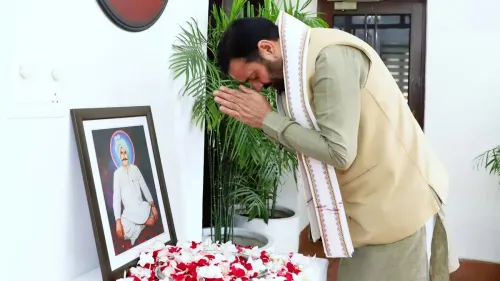
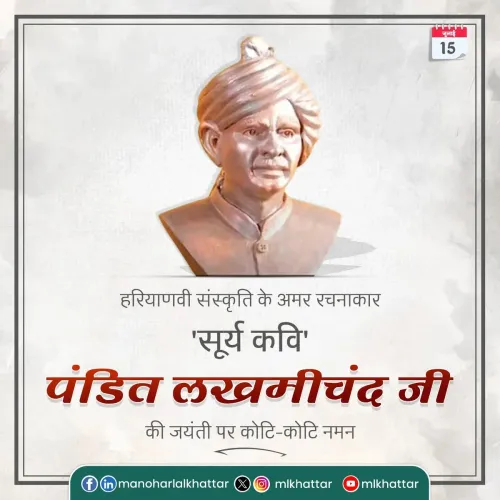
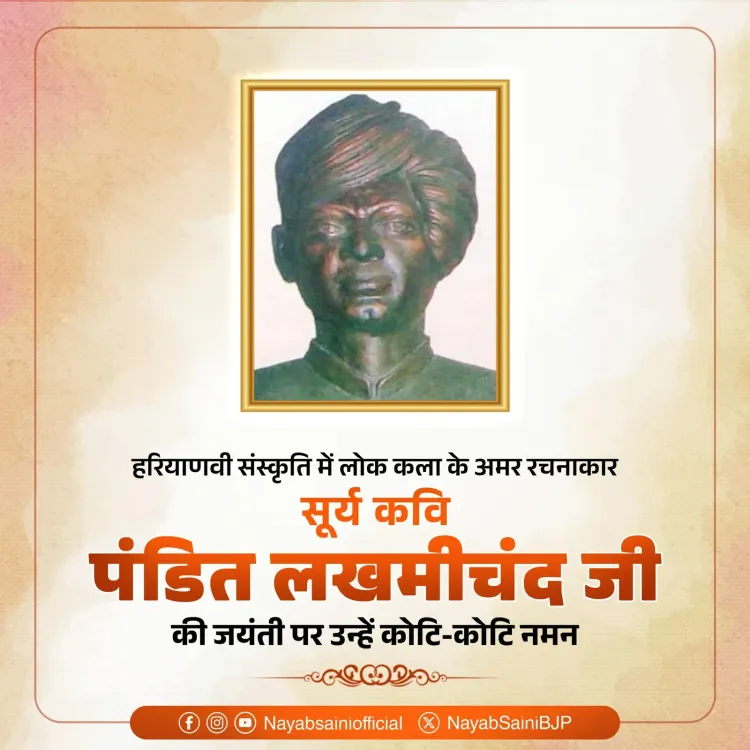
Haryana Chief Minister Nayab Singh Saini on 15 July 2026 paid tribute to Pandit Lakhmichand, the celebrated 'Surya Kavi' of Haryanvi folk tradition, on his birth anniversary, honouring the poet's enduring cultural legacy.
Key Takeaways
CM Nayab Singh Saini posted a tribute to Pandit Lakhmichand on his birth anniversary on 15 July 2026 .
Pandit Lakhmichand is known as Surya Kavi and is regarded as the foremost figure in the Haryanvi Saang folk-theatre tradition.
Saini described Lakhmichand's works as embodying 'the fragrance of Haryana's soil, the simplicity of rural life, and the highest cultural ideals.' The tribute aligns with a pattern of the BJP-led Haryana government formally commemorating regional literary and folk artists.
Cultural organisations and folk artists in Haryana are the primary stakeholders who benefit from such official recognition.
State-level commemorative events or policy announcements on folk-arts support may follow the Chief Minister's tribute.
Haryana Chief Minister Nayab Singh Saini on Wednesday, 15 July 2026, paid tribute to Pandit Lakhmichand, the revered Haryanvi folk poet and playwright known as Surya Kavi (Sun Poet), on the occasion of the legendary artist's birth anniversary.
Context
In his post, CM Saini offered what he called 'vinm श्रद्धांजलि evam koti-koti naman' — 'humble tribute and a million salutations' — to Pandit Lakhmichand. He described the poet's works as carrying 'the fragrance of Haryana's soil, the simplicity of rural life, and an unmatched confluence of culture's highest ideals.' The Chief Minister added that Lakhmichand's creative legacy 'will always keep future generations connected to their culture.'
Policy Backdrop
Pandit Lakhmichand is widely regarded as the foremost figure in the Haryanvi Saang tradition — a form of traditional folk theatre that weaves together mythology, rural life and regional dialect into performed narratives. His compositions in the ragini style remain foundational texts for folk artists across Haryana. The title Surya Kavi reflects the luminous quality attributed to his verse by generations of admirers.
The BJP-led government in Haryana has maintained a pattern of formally commemorating regional literary and performing artists, using state platforms such as Haryana Kalagram to stage folk performances and felicitate practitioners of traditional arts. Tributes of this kind form part of a broader cultural outreach strategy that seeks to anchor the party's governance narrative in the distinct identity of the state's rural heartland.
Stakeholders and Impact
The commemoration resonates most directly with Haryanvi folk artists, cultural organisations, and communities in districts where the Saang tradition remains a living practice. For these groups, official recognition from the Chief Minister's office carries symbolic weight — affirming that the state continues to value oral and performative heritage alongside formal literary culture.
Scholars and cultural bodies that work on documenting Haryanvi folk theatre have long argued for greater institutional support, including the integration of Saang heritage into school curricula and dedicated archival projects. Public statements by senior political figures on birth anniversaries of icons like Pandit Lakhmichand can lend momentum to such proposals.
What's Next
State-level cultural events or government-sponsored programmes marking the birth anniversary of Pandit Lakhmichand may follow the Chief Minister's tribute, as has been the pattern with similar commemorations in Haryana. Observers of cultural policy will watch whether the occasion is accompanied by announcements on folk-arts funding, documentation initiatives, or the inclusion of Saang modules in educational settings — steps that would translate ceremonial acknowledgement into institutional action.
Point of View
Saini connects the ruling party to a folk heritage that resonates deeply in the state's rural constituencies. This pattern of commemorating vernacular icons has become a consistent feature of BJP-led state governments seeking to cultivate voter affinity through cultural pride. Whether the tribute translates into concrete policy action — such as funding for Saang documentation or curriculum inclusion — will determine its lasting significance beyond the symbolic.
NationPress
13 Oct 2026
Frequently Asked Questions
Who is Pandit Lakhmichand?
Pandit Lakhmichand was a celebrated Haryanvi folk poet and playwright, popularly known as Surya Kavi (Sun Poet). He is regarded as the foremost figure in the Saang tradition — a form of Haryanvi folk theatre that blends mythology, rural life and regional dialect into performed narratives.
Why did CM Nayab Saini pay tribute to Pandit Lakhmichand?
CM Nayab Singh Saini paid tribute to Pandit Lakhmichand on the occasion of the folk poet's birth anniversary on 15 July 2026 , honouring his contribution to Haryanvi culture and folk literature.
What is the Saang tradition in Haryana?
Saang is a traditional form of folk theatre native to Haryana that combines music, verse, mythology and rural storytelling. Pandit Lakhmichand is its most celebrated practitioner, and his compositions in the ragini style remain foundational to the genre.
What is Haryana Kalagram?
Haryana Kalagram is a state-supported cultural complex that serves as a venue for folk performances, exhibitions and felicitation of traditional artists, and has been used by the Haryana government to promote regional arts including Saang.
What could follow CM Saini's tribute to Pandit Lakhmichand?
State-level cultural events marking Pandit Lakhmichand's birth anniversary may follow the Chief Minister's tribute. Policy watchers will look for possible announcements on folk-arts funding, archival projects, or inclusion of Saang heritage in school curricula.