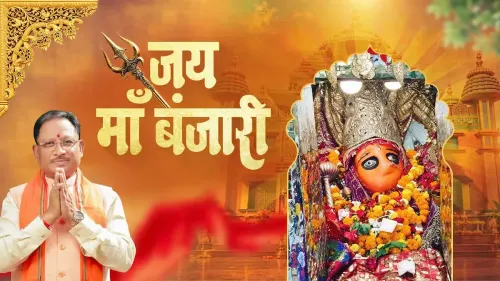
CM Sai's Navratri Prayer for Chhattisgarh at Maa Banjari Devi
Synopsis
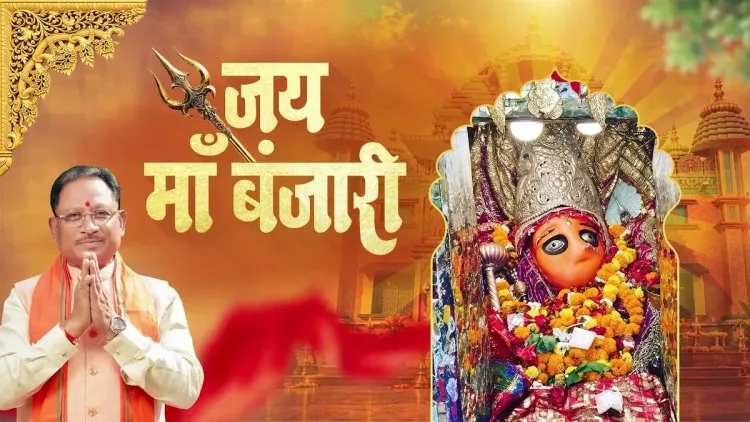
The Chief Minister's Office of Chhattisgarh shared a Navratri prayer on 17 October 2026, invoking Raipur's Maa Banjari Devi and seeking peace and prosperity for every family in the state under CM Vishnu Deo Sai's government.
Key Takeaways
The Chhattisgarh CMO posted a Navratri message on 17 October 2026 invoking Maa Banjari Devi of Raipur.
The prayer sought happiness, prosperity, and peace for every family across Chhattisgarh .
The Maa Banjari Devi temple in Raipur is described as a symbol of unwavering devotion among the state's believers.
Hashtags including #ViksitChhattisgarh and #महतारी_का_सम्मान link the devotional message to CM Vishnu Deo Sai's governance identity.
The post reflects a broader pattern of Indian state governments weaving local religious traditions into public welfare messaging during Navratri.
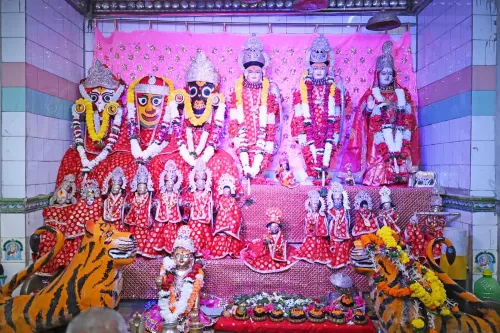
As Navratri lights up temples across India, the Chief Minister's Office of Chhattisgarh invoked the blessings of Maa Banjari Devi — a revered goddess whose sacred shrine stands in Raipur — praying for peace, prosperity, and well-being in every household across the state.
The post, shared on Saturday, 17 October 2026, carried the salutation 'Jai Maa Banjari' (Victory to Maa Banjari) and described the Maa Banjari Devi temple in Raipur as a symbol of the unshakeable faith of devotees. The prayer expressed: 'Maa Banjari Mata ki kripa se Chhattisgarh ke har parivaar mein sukh-samridhi bani rahe' — 'May the grace of Maa Banjari Mata bring happiness and prosperity to every family in Chhattisgarh, and may peace, joy, and auspiciousness spread across the entire state.'
Maa Banjari Devi — Raipur's enduring faith
The Maa Banjari Devi temple in Raipur draws devotees year-round, but its significance peaks during Navratri — the nine-night Hindu festival dedicated to the worship of Goddess Durga. Observed widely across India and with particular fervour in Chhattisgarh, Navratri is a period when state governments and public institutions routinely acknowledge local goddess traditions, weaving themes of welfare and unity into their messages.
Vishnu Deo Sai and Chhattisgarh's cultural identity
Chief Minister Vishnu Deo Sai, who took office after the BJP's victory in the 2023 Chhattisgarh assembly elections, has made the state's tribal and religious heritage a visible thread in his government's public messaging. The hashtags accompanying this post — including #महतारी_का_सम्मान (Respect for the Mother), #ViksitChhattisgarh (Developed Chhattisgarh), and #CGNavratri2026 — reflect a consistent effort to connect cultural reverence with the administration's governance identity.
The dual invocation of devotion and development is a well-worn register for Indian state governments during major festivals. What sets Navratri messaging from Raipur apart is its grounding in a distinctly local deity — not just the pan-Indian Durga — signalling an attentiveness to Chhattisgarh's own religious landscape. The kicker is simple: in a state where faith and governance walk the same road, a prayer from the Chief Minister's Office carries more than spiritual weight.
Point of View
' the BJP-led administration signals that faith and development are presented as a unified narrative. This is consistent with the party's broader strategy of positioning state governments as stewards of both economic progress and cultural continuity. For a state as culturally diverse as Chhattisgarh, the emphasis on local deities like Maa Banjari Devi also serves as a soft outreach to tribal and regional communities.
NationPress
17 Oct 2026
Frequently Asked Questions
Who is Maa Banjari Devi and where is her temple?
Maa Banjari Devi is a revered Hindu goddess whose sacred temple is located in Raipur , the capital of Chhattisgarh. The shrine is considered a symbol of strong devotion among local believers and draws large numbers of pilgrims, especially during Navratri.
What did the Chhattisgarh CMO post for Navratri 2026?
The Chhattisgarh Chief Minister's Office posted a prayer on 17 October 2026 invoking Maa Banjari Devi's blessings and seeking peace, happiness, and prosperity for every family in Chhattisgarh during the Navratri festival.
Who is Vishnu Deo Sai, the Chief Minister of Chhattisgarh?
Vishnu Deo Sai is the Chief Minister of Chhattisgarh and a BJP leader who assumed office following the party's victory in the 2023 Chhattisgarh assembly elections .
What is Navratri and why is it significant in Chhattisgarh?
Navratri is a nine-night Hindu festival dedicated to the worship of Goddess Durga. In Chhattisgarh, it is observed with deep fervour, with local goddess traditions — including at temples like Maa Banjari Devi in Raipur — playing a central role in the celebrations.
What does the hashtag ViksitChhattisgarh mean?
Viksit Chhattisgarh translates to 'Developed Chhattisgarh' and is a governance branding hashtag used by CM Vishnu Deo Sai's administration to link cultural and public messaging to the state's development agenda.