CM Samrat Choudhary greets taxpayers on Income Tax Day
Synopsis
Bihar Chief Minister Samrat Choudhary marked National Income Tax Day on 24 July 2026 by greeting taxpayers and Income Tax Department personnel, urging citizens to embrace honest tax payment as a pillar of the Viksit Bharat vision.
Key Takeaways
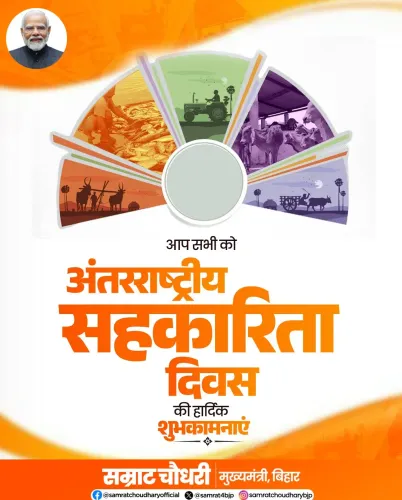
Bihar Chief Minister Samrat Choudhary extended greetings on National Income Tax Day, 24 July 2026 , via a post on X.
He acknowledged taxpayers and Income Tax Department personnel for their contributions to nation-building, transparency, and economic development.
The Chief Minister invoked the Viksit Bharat vision, calling for renewed commitment to honest tax compliance.
National Income Tax Day marks the introduction of income tax in India in 1860 and is observed annually on 24 July .
The message aligns with central-level reforms including the faceless assessment scheme (2019) and GST (2017) , both aimed at widening the formal tax base.
BJP -led state leaders routinely echo national fiscal themes on such occasions, linking local governance messaging to central policy priorities.
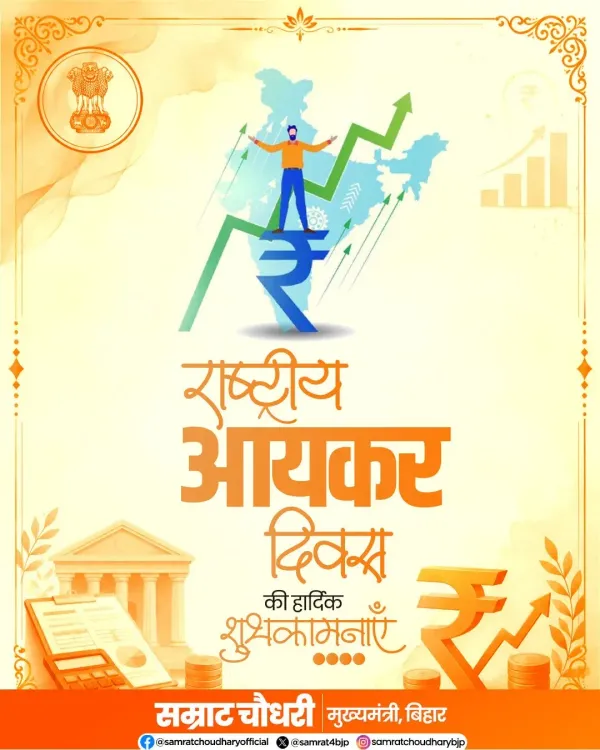
Bihar Chief Minister Samrat Choudhary on Friday, 24 July 2026, extended greetings to taxpayers and Income Tax Department personnel on the occasion of National Income Tax Day, calling on citizens to reaffirm their commitment to honest tax payment as a contribution to building a developed India.
In his post on X, the Chief Minister wrote: 'Rashtra nirman, pardarshita aur arthik vikas mein mahatvapurn yogdan dene wale sabhi kardataon evam aaykar vibhag ke karmiyon ko Rashtriya Aaykar Divas ki hardik shubhkamnayein.' ('Heartfelt greetings on National Income Tax Day to all taxpayers and Income Tax Department personnel who make significant contributions to nation-building, transparency, and economic development.')
He further urged citizens: 'Let us fulfil our participation in building Viksit Bharat with the resolve of honest tax payment.'
Context
National Income Tax Day is observed annually on 24 July, marking the anniversary of the introduction of income tax in India in 1860 by James Wilson during British rule. The day serves as an occasion for the government and public officials to acknowledge the role of voluntary tax compliance in funding public services and national development.
The Income Tax Act, 1961 remains the primary statute governing direct taxation in India. Over the decades, successive administrations have sought to modernise and simplify the system to widen the tax base and improve compliance.
Policy Backdrop
The emphasis on transparency in Choudhary's message echoes a series of structural reforms in direct tax administration at the central level. The faceless assessment scheme, introduced in 2019, was designed to eliminate physical interface between taxpayers and officials, reducing opportunities for discretion and improving accountability.
The rollout of the Goods and Services Tax (GST) in 2017 as a unified indirect tax reform also contributed to broadening the formal tax base, complementing efforts on the direct tax side. Data analytics and simplified filing processes have further been deployed to bring more individuals and businesses into the tax net.
The Viksit Bharat vision — the central government's stated goal of achieving developed-nation status by 2047 — has become a recurring frame in official communications linking fiscal participation to long-term national growth.
Stakeholders and Impact
The message is directed at two primary groups: individual and corporate taxpayers across India, and the personnel of the Income Tax Department who administer direct tax collection. Both are recognised as integral to sustaining government revenues that fund infrastructure, welfare schemes, and public services.
BJP-led state governments, including Bihar, have routinely aligned their messaging on such observances with the national fiscal narrative, reinforcing themes of honest compliance and economic patriotism. Choudhary's post follows this established pattern, using a nationally recognised occasion to connect Bihar's leadership voice to broader governance goals.
What's Next
Attention in tax policy circles will turn to the Union Budget 2027-28, where announcements on revised tax slabs, compliance incentives, and potential amendments to the Income Tax Act are expected to shape the direct tax landscape. Any legislative updates during the winter session of Parliament could further signal the government's direction on tax reform.
As India's formal economy expands, the participation of a broader taxpayer base — and the efficiency of the department that serves them — will remain central to financing the country's development ambitions.
Point of View
He ties routine ceremonial greetings to a long-horizon national project, lending the occasion political weight beyond symbolism. The dual acknowledgement of taxpayers and departmental staff reflects a deliberate effort to humanise tax administration at a time when faceless assessments and digital filing have distanced citizens from the process. Against the backdrop of an expanding direct tax base, such messaging serves to normalise compliance as civic duty rather than legal obligation.
NationPress
22 Oct 2026
Frequently Asked Questions
What is National Income Tax Day and why is it on 24 July?
National Income Tax Day is observed on 24 July every year to mark the anniversary of the introduction of income tax in India in 1860 by James Wilson during British rule. It is used to recognise the contributions of taxpayers and tax officials to national development.
What did Bihar CM Samrat Choudhary say on Income Tax Day 2026?
Samrat Choudhary extended greetings to all taxpayers and Income Tax Department personnel, recognising their role in nation-building, transparency, and economic growth. He urged citizens to commit to honest tax payment as part of the Viksit Bharat mission.
What is Viksit Bharat and how does it relate to tax compliance?
Viksit Bharat is the central government's vision to make India a developed nation by 2047 . Tax compliance is seen as a key enabler of this goal, as government revenues fund infrastructure, welfare, and public services needed for sustained growth.
What reforms has India introduced to improve income tax transparency?
The faceless assessment scheme launched in 2019 removed direct physical contact between taxpayers and officials to reduce discretion and improve accountability. Simplified digital filing and data analytics have also been deployed to widen the tax base.
Why do BJP state leaders post messages on National Income Tax Day?
BJP -led state governments routinely use National Income Tax Day to align their messaging with the central government's fiscal priorities, reinforcing themes of voluntary compliance, transparency, and economic patriotism at the state level.