CM Samrat Choudhary Orders Judicial Probe into Bhojpur Encounter
Synopsis
Bihar Chief Minister Samrat Choudhary has ordered a retired High Court judge to conduct an independent judicial inquiry into a police encounter that occurred on 17 June 2026 in Bhojpur district's Bilauți village, citing the need for impartiality and transparency.
Key Takeaways
Bihar Chief Minister Samrat Choudhary announced the judicial inquiry on 20 June 2026 , three days after the encounter.
The encounter took place on 17 June 2026 in Bilauți village under Shahpur police station , Bhojpur district .
A retired High Court judge will head the independent probe to ensure impartiality and transparency.
The Supreme Court of India's 2014 guidelines mandate independent investigations into deaths during police encounters.
The inquiry's findings may result in procedural reforms or disciplinary action against personnel involved.
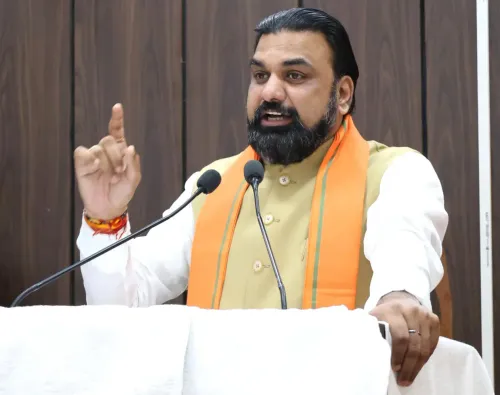
Bihar Chief Minister Samrat Choudhary on Saturday, 20 June 2026, announced that the state government has decided to order a judicial inquiry — to be conducted by a retired High Court judge — into a police encounter that took place on 17 June 2026 in Bilauți village under Shahpur police station limits in Bhojpur district. The decision signals the government's intent to ensure an independent and transparent examination of the incident.
Context
In his post on X, Chief Minister Choudhary stated: 'न्यायिक जांच का उद्देश्य घटना के सभी पहलुओं की निष्पक्षता एवं पारदर्शिता के साथ जांच सुनिश्चित करना है' — 'The objective of the judicial inquiry is to ensure that all aspects of the incident are investigated with impartiality and transparency.' The announcement came three days after the encounter, indicating a swift governmental response to the episode in Bhojpur, one of Bihar's sensitive districts.
A retired judge of the High Court has been designated to lead the probe, a standard practice in India when the state seeks to distance the inquiry from the police establishment directly involved in the incident.
Policy Backdrop
The framework for independently investigating deaths in police encounters has deep constitutional and judicial roots. In 2014, the Supreme Court of India laid down comprehensive guidelines mandating independent probes whenever a death occurs in a police encounter, covering aspects such as magisterial inquiry, forensic examination, and accountability of officers involved.
Bihar, like other Indian states, has periodically resorted to judicial inquiries when encounters attract public scrutiny, using retired judges to lend credibility to the process. Such inquiries are empowered to examine all facts on record, record witness testimony, and submit findings with recommendations to the state government.
Stakeholders and Impact
Bihar Police will be a primary subject of the inquiry, with officers involved in the 17 June 2026 operation expected to depose before the retired judge. Local residents of Bilauți village and the families of those affected by the encounter are the most directly impacted stakeholders, and the judicial process provides them a formal channel to present their account of events.
The move also carries significance for the broader law-enforcement ecosystem in the state: a credible inquiry outcome can either reinforce public trust in police operations or lead to disciplinary recommendations, depending on what the retired judge's findings reveal. Civil-liberties advocates have long argued that judicial oversight is the minimum safeguard required when lethal force is used by the state.
What's Next
The retired High Court judge is expected to be formally notified and a timeline for the inquiry set in the coming days. The inquiry report, once submitted to the state government, will determine whether any corrective action — procedural or disciplinary — is warranted against personnel involved in the Shahpur encounter.
How swiftly the inquiry concludes and whether its findings are made public will be closely watched as a measure of the Bihar government's commitment to the transparency that Chief Minister Choudhary has publicly pledged.
Point of View
The Bihar government is attempting to pre-empt opposition criticism and demonstrate institutional responsiveness. The move fits a broader national pattern in which state governments use judicial inquiries as a legitimacy instrument, though the credibility of such inquiries ultimately rests on the speed and public accessibility of their final reports. The real test for the Choudhary administration will come when the retired judge's findings are submitted — and whether the government acts on them.
NationPress
19 Sept 2026
Frequently Asked Questions
What happened in the Bhojpur police encounter on 17 June 2026?
A police encounter occurred on 17 June 2026 in Bilauți village under Shahpur police station in Bhojpur district , Bihar. The specific details of the encounter are subject to the judicial inquiry ordered by Chief Minister Samrat Choudhary.
Why has Bihar ordered a judicial inquiry into the Bhojpur encounter?
Chief Minister Samrat Choudhary ordered the inquiry to ensure an independent, impartial, and transparent investigation into all aspects of the encounter, in line with established norms for scrutinising police use of lethal force.
Who will conduct the judicial inquiry into the Bihar encounter?
A retired judge of the High Court will conduct the inquiry. The use of a retired judge is standard practice to ensure independence from the police establishment involved in the incident.
What are the Supreme Court guidelines on police encounter investigations?
In 2014 , the Supreme Court of India mandated that all deaths in police encounters must be independently investigated, covering magisterial inquiry, forensic examination, and officer accountability, to safeguard against misuse of force.
What will happen after the judicial inquiry into the Bhojpur encounter?
Once the retired High Court judge submits the inquiry report to the Bihar government, the findings may lead to procedural reforms, exoneration of officers, or disciplinary action, depending on what the investigation reveals.