CM Sawant Launches Medical Assistance Scheme at Manipal Hospital, Goa
Synopsis
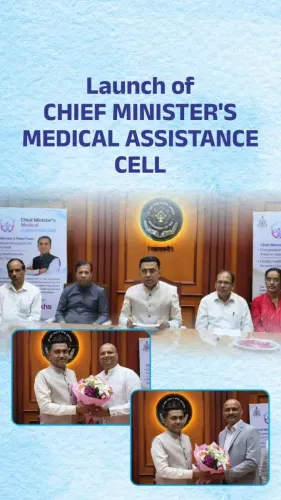
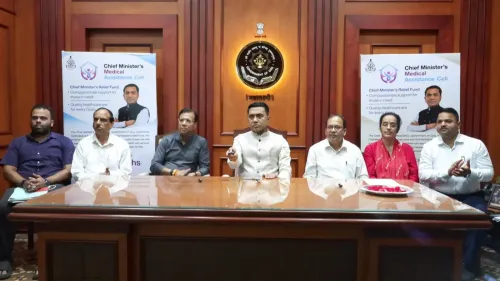
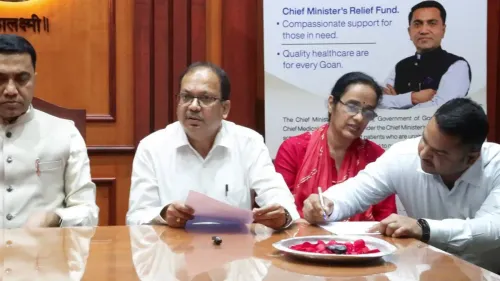
Goa Chief Minister Pramod Sawant handed over financial assistance to the first beneficiary of the Chief Minister's Medical Assistance Scheme at Manipal Hospital on October 20, 2026, extending the state's healthcare safety net beyond DDSSY with a new dedicated cell and toll-free helpline 14524.
Key Takeaways
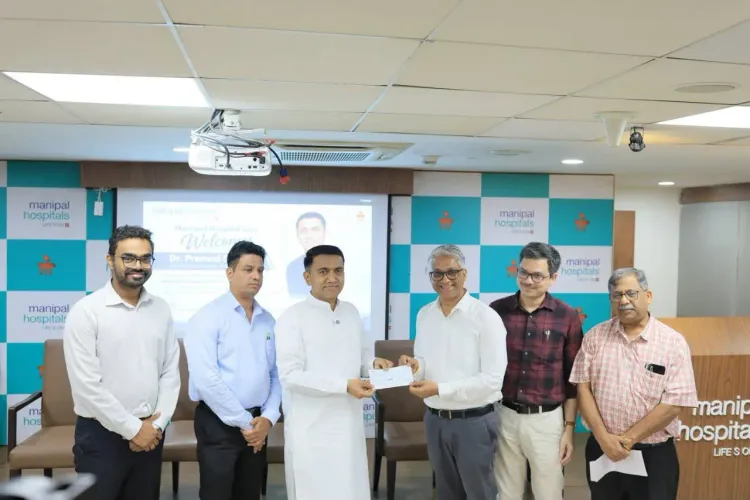
Goa CM Pramod Sawant personally handed over financial aid to the first eligible beneficiary under the new Chief Minister's Medical Assistance Scheme at Manipal Hospital, Goa on October 20, 2026 .
A dedicated Chief Minister's Medical Assistance Cell is now operational, with a toll-free helpline at 14524 for guidance and applications.
The scheme is designed to cover medical costs that fall outside the scope of existing insurance, addressing gaps in high-cost treatment support.
It builds on Deen Dayal Swasthya Seva Yojana (DDSSY) , Goa's cashless health insurance scheme launched in 2016 , which has benefited lakhs of residents.
The initiative reflects Goa's strategy of layering targeted welfare schemes atop existing healthcare frameworks rather than replacing them.
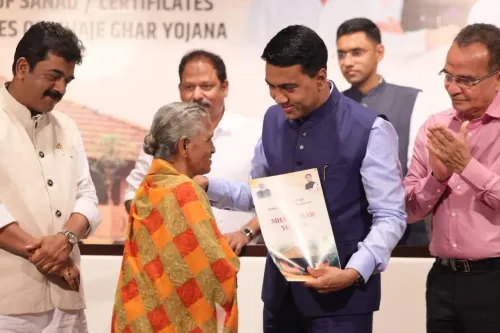
At Manipal Hospital, Goa, Goa Chief Minister Pramod Sawant personally handed over financial assistance to the first eligible beneficiary under the newly activated Chief Minister's Medical Assistance Scheme on Tuesday, October 20, 2026 — a gesture designed to signal that the state's healthcare safety net is now stretching further than ever before.
What the new scheme does — and who it targets
The Chief Minister's Medical Assistance Scheme is built to fill a critical gap: patients whose treatment costs slip through the coverage provided by existing health insurance. A dedicated Chief Minister's Medical Assistance Cell sits at the heart of the initiative, fielding requests via a toll-free helpline — 14524 — so families in distress have a clear, immediate point of contact.
The scheme's stated goal is direct: ensure that financial constraints do not delay or deny timely medical care. Eligible applicants call 14524 and receive information and guidance on how to access the assistance. The first handover at Manipal Hospital was symbolic as much as operational — a public demonstration that the cell is live and functional.
Built on the foundation of DDSSY
Goa's healthcare architecture already rests on Deen Dayal Swasthya Seva Yojana (DDSSY), the state's cashless health insurance scheme launched in 2016 that has since covered lakhs of residents. Sawant explicitly positioned the new scheme as an extension of that foundation — not a replacement, but a top-up layer targeting high-cost cases or circumstances not fully absorbed by insurance coverage.
That layered approach reflects a deliberate state-level strategy: rather than overhauling existing frameworks, Goa has chosen to stack targeted interventions on top of proven ones. The Medical Assistance Cell is the latest addition to that stack — an escalation ladder for families who have exhausted other options.
The wider stakes for Goa's health safety net
For families caught between the financial shock of a serious diagnosis and the bureaucratic complexity of insurance claims, the gap has historically been both real and costly. The new cell and helpline are designed to be the bridge. How quickly the scheme scales — in terms of uptake, eligible hospitals, and treatment categories — will determine whether this first handover at Manipal Hospital is the start of a meaningful expansion or a well-photographed launch event.
The number to watch now is 14524. Volume of calls, turnaround time on assistance, and the range of cases approved will tell the fuller story.
Point of View
Chief-minister-branded top-up mechanisms that offer political visibility alongside genuine welfare reach. By anchoring the scheme's debut at a private hospital like Manipal, Sawant signals an intent to bring private healthcare infrastructure into the public assistance ecosystem — a shift worth tracking. The DDSSY heritage gives this initiative credibility, but the scheme's real test will be institutional throughput: whether the helpline and cell can scale to demand without becoming a bottleneck. If uptake is strong, expect Goa to present this model as a template for other small states navigating high treatment costs against thin insurance cover.
NationPress
20 Oct 2026
Frequently Asked Questions
What is the Chief Minister's Medical Assistance Scheme in Goa?
It is a Goa government initiative that provides direct financial assistance to eligible patients who need support for medical treatment costs, particularly in cases not fully covered by existing health insurance schemes.
How can I apply for the Chief Minister's Medical Assistance Scheme in Goa?
Eligible applicants can call the toll-free helpline 14524 to get information and guidance on how to seek financial assistance under the scheme.
What is DDSSY and how is it related to this new Goa health scheme?
Deen Dayal Swasthya Seva Yojana (DDSSY) is Goa's cashless health insurance scheme launched in 2016 . The new Chief Minister's Medical Assistance Scheme builds on DDSSY by addressing treatment costs or cases not covered under that insurance framework.
Where was the first beneficiary handover of the Goa medical assistance scheme?
The first financial assistance handover took place at Manipal Hospital, Goa on October 20, 2026 , conducted personally by Chief Minister Pramod Sawant.
Who is eligible for Goa's Chief Minister's Medical Assistance Scheme?
The scheme targets patients and families facing financial burdens from medical treatment costs. Specific eligibility criteria can be obtained by calling the toll-free helpline 14524 .