CM Sawant Backs Nasha Mukt Goa Drive for Viksit Bharat
Synopsis
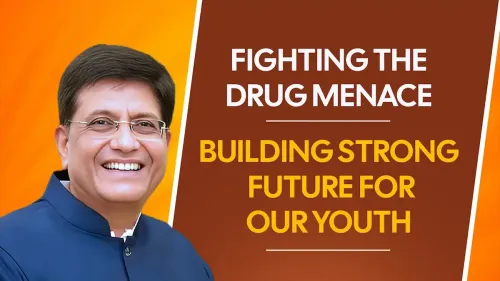
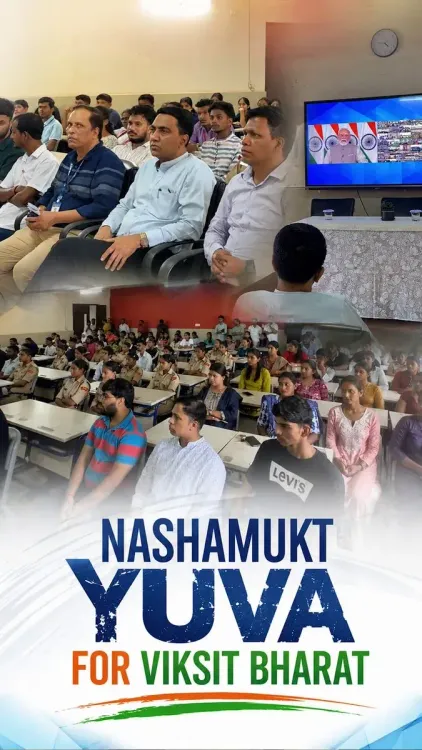
Goa Chief Minister Pramod Sawant on 2 August 2026 called for a collective push toward a drug-free Goa, invoking the national Nasha Mukt Bharat Abhiyan and tying youth protection directly to the Viksit Bharat 2047 development vision.
Key Takeaways
CM Pramod Sawant on 2 August 2026 publicly committed to building a Nasha Mukt Goa as part of the broader Viksit Bharat agenda.
The post amplifies the Nasha Mukt Bharat Abhiyan , launched in 2020 by the Ministry of Social Justice and Empowerment , which initially covered 272 districts .
Sawant framed drug prevention as a national-development imperative, calling youth 'the strength of our nation.' BJP -governed states have increasingly linked anti-narcotics drives to human-capital arguments underpinning the Viksit Bharat 2047 vision.
Key next steps include district-level Nasha Mukt committees , campus awareness drives, and coordination with the Narcotics Control Bureau in Goa .
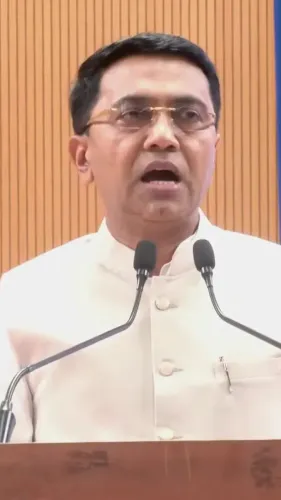
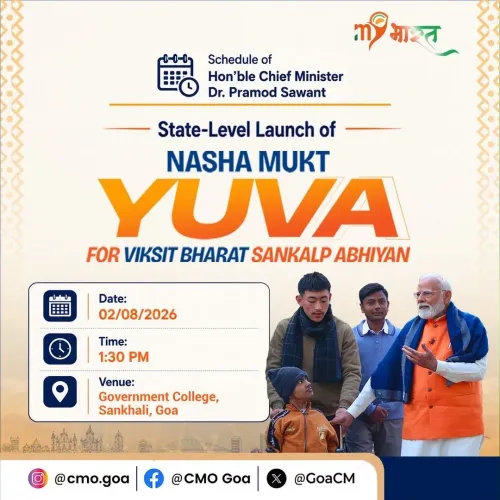
Goa's youth are at the centre of a renewed anti-drug push, and Chief Minister Pramod Sawant is making the stakes plain: protecting young people from narcotics is not optional — it is a governing responsibility. On Sunday, 2 August 2026, Sawant took to X to call for collective action under the twin banners of Nasha Mukt Goa and the central government's Viksit Bharat vision for a developed India by 2047.
What Nasha Mukt Bharat Abhiyan actually does
The campaign Sawant is amplifying is not new — but the political weight behind it keeps growing. The Nasha Mukt Bharat Abhiyan, launched in 2020 by the Ministry of Social Justice and Empowerment, initially targeted 272 high-burden districts across the country for drug de-addiction awareness, community outreach, and rehabilitation support. The programme specifically centres youth as both the most vulnerable group and the most powerful agents of change.
Sawant's post — hashtagged #NashaMuktYuva and #NashaMuktBharat — slots directly into that national framework, signalling that Goa's state machinery is expected to move in step with the central drive.
Goa's drug problem and the BJP's human-capital argument
Goa, as a high-footfall tourism destination, has long faced a disproportionate drug-availability challenge relative to its small population. State-level BJP governments across India have increasingly framed anti-narcotics work not merely as a law-and-order issue but as a human-capital imperative — the argument being that a drug-affected youth cohort cannot deliver the skilled, productive workforce that Viksit Bharat demands by mid-century.
Sawant's post makes that logic explicit: youth are described as 'the strength of our nation,' directly linking their welfare to national ambition.
What district committees and campus drives could look like next
The immediate watch-point is whether this public commitment translates into district-level Nasha Mukt committees, school and college awareness drives, and tighter coordination between the Goa government and the Narcotics Control Bureau. The Abhiyan's model involves peer-educator networks, community pledge campaigns, and de-addiction referral chains — all of which require active state-level ownership to function.
A Chief Minister's public endorsement is the loudest possible signal to district administrations and welfare departments that this is a priority — not a file to be processed slowly.
The message from Panaji is clear: in the race toward a developed India, no state can afford to leave its youth behind to addiction.
Point of View
A state whose tourism economy creates unusual drug-access pressures, a Chief Minister-level endorsement of the Abhiyan carries real administrative weight beyond symbolism. The move also keeps Goa aligned with the Ministry of Social Justice's district-level rollout machinery, which depends on state ownership to function. Whether the rhetoric converts into measurable district-level action — committees, awareness drives, de-addiction referrals — will be the real test of this commitment.
NationPress
16 Sept 2026
Frequently Asked Questions
What is the Nasha Mukt Bharat Abhiyan?
The Nasha Mukt Bharat Abhiyan is a national drug-awareness and de-addiction campaign launched in 2020 by India's Ministry of Social Justice and Empowerment , initially targeting 272 high-burden districts with a focus on youth outreach, community pledges, and rehabilitation referrals.
What did Goa CM Pramod Sawant say about drugs?
On 2 August 2026 , CM Pramod Sawant posted that protecting youth from drugs is a collective responsibility, calling for action to build a Nasha Mukt Goa and linking that goal to the Viksit Bharat national development vision.
What is Viksit Bharat and how does it relate to drug prevention?
Viksit Bharat is the central government's vision for a fully developed India by 2047 . BJP -led state governments, including Goa , have framed drug prevention as a human-capital priority — arguing that a drug-affected youth population cannot contribute to the skilled workforce that the 2047 target requires.
Why is drug abuse a particular concern in Goa?
Goa 's status as a major tourism destination creates higher-than-average drug availability relative to its small resident population, making youth drug prevention a recurring focus for state administrations and law-enforcement agencies.
What actions could follow CM Sawant's Nasha Mukt Goa call?
Likely follow-up steps include the formation of district-level Nasha Mukt committees , school and college awareness campaigns, peer-educator networks, and closer coordination between the Goa government and the Narcotics Control Bureau — all standard elements of the national Abhiyan's rollout model.