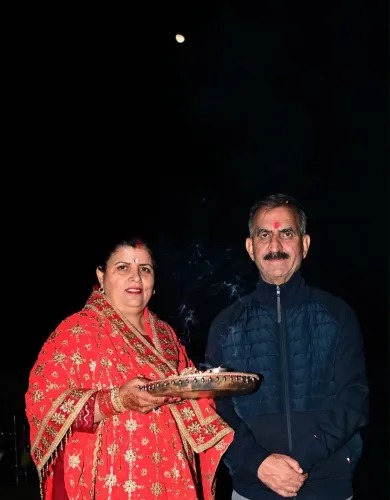
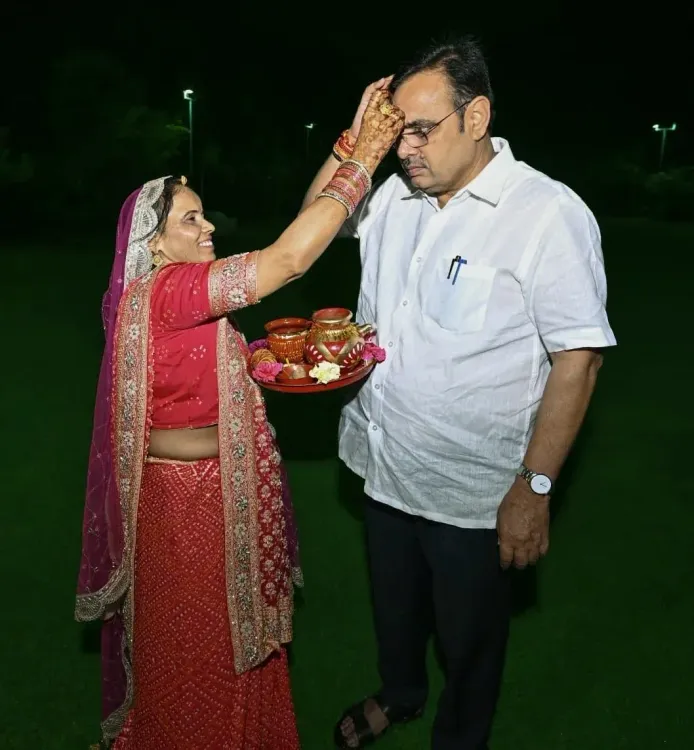
CM Bhajan Lal Sharma observes Karwa Chauth with wife
Synopsis
Rajasthan Chief Minister Bhajan Lal Sharma observed Karwa Chauth on 29 October 2026, performing traditional rituals with his wife and offering her water to break her fast. He extended wishes of happiness, good fortune and prosperity to all married women and families across the state.
Key Takeaways
Rajasthan Chief Minister Bhajan Lal Sharma observed Karwa Chauth 2026 with his wife on 29 October 2026 .
He performed vidhi-vat puja-archana (ceremonial worship) and offered water to his wife to break her fast — the traditional paran ritual.
The CM described Karwa Chauth as 'a sacred festival of love, faith and devotion' and called mutual trust 'the most precious currency of relationships.' He extended greetings to 'all mothers and sisters,' wishing them happiness, good fortune and prosperity.
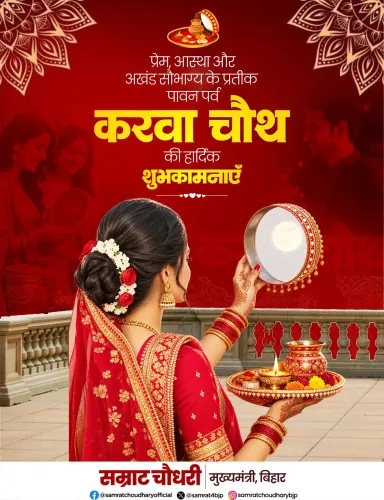
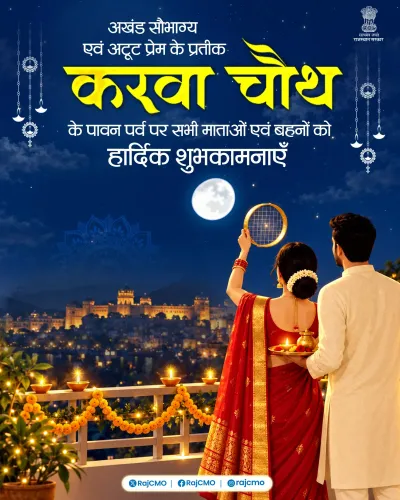
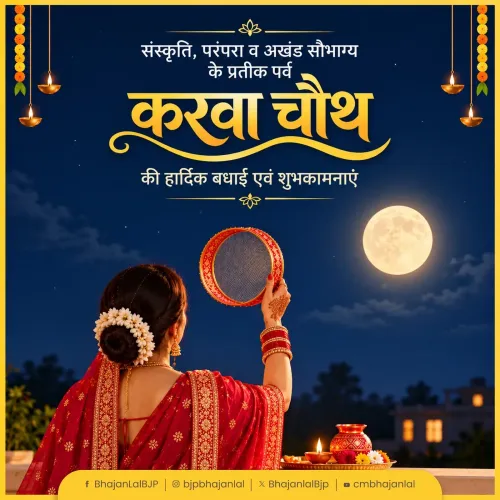
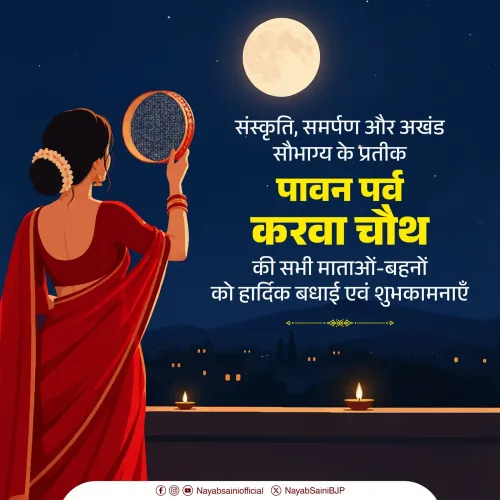
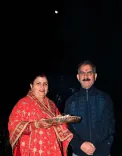
The post was shared with four images of the occasion, consistent with Sharma's practice of using cultural observances for public outreach.
Sharma has served as Chief Minister of Rajasthan since December 2023 following the BJP's state assembly election victory.
On the night of Karwa Chauth 2026, Rajasthan Chief Minister Bhajan Lal Sharma stepped away from the legislative calendar and into a quiet ritual — performing vidhi-vat puja-archana (ceremonial worship) alongside his wife and breaking her fast by offering her water as the moon rose.
Sharing the moment on Thursday, 29 October 2026, the Chief Minister wrote that Karwa Chauth is 'a sacred festival of love, faith and devotion that deepens the intimacy of married life and the unbreakable affection for one's life partner.' He added that 'mutual trust, affection and togetherness are the most precious currency of relationships in this beautiful journey called life.'
A personal moment, a public message
Karwa Chauth is an annual Hindu festival observed primarily by married women, who fast from sunrise to moonrise for the longevity and well-being of their husbands. The paran — the ritual breaking of the fast — traditionally takes place when the husband offers water to his wife after sighting the moon through a sieve. Sharma's post describes exactly this moment, grounding a very public figure in a very private tradition.
The Chief Minister extended his greetings to 'all mothers and sisters,' praying that the festival bring 'happiness, good fortune and prosperity' into their lives and that 'every family remain forever illuminated by love, faith and joy.' The post was accompanied by four images of the occasion.
Festival greetings as political ritual in Rajasthan
Bhajan Lal Sharma assumed office as Chief Minister of Rajasthan in December 2023, the BJP's pick to lead the state after the party's assembly election victory. Since then, festival greetings — shared on social media with personal photographs — have become a consistent part of his public communication strategy, reflecting a broader pattern among Indian political leaders who use cultural observances to maintain a warm, relatable presence with constituents.
Karwa Chauth carries particular resonance in Rajasthan, where the festival is celebrated with deep traditional fervour across communities. A Chief Minister's public participation in its rituals is therefore as much a gesture of cultural solidarity as it is a personal expression.
As moonlit rooftops and sieve-silhouetted skies lit up across the state on Thursday night, Sharma's message landed a simple, durable point: the most resilient bonds — personal or political — are built on trust and kept alive by showing up.
Point of View
Still in the early years of his tenure in Jaipur, participating visibly in Karwa Chauth reinforces an image of a grounded, tradition-respecting leader in a state where such symbolism carries genuine electoral weight. The broader BJP playbook has long used cultural festivals as soft-power moments, blending personal authenticity with mass outreach in a way that no press conference can replicate. Whether these gestures translate into governance credibility remains the harder, longer test.
NationPress
30 Oct 2026
Frequently Asked Questions
What did Rajasthan CM Bhajan Lal Sharma do on Karwa Chauth 2026?
He performed traditional Karwa Chauth rituals with his wife on 29 October 2026 , conducting ceremonial worship and offering her water to break her day-long fast.
What is Karwa Chauth and how is it observed?
Karwa Chauth is an annual Hindu festival where married women fast from sunrise to moonrise for their husbands' longevity. The fast is broken after the husband offers water to his wife following the sighting of the moon.
When did Bhajan Lal Sharma become Chief Minister of Rajasthan?
Bhajan Lal Sharma became Chief Minister of Rajasthan in December 2023 after the BJP won the state assembly elections.
What did CM Bhajan Lal Sharma wish on Karwa Chauth 2026?
He prayed that the festival bring 'happiness, good fortune and prosperity' to all mothers and sisters, and that every family remain 'forever illuminated by love, faith and joy.'
Is Karwa Chauth widely celebrated in Rajasthan?
Yes, Karwa Chauth is observed with deep traditional fervour across communities in Rajasthan , making it one of the more prominent cultural festivals in the state.