CM Shivakumar Honours Farmers at Chitradurga Felicitation
Synopsis
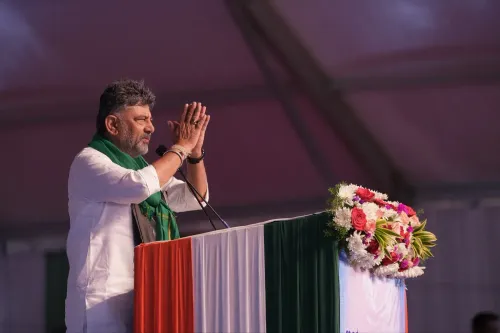
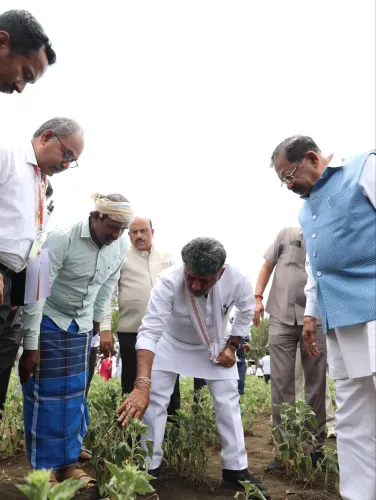
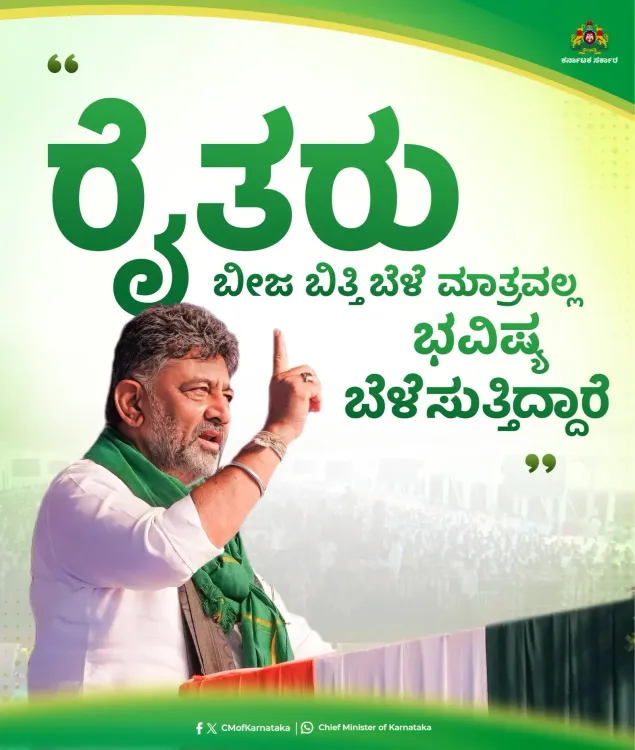
Karnataka CM D.K. Shivakumar addressed a farmer felicitation ceremony in drought-prone Chitradurga on September 24, 2026, declaring that the state 'lives by the sweat of farmers' and that their labour is beyond price.
Key Takeaways
Shivakumar addressed a farmer felicitation event in Chitradurga on September 24, 2026 .
He stated: 'We live by the sweat of farmers.
We cannot put a price on their toil.' Chitradurga is a central Karnataka district known for rainfed, drought-prone agriculture.
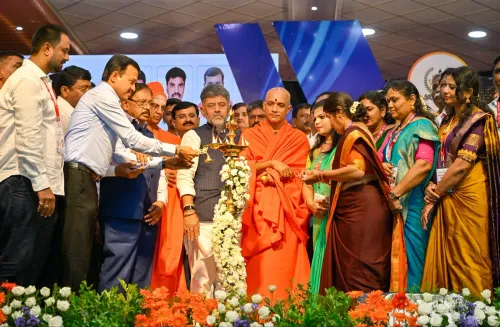
The event was a formal felicitation ( abhinandana samarambha ) recognising farmers' contributions.
Karnataka governments have long used such local events to publicly acknowledge the agrarian community's role in the state economy.
Follow-up announcements on crop procurement prices or rural schemes are expected to be watched closely.
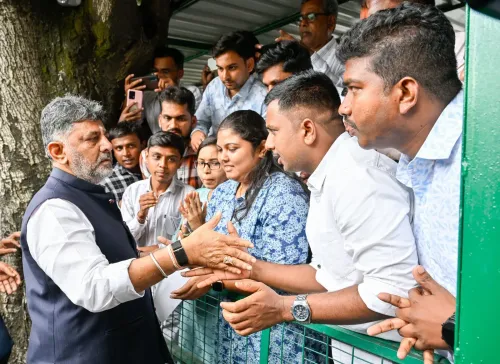
No price tag can be put on a farmer's labour — and Karnataka Chief Minister D.K. Shivakumar made that the defining note of a farmer felicitation ceremony held in Chitradurga on Thursday, September 24, 2026. The Chief Minister's Office of Karnataka shared the highlights of his address, anchoring them in a sentiment that resonated far beyond the ceremony hall.
Speaking at the event, CM Shivakumar said, 'Raitara bevarininda naavu badukuttiddeve. Raitara shramakke naavu bele kattalu sadhyavilla' — 'We live by the sweat of farmers. We cannot put a price on their toil.' The words were brief, but the framing was deliberate: a sitting Chief Minister publicly placing agrarian labour at the moral centre of the state's existence.
Why Chitradurga, and Why It Matters
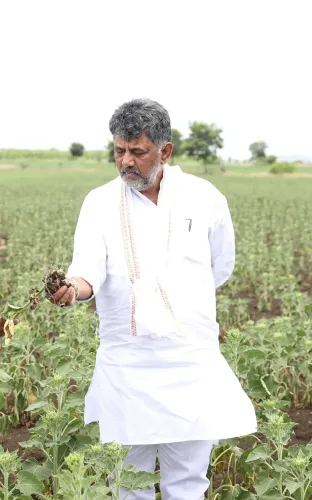
Chitradurga is not an incidental venue. Located in central Karnataka, the district sits in a largely rainfed, drought-prone belt where agriculture is as much an act of faith as it is an occupation. Choosing it for a farmer felicitation event signals attention to a region that frequently bears the brunt of uneven monsoons and fluctuating market prices.
Karnataka governments have, over successive administrations, held such local felicitation events to acknowledge the farming community's role in the state's agrarian economy. But the emotional register of CM Shivakumar's remarks — framing farmers not as policy beneficiaries but as the very reason the rest of society survives — carries a distinct political warmth that goes beyond standard ceremony.
Shivakumar's Farmer-First Political Messaging
D.K. Shivakumar, who has built a reputation as a hands-on administrator with deep roots in Karnataka's political landscape, has consistently returned to rural welfare as a touchstone. His remarks at Chitradurga continue that pattern — positioning the state government as one that sees farmers not through the lens of subsidy ledgers, but through the lens of dignity and gratitude.
With Karnataka's agricultural sector employing a significant share of the population and rural constituencies forming a decisive electoral base, such ceremonial moments also carry a policy undertone: the next budget cycle, crop procurement prices, and rural scheme rollouts will all be watched for whether the rhetoric finds legislative form.
A Chief Minister bowing to the farmer — not just in words, but on a public stage — sets a benchmark the assembly floor will be asked to match.
Point of View
Drought-vulnerable district — as the backdrop for a farmer felicitation is politically calculated as well as symbolically resonant. By framing farmers as the moral foundation of society rather than as policy recipients, the CM elevates the discourse above routine welfare announcements, building goodwill in a rural base that has historically swung Karnataka elections. The speech also sets a self-imposed bar: the government's credibility on farmer dignity will now be judged against concrete follow-through on crop pricing and rural scheme delivery. In a state where agrarian distress has repeatedly shaped electoral outcomes, these ceremonial moments are as much political investments as they are acts of governance.
NationPress
24 Sept 2026
Frequently Asked Questions
What did CM D.K. Shivakumar say at the Chitradurga farmer event?
CM Shivakumar said 'We live by the sweat of farmers. We cannot put a price on their toil,' at a farmer felicitation ceremony held in Chitradurga on September 24, 2026.
Where is Chitradurga and why is it important for farming?
Chitradurga is a district in central Karnataka. It is largely a rainfed, drought-prone agricultural zone, making it emblematic of the challenges facing Karnataka's farming community.
What is a farmer felicitation ceremony in Karnataka?
A farmer felicitation ( abhinandana samarambha ) is a formal public event where the government honours farmers for their contribution to the state's agrarian economy. Karnataka governments have held such events across successive administrations.
Who is D.K. Shivakumar and what is his role?
D.K. Shivakumar is the Chief Minister of Karnataka, known for his focus on rural welfare and deep roots in the state's political landscape.
What policy announcements could follow the Chitradurga farmer event?
Analysts are watching for follow-up announcements on crop procurement prices and new rural welfare schemes in the Karnataka state assembly, to see whether the CM's public commitment translates into legislative action.