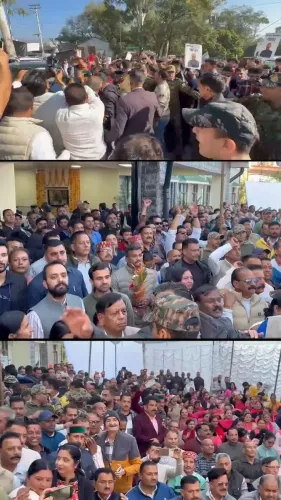
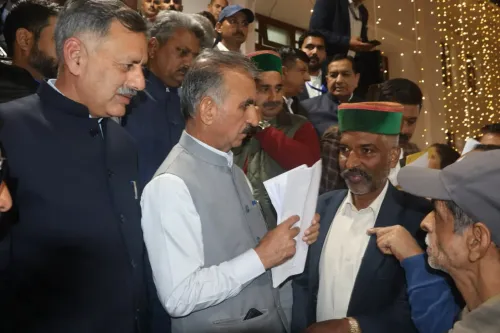
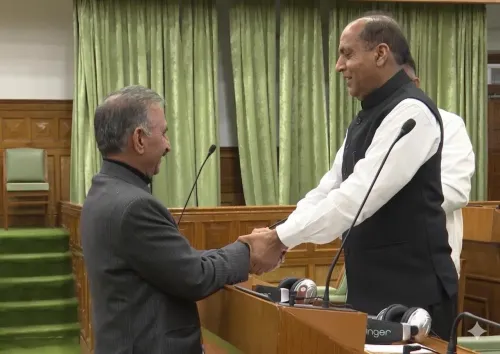
CM Sukhu meets Kangra bloc chiefs in Dharamshala
Synopsis
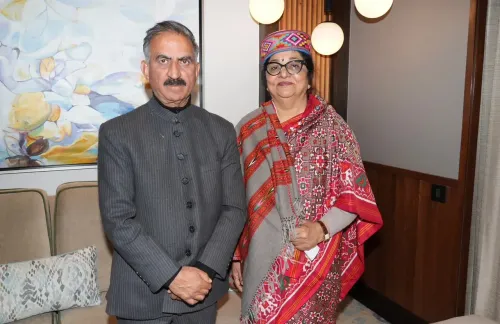
Chief Minister Sukhvinder Singh Sukhu chaired a meeting of all 15 Kangra district block Congress presidents at Dharamshala's Circuit House, focusing on scheme outreach, grassroots dialogue, and booth-level party coordination ahead of the 2027 state elections.
Key Takeaways
CM Sukhvinder Singh Sukhu met block presidents from all 15 Vidhan Sabha constituencies of Kangra district at Circuit House, Dharamshala on November 21, 2026 .
The meeting covered organisational activities, forthcoming action plans, and dissemination of state government schemes to ordinary citizens.
Special discussion was held on strengthening booth-level coordination and energising the party worker base.
Rajya Sabha MP Anurag Sharma , president of the District Congress Committee Kangra, was also present.
Kangra's 15 seats make it Himachal Pradesh's most electorally significant district, with the next assembly elections due in 2027 .
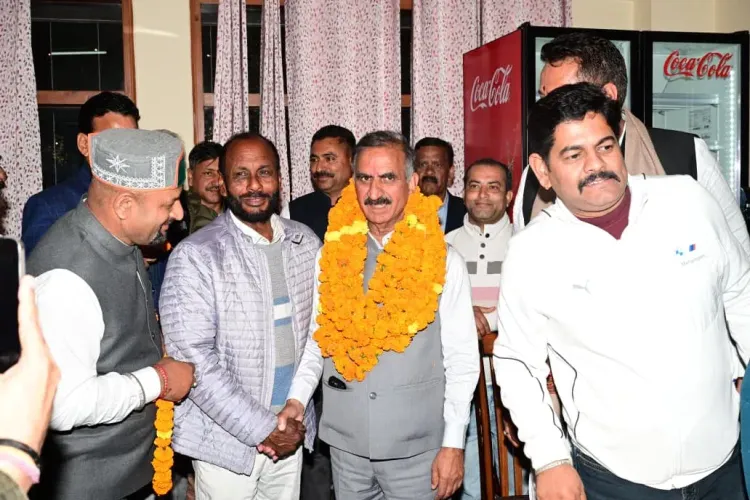
Dharamshala, November 21: With assembly elections on the horizon and Kangra district's 15 constituencies holding outsized sway over Himachal Pradesh's political arithmetic, Chief Minister Sukhvinder Singh Sukhu convened a closed-door organisational meeting at the Circuit House, Dharamshala on Saturday — sitting down with block presidents from every single Vidhan Sabha segment in the district.
The Chief Minister described the agenda in his own words: discussions centred on 'organisational activities and the forthcoming action plan,' pushing state government policies and schemes to the grassroots, maintaining continuous dialogue with people at the local level, and — critically — ensuring 'strong coordination at the booth level and an active role for party workers.' Also present was Rajya Sabha MP and District Congress Committee Kangra president Anurag Sharma, signalling the meeting carried both organisational and political weight.
Why Kangra's 15 seats command this attention
Kangra is Himachal Pradesh's most populous district and its single largest reservoir of assembly seats. No party can comfortably form a government in Shimla without performing well here. The Congress, which returned to power in December 2022 under Sukhu, has since made grassroots outreach a declared priority — the logic being that welfare scheme delivery and local visibility go hand in hand with electoral durability.
Dharamshala, which doubles as the district's administrative headquarters and the state's winter capital, served as the natural venue — a signal, in itself, that Sukhu is treating the region as a governance focus, not just an electoral stopover.
Booth-level muscle: the real agenda behind the meeting
Ruling parties across Indian states routinely hold such district-level conclaves, but the specificity here stands out. The deliberate emphasis on booth star prabandhan — booth-level coordination — points to a party machine gearing up well ahead of the 2027 Himachal Pradesh assembly elections. Block presidents are the connective tissue between the central leadership and the last-mile voter; getting all 15 of them in one room, with both the Chief Minister and the district party chief present, is a mobilisation signal the cadre will read clearly.
The agenda item of 'continuous communication with people at the local level' also reflects a governance reality: state welfare programmes only translate into political capital when constituents know who delivered them. Saturday's meeting was as much about messaging infrastructure as it was about policy feedback.
Point of View
But its timing — over a year before the 2027 Himachal assembly elections — suggests the Congress leadership is not waiting for the campaign season to activate its ground machinery. Kangra's demographic heft makes it a district where booth-level gaps can swing double-digit seats; Sukhu's personal presence signals he is treating organisational health as a Chief Minister's business, not just a party president's. The dual presence of the Chief Minister and the district Congress chief also points to an effort to align the government narrative with party messaging — a coordination challenge that often frays in mid-term for ruling parties.
NationPress
21 Nov 2026
Frequently Asked Questions
Why did CM Sukhu meet Kangra block presidents in Dharamshala?
Chief Minister Sukhvinder Singh Sukhu convened the meeting to discuss party organisational activities, the action plan for reaching state government schemes to citizens, and strengthening booth-level coordination across Kangra's 15 assembly segments.
Who is Anurag Sharma in Himachal Pradesh politics?
Anurag Sharma is a Rajya Sabha MP from Himachal Pradesh and serves as the president of the District Congress Committee, Kangra. He was present at the November 21 Dharamshala meeting.
How many Vidhan Sabha seats does Kangra district have?
Kangra district has 15 Vidhan Sabha constituencies, making it Himachal Pradesh's most populous district and its single largest bloc of assembly seats.
When are the next Himachal Pradesh assembly elections?
The next Himachal Pradesh assembly elections are due in 2027. The Congress, led by CM Sukhu, has been holding grassroots organisational meetings in key districts as part of its early preparation.
What is the significance of Dharamshala for Himachal Pradesh government?
Dharamshala serves as the winter capital of Himachal Pradesh and is the administrative headquarters of Kangra district, making it a natural hub for high-level government and party meetings in the region.