CM Sukhu Dedicates 3-Tesla MRI at Chamiana Hospital
Synopsis
Chief Minister Sukhvinder Singh Sukhu has dedicated a Rs 23 crore three-Tesla MRI machine at Super Specialty Hospital, Chamiana, saying residents no longer need to travel outside Himachal Pradesh for advanced diagnostic imaging. The move is part of the Congress government's push to upgrade public-sector tertiary care since December 2022.
Key Takeaways
A three-Tesla MRI machine costing approximately Rs 23 crore has been installed at Super Specialty Hospital, Chamiana in Himachal Pradesh.
CM Sukhvinder Singh Sukhu announced the dedication on 13 July 2026 , framing it as a milestone in his government's healthcare agenda.
The machine eliminates the need for patients to travel to cities like Delhi or Chandigarh for high-field MRI scans.
The Congress government has been in power in Himachal Pradesh since December 2022 and has prioritised reducing out-of-state medical referrals.
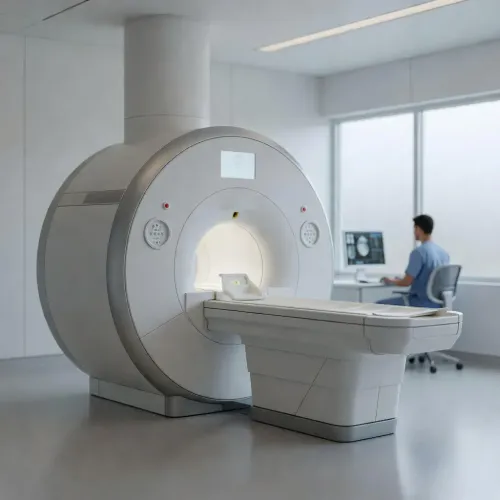
Three-Tesla MRI scanners offer higher imaging resolution than the standard 1.5-Tesla systems and were previously unavailable in the state's public hospital network.
The investment aligns with a broader national trend of hill and smaller states procuring advanced diagnostic equipment to reduce patient out-of-pocket expenditure.
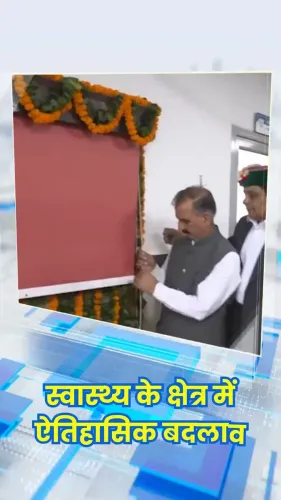
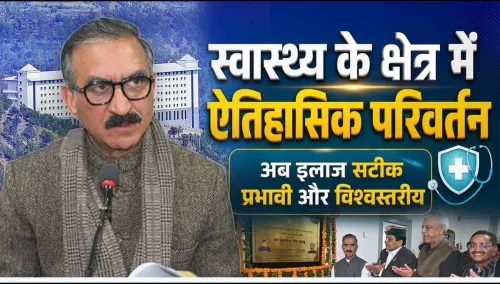
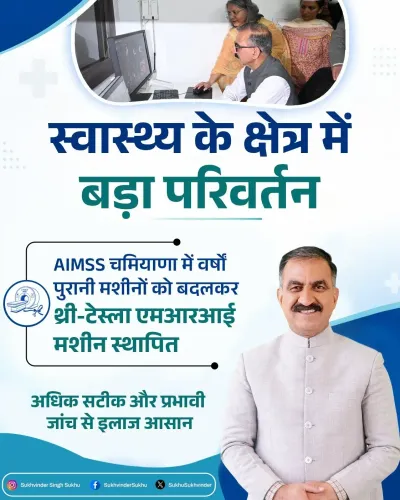
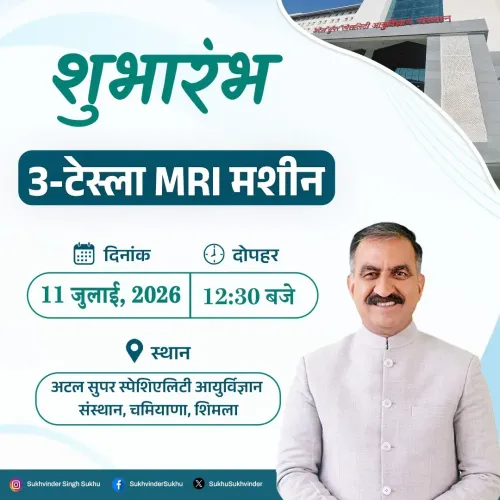
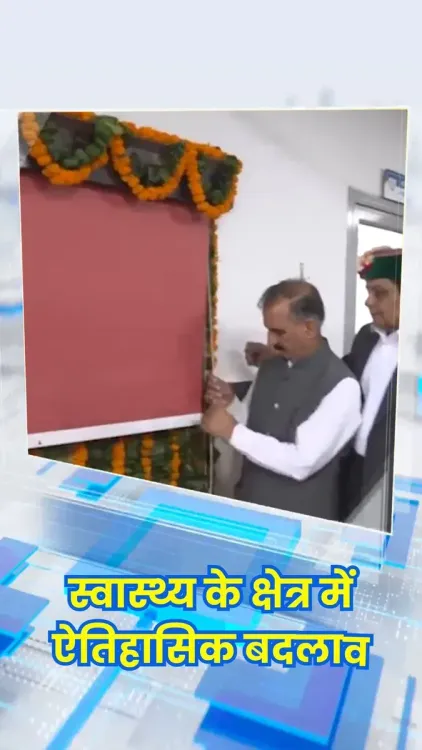
Himachal Pradesh Chief Minister Sukhvinder Singh Sukhu on Monday, 13 July 2026, announced that a state-of-the-art three-Tesla MRI machine installed at a cost of approximately Rs 23 crore has been dedicated to public service at the Super Specialty Hospital, Chamiana, marking what his government describes as a new benchmark in healthcare delivery for the hill state.
Context
Posting in Hindi on X, CM Sukhu stated: 'हमारी सरकार बनने के बाद से हिमाचल प्रदेश में स्वास्थ्य सेवाएँ निरंतर नए मानक स्थापित कर रही हैं' ['Since our government was formed, health services in Himachal Pradesh have been continuously setting new standards']. He added that residents will no longer need to travel to other cities for MRI scans, as 'timely, accurate and world-class diagnostic facilities are now easily available within the state itself.'
The three-Tesla MRI scanner is among the most advanced clinical imaging systems available, offering higher resolution and faster scan times compared to the more common 1.5-Tesla machines. Its installation at a government hospital in Shimla district represents a significant upgrade for public-sector diagnostics in the region.
Policy Backdrop
The Indian National Congress government led by CM Sukhu assumed office in December 2022 after winning the state assembly elections. Since then, the administration has announced a series of measures aimed at strengthening district-level super-specialty services and reducing patient referrals outside Himachal Pradesh.
High-field MRI machines of this calibre were previously available only at major facilities in cities such as Delhi and Chandigarh, or at private corporate hospitals, placing them financially and geographically out of reach for a large share of Himachal Pradesh's predominantly rural population. State governments across India have accelerated procurement of such equipment in the post-pandemic period to expand tertiary care and reduce out-of-pocket expenditure for patients.
Stakeholders and Impact
The primary beneficiaries are residents of Himachal Pradesh who previously had to bear travel costs, lodging expenses and longer waiting times to access advanced neurological, orthopaedic or oncological imaging in other states. Super Specialty Hospital, Chamiana serves as a tertiary-care referral centre, meaning patients from across the state are routed here for complex diagnoses.
The Rs 23 crore investment signals the state government's intent to contain what health economists call 'medical migration' — the outflow of patients and healthcare spending to other states. For families in remote hill districts, avoiding a trip to Chandigarh or Delhi can mean savings of several thousand rupees per visit in transport and accommodation alone.
What's Next
Attention will now turn to the operational throughput of the new machine — specifically, monthly scan volumes and waiting times at Chamiana — as indicators of whether the infrastructure investment is translating into accessible care. The Sukhu government may also face questions about whether similar high-end diagnostic equipment will be extended to other district hospitals or medical colleges across the state, particularly in more remote areas such as Lahaul-Spiti or Kinnaur. If the Chamiana model proves scalable, it could become a template for public-sector diagnostic expansion in other hill states facing similar geographic and economic constraints.
Point of View
Verifiable infrastructure deliverable that the Sukhu administration can point to ahead of future electoral cycles. It fits into a post-2022 pattern of Congress-governed hill states using high-visibility healthcare investments to counter perception gaps on governance. The emphasis on eliminating 'medical migration' also carries a fiscal-welfare argument — reducing out-of-pocket spending for rural families — that resonates beyond partisan lines. Whether the machine's benefits reach the state's most remote districts, however, will depend on referral pathways and staffing that a single announcement cannot guarantee.
NationPress
13 Jul 2026
Frequently Asked Questions
What is the three-Tesla MRI machine installed in Himachal Pradesh?
A three-Tesla MRI machine is a high-field magnetic resonance imaging scanner that provides superior image resolution compared to the more common 1.5-Tesla systems. The one installed at Super Specialty Hospital, Chamiana cost approximately Rs 23 crore and is now available for public use in Himachal Pradesh.
Where is Super Specialty Hospital Chamiana located?
Super Specialty Hospital Chamiana is a tertiary-care government facility in Himachal Pradesh that serves as a referral centre for patients from across the state.
Why did CM Sukhu announce the MRI machine?
CM Sukhvinder Singh Sukhu announced the machine's dedication to highlight his government's healthcare investments since taking office in December 2022, specifically to show that residents no longer need to travel to cities like Delhi or Chandigarh for advanced MRI scans.
How does the Chamiana MRI machine benefit Himachal Pradesh residents?
Residents can now access world-class diagnostic imaging within the state, avoiding the cost and inconvenience of travelling to other cities. This is particularly significant for families in remote hill districts where travel expenses can add thousands of rupees to medical costs.
What is Himachal Pradesh's broader healthcare policy under the Sukhu government?
Since assuming power in December 2022, the Congress government led by CM Sukhu has focused on upgrading district-level super-specialty services and reducing referrals outside the state, as part of a wider effort to strengthen public-sector diagnostic capacity.