CM Sukhu Marks 200 Years of Hindi Journalism on Patrakarita Diwas
Synopsis
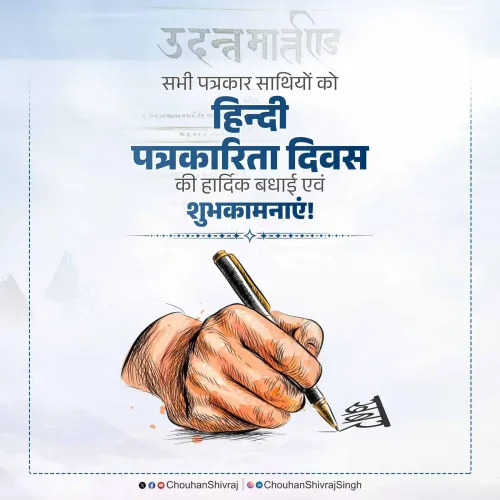
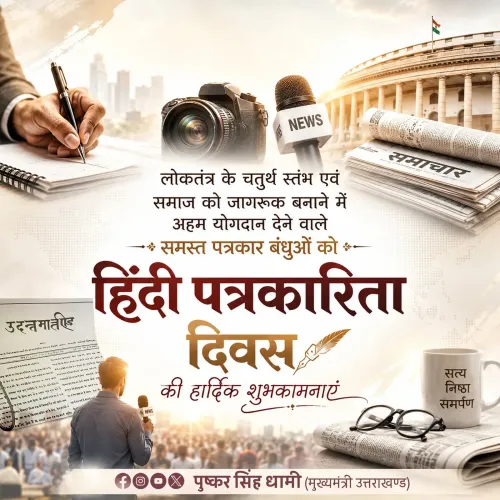
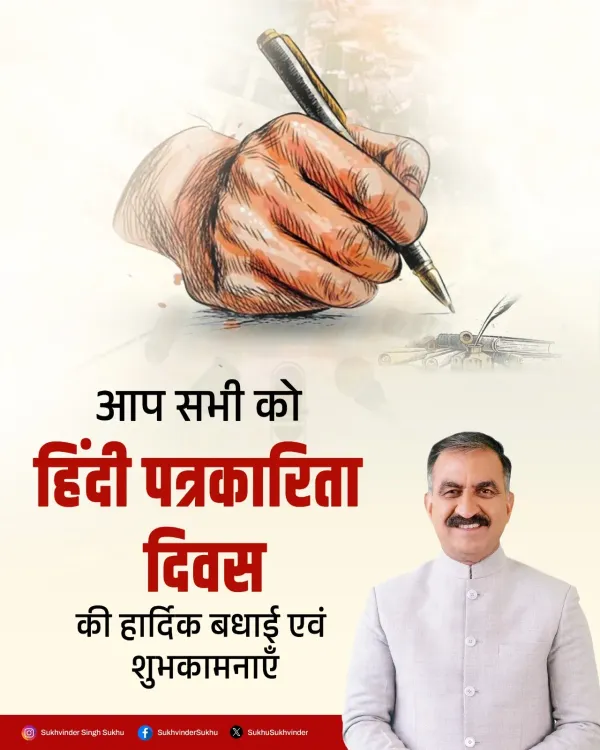
Himachal Pradesh Chief Minister Sukhvinder Singh Sukhu marked Hindi Patrakarita Diwas on 30 May 2026, honouring 200 years of Hindi journalism since the 1826 launch of Udant Martand and greeting journalist colleagues across India.
Key Takeaways
Hindi Patrakarita Diwas is observed on 30 May each year to mark the founding of India's first Hindi newspaper.
Udant Martand was launched in 1826 from Kolkata by Pt.
Jugal Kishore Shukla , making 2026 its bicentennial year.
CM Sukhvinder Singh Sukhu credited Hindi journalism with awakening society, voicing public sentiment, and strengthening democratic values.
India's vernacular press has historical roots in 19th-century social reform and the freedom struggle.
The message was directed at journalist colleagues across the country, reflecting the pan-India significance of the observance.
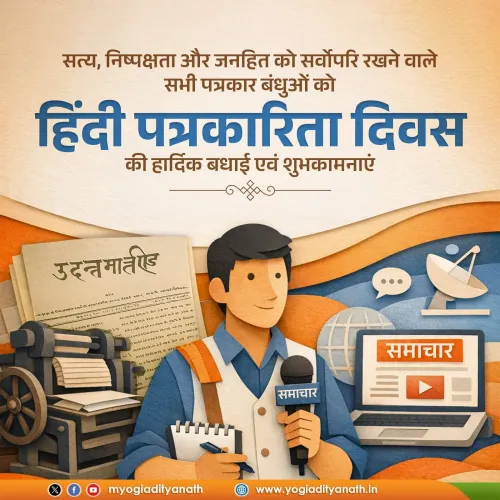
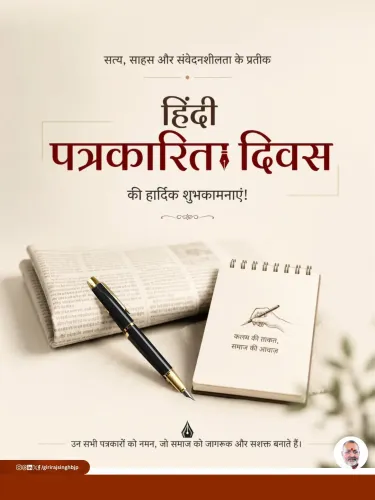
Himachal Pradesh Chief Minister Sukhvinder Singh Sukhu on Saturday, 30 May 2026 extended greetings to journalists across the country on Hindi Patrakarita Diwas, marking 200 years since the publication of India's first Hindi newspaper, Udant Martand, in 1826.
Context
In his post, CM Sukhu described the day as a commemoration of a 'glorious journey' that began two centuries ago with the launch of 'Udant Martand' — 'हिंदी के प्रथम समाचार पत्र' [India's first Hindi-language newspaper]. He noted that Hindi journalism has consistently played a 'vital role in awakening society, expressing public sentiment, and strengthening democratic values.'
The Chief Minister concluded with warm wishes for all journalist colleagues, calling them 'पत्रकार साथी' [journalist comrades], on the occasion.
Policy Backdrop
Hindi Patrakarita Diwas is observed annually on 30 May to honour the founding of Udant Martand, launched in 1826 from Kolkata by Pt. Jugal Kishore Shukla. The publication is widely regarded as the cornerstone of Hindi-language print journalism in the Indian subcontinent.
India's vernacular press, rooted in 19th-century reform movements, played a documented role in mobilising public opinion during the freedom struggle and later became a foundational pillar of post-independence democratic discourse. State and central leaders routinely issue formal messages on language-specific journalism days as part of broader commitments to promoting Indian languages in public communication.
Stakeholders and Impact
The observance is particularly significant for Hindi-belt journalists and regional media houses across states including Himachal Pradesh, Uttar Pradesh, Madhya Pradesh, and Rajasthan, where Hindi-language media forms the dominant information ecosystem. For working journalists, formal recognition from elected leaders on this day carries symbolic weight regarding the state's stance on press freedom and language promotion.
Chief Ministers and senior politicians issuing such greetings also signals continued political acknowledgement of the regional-language media's reach and influence among vernacular audiences, who constitute a significant share of India's news-consuming public.
What's Next
Observers and media professionals will watch for any follow-up state government announcements on media fellowships, Hindi-content digital initiatives, or support schemes for vernacular journalism in Himachal Pradesh. At the national level, discussions on language policy in broadcasting and digital media regulation could intersect with the themes raised on this bicentennial milestone. The 200th anniversary of Udant Martand in 2026 makes this year's observance especially resonant for advocates of India's multilingual press heritage.
Point of View
Sukhu places Himachal Pradesh within a broader national narrative of linguistic and democratic heritage. The timing also reflects a wider pattern among state leaders of using language-commemoration days to signal cultural affinity with vernacular audiences ahead of electoral cycles. Whether the tribute translates into concrete policy support for regional journalism in Himachal Pradesh remains to be seen.
NationPress
21 Sept 2026
Frequently Asked Questions
What is Hindi Patrakarita Diwas and why is it celebrated on 30 May?
Hindi Patrakarita Diwas is observed on 30 May each year to commemorate the publication of Udant Martand , India's first Hindi-language newspaper, which was launched on this date in 1826 from Kolkata.
Who founded Udant Martand, the first Hindi newspaper?
Udant Martand was founded by Pt. Jugal Kishore Shukla in 1826 in Kolkata , marking the beginning of Hindi print journalism in India.
What did CM Sukhu say on Hindi Patrakarita Diwas 2026?
CM Sukhvinder Singh Sukhu said Hindi journalism has played a vital role in 'awakening society, expressing public sentiment, and strengthening democratic values,' and extended warm greetings to all journalist colleagues.
Why is Hindi Patrakarita Diwas 2026 special?
The year 2026 marks the 200th anniversary — the bicentennial — of the launch of Udant Martand in 1826, making this year's observance a particularly significant milestone for Hindi journalism.
What is the significance of vernacular press in India's democracy?
India's vernacular press, including Hindi-language newspapers, played a documented role in social reform movements and the freedom struggle, and continues to be a major pillar of democratic discourse and public communication across Hindi-speaking states.