CM Sukhu Honours Barber with Traditional Cap After Haircut
Synopsis
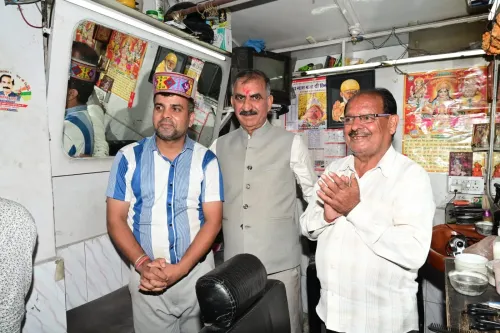
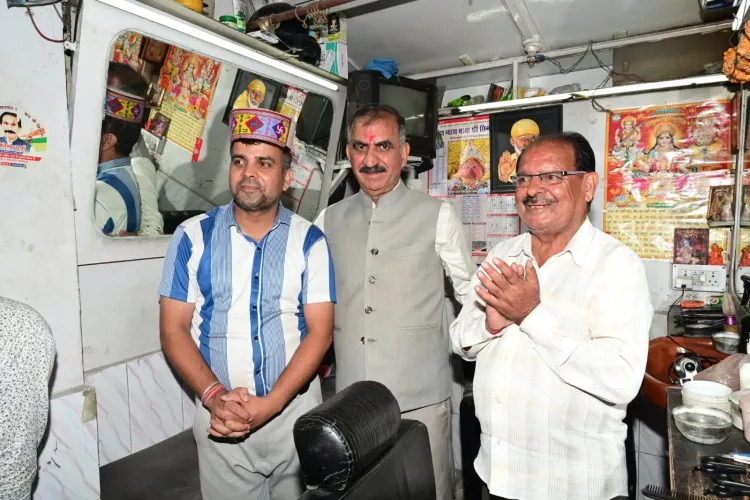
HP CM Sukhvinder Singh Sukhu honoured his barber with a traditional Himachali cap after a haircut on August 2, posting a message that no work is big or small and every hardworking person deserves respect and dignity.
Key Takeaways
CM Sukhvinder Singh Sukhu presented a traditional pahari topi to his barber after a haircut on August 2, 2026 .
He stated publicly that 'no work in the world is big or small' and every hardworking person deserves respect, love, and belonging.
The pahari topi is a culturally significant symbol of pride and identity in Himachal Pradesh .
The gesture aligns with a broader pattern of Indian state leaders using symbolic acts to reinforce dignity-of-labour messaging.
Sukhu is an Indian National Congress leader known for public gestures emphasising social equity.
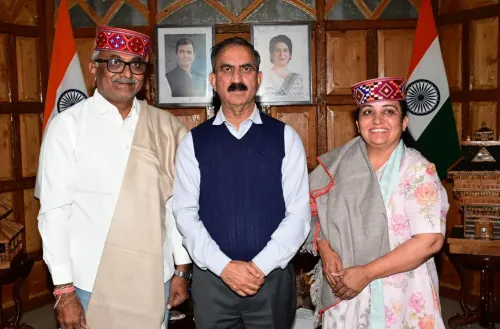
A fresh haircut, a traditional cap, and a quiet but pointed message: Himachal Pradesh Chief Minister Sukhvinder Singh Sukhu stepped out of the barber's chair on Sunday, August 2, 2026, and honoured his barber with a pahari topi — the iconic Himachali cap — in a gesture that carried more weight than the moment itself.
Posting on X, CM Sukhu wrote: 'Aaj hajaamat karwane ke baad hajaam bhai ko paramparik topi pehnakar sammanit kiya' — 'Today, after getting a haircut, I honoured my barber brother by making him wear a traditional cap.' He added that no work in the world is big or small, and that every hardworking person deserves respect, love, and a sense of belonging.
The Cap and What It Signals
The pahari topi is not a casual accessory in Himachal Pradesh — it is a marker of cultural pride and dignified identity. Presenting it to a barber is a deliberate inversion of social hierarchy, a public statement that the hand holding the scissors deserves the same regard as the hand signing files. Sukhu's message was direct: 'Our effort should be to respect every person around us.'
Dignity-of-Labour Gestures in Indian Politics
Indian state leaders have periodically used symbolic acts — sweeping streets, sharing meals with sanitation workers, or, as here, honouring a barber — to reinforce egalitarian messaging around the dignity of labour. The tradition cuts across party lines but has found consistent expression among Indian National Congress leaders who frame social equity as a lived practice, not just a manifesto line. CM Sukhu, known for such public gestures on social values, fits squarely within that lineage.
Whether the moment seeds a broader labour-welfare announcement from Shimla remains to be seen — but as political communication goes, a cap placed on a barber's head speaks louder than a press release.
Point of View
High-visibility piece of political communication that reinforces the Congress party's egalitarian brand in a state where caste and occupational hierarchies remain socially live. By using the culturally loaded pahari topi as the instrument of honour, he anchors a universal message in distinctly Himachali identity. Such symbolic acts rarely stand alone — they often precede or accompany welfare policy announcements targeting informal and manual workers. Whether this moment translates into policy action will determine if it is remembered as conviction or optics.
NationPress
3 Aug 2026
Frequently Asked Questions
Why did CM Sukhu give a cap to his barber?
CM Sukhvinder Singh Sukhu presented a traditional Himachali cap ( pahari topi ) to his barber as a gesture of respect, publicly stating that no work is big or small and every hardworking person deserves dignity and love.
What is a pahari topi?
The pahari topi is a traditional cap worn in Himachal Pradesh , regarded as a symbol of cultural pride and regional identity. Gifting it is considered a mark of honour and respect.
What did CM Sukhu say about dignity of labour?
CM Sukhu wrote that 'no work in the world is big or small' and that 'every hardworking person has the right to receive respect, love, and a sense of belonging.'
Is Sukhvinder Singh Sukhu the Chief Minister of Himachal Pradesh?
Yes, Sukhvinder Singh Sukhu is the Chief Minister of Himachal Pradesh and a leader of the Indian National Congress .
What party does HP CM Sukhu belong to?
Sukhvinder Singh Sukhu belongs to the Indian National Congress (INC).