CM Sukhu Notifies White Paper Committee on BJP-Era Corruption
Synopsis
Himachal Pradesh CM Sukhvinder Singh Sukhu has formally notified a White Paper Committee to investigate alleged corruption during the previous BJP government's 2017–2022 tenure, with Deputy CM Mukesh Agnihotri as chairman and six senior Congress MLAs as members.
Key Takeaways
The official notification for Himachal Pradesh's White Paper Committee was issued on 17 November 2026 .
Deputy CM Mukesh Agnihotri has been named chairman of the panel.
Members include Harshwardhan Chauhan, Jagat Singh Negi, Rohit Thakur, Anirudh Singh, Vikramaditya Singh , and Rajesh Dharmani .
The committee will investigate alleged corruption during Jairam Thakur's BJP government (2017–2022) .
CM Sukhu simultaneously criticised BJP MLAs for raising allegations 'without concrete facts' in the assembly.
The Congress government had promised the white paper exercise after its 2022 Himachal Pradesh election victory .
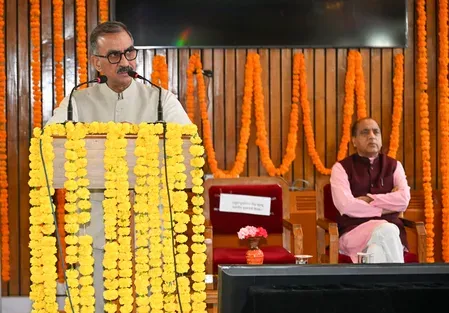
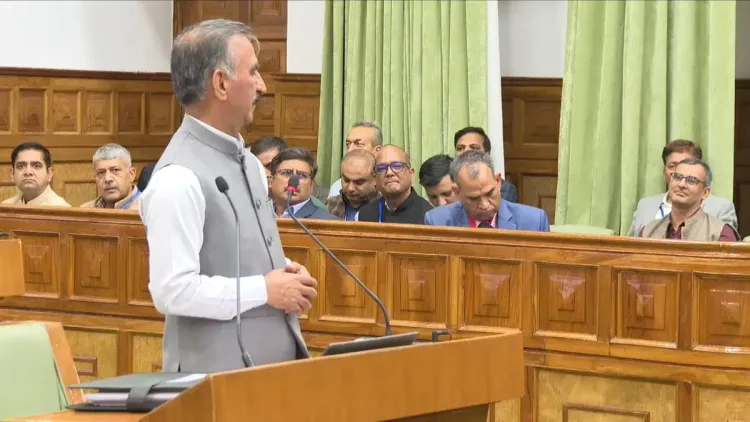
A formal accountability reckoning for Himachal Pradesh's BJP years moved from promise to paperwork on Tuesday, 17 November 2026 — as Chief Minister Sukhvinder Singh Sukhu announced that the notification constituting a White Paper Committee had been officially issued, nearly four years after his Congress government first floated the idea following its 2022 election victory.
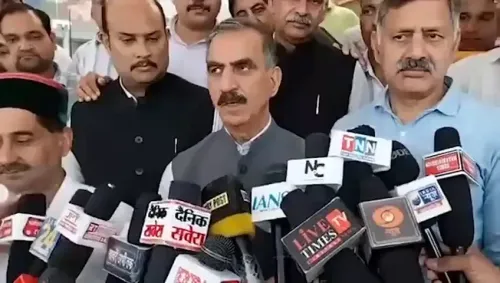
Posting on X, Sukhu framed the move with a pointed jab at the opposition: 'BJP ke hi log Jairam ji ko baat-baat par bolne ke liye uthane mein lage rehte hain' ('It is BJP's own people who keep pushing Jairam ji to speak on every little thing'), adding that his government, by contrast, 'is a well-wisher' of former Chief Minister Jairam Thakur. The Congress government says it has accepted BJP's 'call attention' motion in the assembly, but insists opposition legislators arrive with no concrete facts to back their allegations.
Agnihotri Leads, Six Senior MLAs Join the Panel
Deputy Chief Minister Mukesh Agnihotri will chair the committee — a signal of how seriously the Sukhu government is treating the exercise. The six-member panel includes Harshwardhan Chauhan, Jagat Singh Negi, Rohit Thakur, Anirudh Singh, Vikramaditya Singh, and Rajesh Dharmani — a cross-section of senior Congress legislators drawn from across the state's regions and cabinet.
The committee's mandate is to 'expose corruption' that allegedly took place during the BJP's 2017–2022 tenure under Jairam Thakur. The Sukhu government had flagged financial and administrative irregularities of that period as a campaign concern; this committee is the institutional follow-through.
A Well-Worn Playbook — With Real Consequences
Incoming state governments across India routinely constitute white-paper exercises to scrutinise the records of their predecessors — it is a move that is simultaneously a governance tool and a political weapon. The findings, when published, typically fuel assembly floor battles and, in some cases, trigger investigations by state agencies. The BJP has already signalled it will contest the process, calling the committee politically motivated.
What gives this particular panel weight is the seniority of its composition: Agnihotri as Deputy CM lends it executive authority, and the inclusion of cabinet-level legislators suggests the government intends its report to carry legislative heft, not just rhetorical value.
The next pressure point is the committee's report itself — if its findings are tabled in the assembly, every allegation becomes a matter of public record, and the opposition will have to answer to specifics rather than rebut a general charge. That is precisely the terrain the Sukhu government is trying to claim.
Point of View
Unlike speeches, produce documented findings. By placing Deputy CM Agnihotri at the helm, Sukhu signals executive ownership of the process, making it harder for the BJP to dismiss the exercise as a backbench manoeuvre. The timing, coinciding with what appears to be a live assembly session, is tactically sharp: it redirects the debate from BJP's 'call attention' motion to the Congress's own investigative agenda. Nationally, this fits a broader pattern of incoming state governments using white-paper panels as a dual-purpose tool — genuine accountability exercise and sustained political pressure on the opposition simultaneously.
NationPress
17 Nov 2026
Frequently Asked Questions
What is the Himachal Pradesh White Paper Committee?
It is a committee notified by CM Sukhvinder Singh Sukhu's government on 17 November 2026 to investigate alleged corruption and financial irregularities that occurred during the BJP government's tenure in Himachal Pradesh from 2017 to 2022.
Who is the chairman of the Himachal Pradesh White Paper Committee?
Deputy Chief Minister Mukesh Agnihotri has been named chairman of the White Paper Committee.
Who are the members of the White Paper Committee in Himachal Pradesh?
The six members are Harshwardhan Chauhan, Jagat Singh Negi, Rohit Thakur, Anirudh Singh, Vikramaditya Singh, and Rajesh Dharmani — all senior Congress legislators.
Why did CM Sukhu form the White Paper Committee?
The Congress government announced the committee to probe alleged corruption under the previous BJP government led by Jairam Thakur, fulfilling a commitment made after the Congress won the 2022 Himachal Pradesh assembly elections.
What will happen after the White Paper Committee submits its report?
If the report is tabled in the Himachal Pradesh assembly, its findings become part of the public legislative record and could trigger further debates, state agency investigations, or legal proceedings against individuals named in the report.