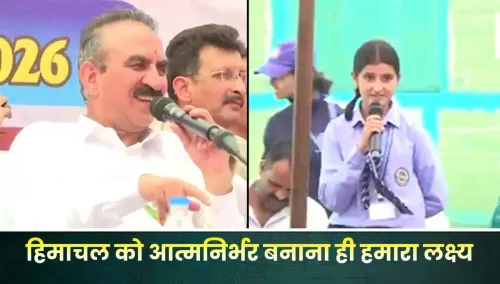
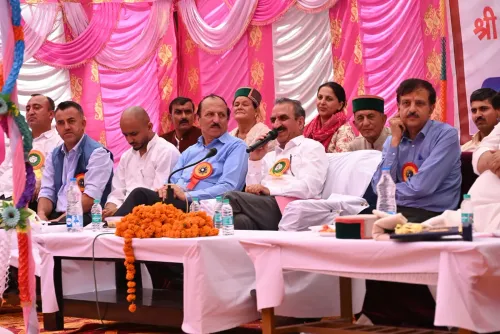
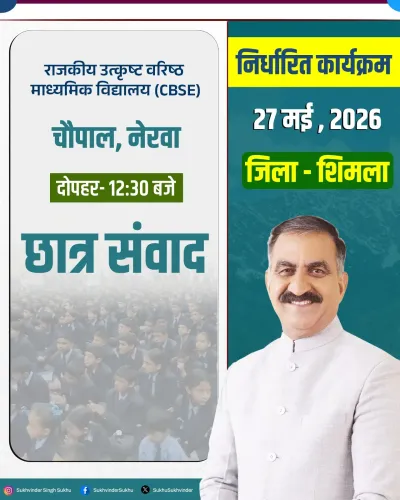
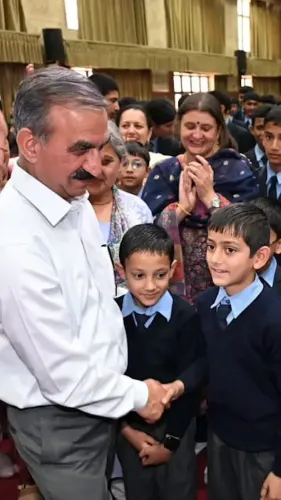
CM Sukhu orders better facilities for 1,013 tribal school students
Synopsis
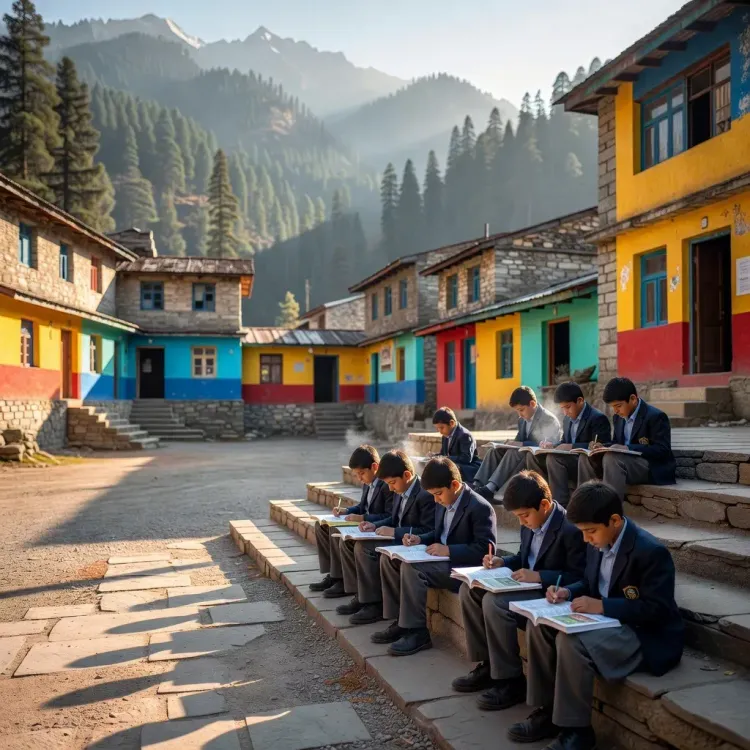
Chief Minister Sukhvinder Singh Sukhu has ordered a review of Eklavya Adarsh Awasiya Vidyalayas in Nichar, Pangi, Bharmour, and Lahaul, directing officials to improve facilities for 1,013 tribal students in Himachal Pradesh's remote high-altitude districts.
Key Takeaways
CM Thakur Sukhvinder Singh Sukhu directed officials to upgrade facilities for 1,013 students in four Eklavya tribal residential schools.
The schools are located in Nichar (Kinnaur), Pangi (Chamba), Bharmour (Chamba), and Lahaul (Lahaul-Spiti) — among Himachal Pradesh's most remote tribal areas.
Minister Jagat Singh Negi and concerned officials were present during the operational review.
The Eklavya Model Residential Schools scheme, launched in 1997–98 by the Union Ministry of Tribal Affairs, operates under joint central-state funding.
The review is part of recurring state efforts to address infrastructure and access gaps for Scheduled Tribe students in high-altitude districts.
The Chief Minister's Office of Himachal Pradesh announced on Tuesday, 23 June 2026 that Chief Minister Thakur Sukhvinder Singh Sukhu has directed authorities to improve facilities for 1,013 students enrolled in Eklavya Adarsh Awasiya Vidyalayas (EMRS) located in the tribal areas of Nichar, Pangi, Bharmour, and Lahaul.
The directive followed a review of the functioning of these four residential schools, conducted in the presence of Minister Jagat Singh Negi and concerned officials. The Chief Minister's office shared the announcement, quoting CM Sukhu directly: 'Eklavya Adarsh Awasiya Vidyalayas (Nichar, Pangi, Bharmour evam Lahaul) ki karyapranali ki samiksha kar 1013 vidyarthiyon ko behtar suvidhayen uplabdh karane ke nirdesh diye' — ('Instructions were given to review the functioning of Eklavya Adarsh Awasiya Vidyalayas in Nichar, Pangi, Bharmour, and Lahaul, and to provide better facilities to 1,013 students.').
Context
The four schools named — in Nichar (Kinnaur district), Pangi and Bharmour (Chamba district), and Lahaul (Lahaul-Spiti district) — serve Scheduled Tribe students in some of Himachal Pradesh's most geographically isolated and high-altitude regions. These areas face acute access barriers to quality education, with students often travelling long distances across difficult terrain.
Minister Jagat Singh Negi, who holds the tribal welfare portfolio in the state cabinet, was present during the review, signalling the government's institutional focus on EMRS oversight rather than a routine administrative exercise.
Policy Backdrop
The Eklavya Model Residential Schools scheme was launched by the Union Ministry of Tribal Affairs in 1997–98 to deliver quality education to Scheduled Tribe children in remote areas. The schools operate under a joint central-state funding framework, with states responsible for day-to-day management and infrastructure maintenance.
In Himachal Pradesh, the tribal belts of Lahaul-Spiti, Kinnaur, and Chamba have historically recorded lower literacy rates than the state average. Periodic state-level reviews of EMRS functioning have been part of recurring efforts to bridge this gap, though infrastructure upgrades in high-altitude zones remain logistically challenging.
Stakeholders and Impact
The immediate beneficiaries of the directive are the 1,013 students currently enrolled across the four schools. Better facilities — which could include hostel infrastructure, academic resources, and essential services — are expected to directly affect the residential experience and learning outcomes for this cohort of tribal students.
Tribal communities in Kinnaur, Chamba, and Lahaul-Spiti have long advocated for parity in educational infrastructure with schools in the state's plains districts. The CM's directive, if implemented, could also set a precedent for similar reviews across other EMRS in the state.
What's Next
The state government is expected to follow up with specific improvement plans for each of the four schools. Observers will watch for allocations in the state budget for EMRS upgrades and any inspection reports that may be tabled in the Himachal Pradesh Legislative Assembly.
With tribal welfare remaining a politically significant issue in the hill state, the pace and outcome of these improvements will be closely tracked by both community representatives and opposition legislators in the coming months.
Point of View
Not merely an administrative one — particularly with Jagat Singh Negi, the tribal affairs minister, present to reinforce accountability. Himachal Pradesh's Congress government has consistently framed welfare of Scheduled Tribe communities as a cornerstone of its governance pitch in a state where tribal constituencies hold significant electoral weight. However, the real test lies in implementation: EMRS upgrades in high-altitude belts like Lahaul-Spiti and Pangi are perennially delayed by terrain, weather, and supply-chain constraints. The directive will be meaningful only if followed by time-bound budget allocations and verifiable on-ground improvements.
NationPress
23 Jun 2026
Frequently Asked Questions
What are Eklavya Adarsh Awasiya Vidyalayas in Himachal Pradesh?
Eklavya Adarsh Awasiya Vidyalayas (EMRS) are government residential schools established under a central scheme launched in 1997–98 to provide quality education to Scheduled Tribe students in remote and tribal areas. In Himachal Pradesh, these schools operate in tribal districts including Kinnaur, Chamba, and Lahaul-Spiti.
What did CM Sukhu announce for tribal school students on 23 June 2026?
Chief Minister Sukhvinder Singh Sukhu directed officials to review the functioning of four Eklavya Adarsh Awasiya Vidyalayas in Nichar, Pangi, Bharmour, and Lahaul, and to provide better facilities to the 1,013 students enrolled in these schools.
Which Eklavya schools were reviewed by the Himachal Pradesh government?
The review covered four EMRS — in Nichar (Kinnaur district), Pangi and Bharmour (Chamba district), and Lahaul (Lahaul-Spiti district). All four serve tribal students in high-altitude, geographically isolated areas of Himachal Pradesh.
Who is Jagat Singh Negi and what is his role in tribal education?
Jagat Singh Negi is a cabinet minister in the Himachal Pradesh government holding the tribal welfare portfolio. He was present during CM Sukhu's review of the Eklavya residential schools, underlining the state's institutional focus on tribal education oversight.
How are Eklavya Model Residential Schools funded in India?
EMRS operate under a joint central-state funding model, with the Union Ministry of Tribal Affairs providing central support and state governments managing day-to-day operations, staffing, and infrastructure maintenance.