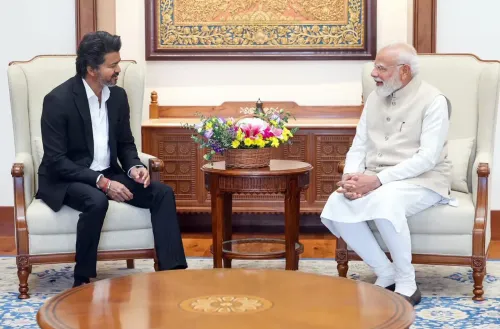
CM Joseph Vijay Writes to PM Modi Over NLC Disinvestment
Synopsis
Tamil Nadu Chief Minister C. Joseph Vijay has written to Prime Minister Narendra Modi urging the Centre to reconsider its decision to divest the Government of India's stake in NLC India Limited, a key lignite mining and power generation PSU based in Neyveli, Tamil Nadu.
Key Takeaways
Joseph Vijay has formally written to PM Narendra Modi on the NLC India Limited disinvestment issue.
The letter requests the Centre to 'reconsider' its decision to sell the Government of India's stake in NLC India Limited (formerly Neyveli Lignite Corporation).
NLC India Limited is a central PSU based in Neyveli, Tamil Nadu , involved in lignite mining and thermal power generation.
The move reflects ongoing federal friction over central disinvestment decisions affecting enterprises operating in Tamil Nadu.
Key stakeholders include NLC employees , Tamil Nadu power sector workers, and the state's broader electricity supply chain.
A formal reply from the Prime Minister's Office and any mention in upcoming Budget or disinvestment policy statements will be closely tracked.
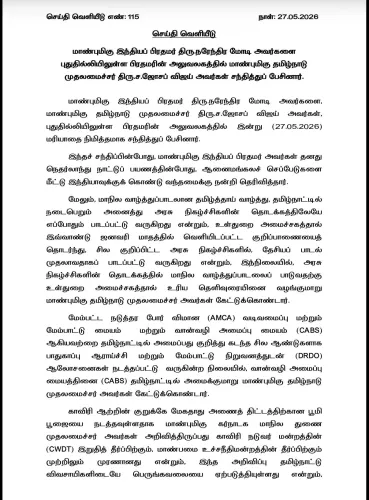
The Chief Minister's Office of Tamil Nadu announced on Thursday, 25 June 2026 that Chief Minister C. Joseph Vijay has written to Prime Minister Narendra Modi, urging the Centre to reconsider its decision to divest the Government of India's stake in NLC India Limited, formerly known as Neyveli Lignite Corporation.
Context
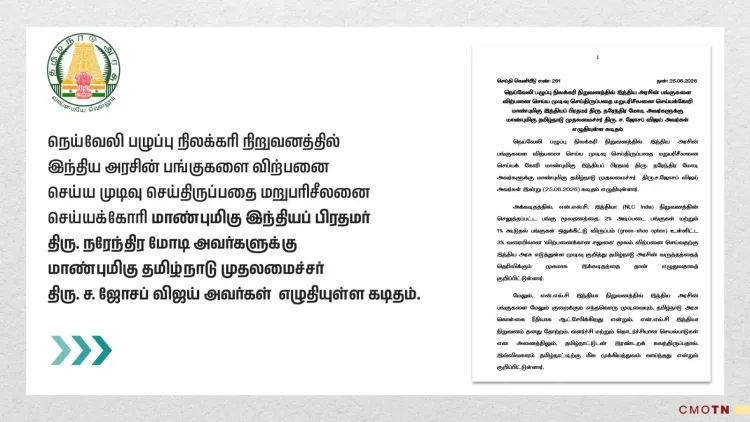
The letter, shared by the official CMO Tamil Nadu account, was addressed to the Prime Minister requesting a 'reconsideration' of the Centre's decision to sell its shareholding in NLC India Limited. The Tamil Nadu government has positioned its intervention as a matter of safeguarding regional employment and the state's energy security interests. NLC India Limited is a central public sector undertaking headquartered in Neyveli, Tamil Nadu, engaged in lignite mining and thermal power generation.
The post's Tamil text reads: 'நெய்வேலி பழுப்பு நிலக்கரி நிறுவனத்தில் இந்திய அரசின் பங்குகளை விற்பனை செய்ய முடிவு செய்திருப்பதை மறுபரிசீலனை செய்யக்கோரி' — translated as: 'urging reconsideration of the decision to sell the Government of India's shares in the Neyveli Lignite Corporation.'
Policy Backdrop
Disinvestment of central public sector undertakings has been a recurring feature of Union Budget policy since 2014, with the government setting annual targets to monetise stakes in state-owned enterprises as part of fiscal consolidation. NLC India Limited operates lignite mines and power plants that are integral to Tamil Nadu's electricity supply chain, making any change in its ownership structure a matter of direct concern for the state.
The strategic or non-strategic classification of energy and mineral PSUs has been a persistent source of federal friction, with several state governments over the years contesting Centre-led disinvestment moves that affect enterprises operating on their soil. Tamil Nadu's intervention follows this established pattern of state-level pushback against central disinvestment decisions in the energy sector.
Stakeholders and Impact
The proposed stake sale, if carried through, could affect thousands of NLC India Limited employees and contract workers based in Neyveli and surrounding areas. Tamil Nadu's power sector, which draws on NLC's thermal generation capacity, could also see implications for electricity supply planning depending on the nature and extent of any ownership change.
Unions representing NLC workers have historically been vocal against disinvestment moves, and CM Joseph Vijay's letter is likely to amplify those concerns at the highest political level. The move also signals the state government's intent to assert its interests in decisions involving major industrial assets located within Tamil Nadu.
What's Next
The immediate focus will be on a formal response from the Prime Minister's Office to the Chief Minister's letter. Any reference to NLC India Limited in upcoming Union Budget speeches or revised disinvestment policy statements will be closely watched by state officials, employees, and energy sector observers. The Centre's handling of this request will also serve as a signal for how it intends to manage state-Centre relations on disinvestment matters going forward.
Point of View
The Tamil Nadu government creates a formal paper trail that signals seriousness beyond routine political rhetoric. The move fits a broader pattern in which southern states have increasingly pushed back against economic decisions made in New Delhi that they see as affecting regional employment and resource sovereignty. How the Centre responds — or chooses not to respond — will set a precedent for similar state-Centre standoffs over PSU disinvestment.
NationPress
24 Sept 2026
Frequently Asked Questions
Why has Tamil Nadu CM written to PM Modi about NLC India?
Tamil Nadu Chief Minister C. Joseph Vijay has written to Prime Minister Narendra Modi urging him to reconsider the Centre's decision to divest the Government of India's stake in NLC India Limited, citing concerns about employment and the state's energy interests.
What is NLC India Limited and why is it important to Tamil Nadu?
NLC India Limited, formerly Neyveli Lignite Corporation, is a central public sector undertaking based in Neyveli, Tamil Nadu. It is engaged in lignite mining and thermal power generation, making it a key contributor to Tamil Nadu's electricity supply.
What does disinvestment of NLC India mean?
Disinvestment means the Government of India would sell part or all of its shareholding in NLC India Limited, potentially reducing the Centre's ownership and control over the company.
Has the Centre responded to Tamil Nadu's objection on NLC disinvestment?
As of 25 June 2026, no formal response from the Prime Minister's Office has been reported. A reply from the Centre and any mention in upcoming Budget or policy statements will be closely watched.
Which other states have opposed central PSU disinvestment in the past?
Several state governments have historically opposed Centre-led disinvestment of PSUs operating on their territory, particularly in the energy and mineral sectors, citing concerns over employment, resource control, and regional economic impact.