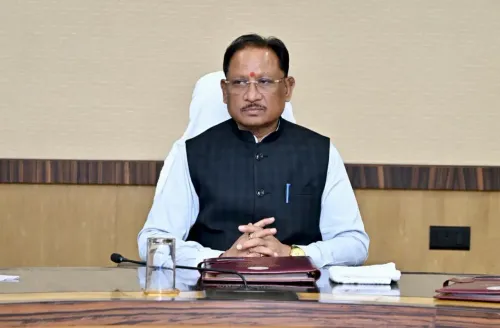
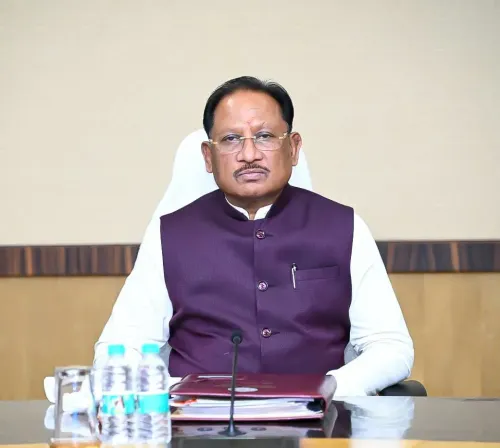
CM Vishnu Deo Sai Chairs Cabinet Meeting in Nava Raipur
Synopsis
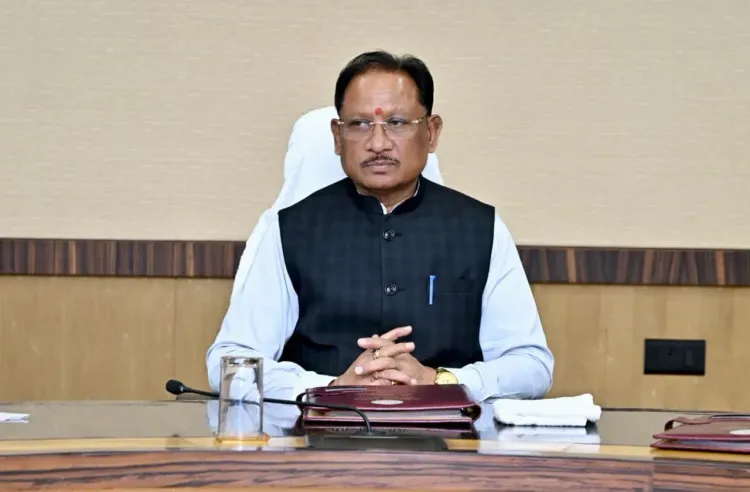
Chief Minister Vishnu Deo Sai convened a Cabinet meeting at Mahanadi Bhawan, Nava Raipur Atal Nagar on 30 September 2026. The BJP-led Chhattisgarh government announced the session officially but disclosed no agenda or outcomes at the time of the post.
Key Takeaways
Chief Minister Vishnu Deo Sai chaired the Cabinet meeting on 30 September 2026 .
The meeting was held at Mahanadi Bhawan, Nava Raipur Atal Nagar , the state's planned capital and secretariat.
No specific agenda items or decisions were disclosed in the official announcement.
Sai has been Chief Minister since December 2023 , following the BJP's assembly election victory.
Cabinet meetings are the constitutional mechanism for collective executive decision-making in Indian states.
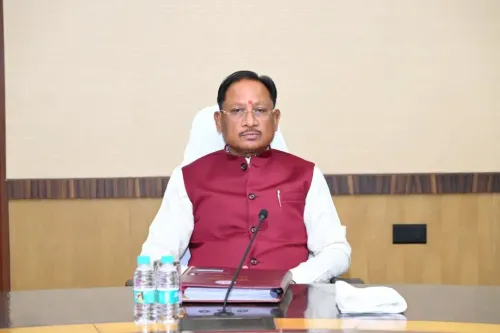
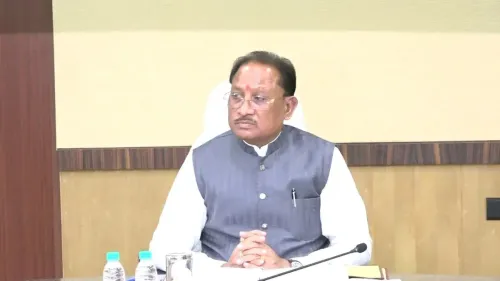
The wheels of Chhattisgarh's executive machinery turned again on Wednesday, 30 September 2026, as Chief Minister Vishnu Deo Sai convened a full meeting of the state Cabinet at Mahanadi Bhawan, Nava Raipur Atal Nagar — the planned capital that now houses the state secretariat and serves as the nerve centre of the BJP government's administrative operations.
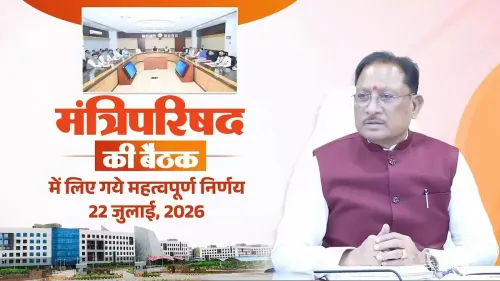
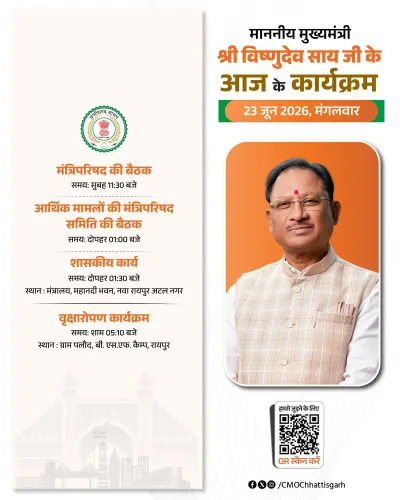
The Chief Minister's Office of Chhattisgarh announced the commencement of the Mantriparishad ki baithak (Council of Ministers meeting) via its official X account, confirming the venue as the state's ministerial headquarters. No specific agenda or decisions were disclosed in the announcement.Sai Cabinet's governing rhythm since December 2023
Vishnu Deo Sai was sworn in as Chief Minister in December 2023 after the BJP secured a decisive majority in the Chhattisgarh assembly elections, ending the Congress government's five-year tenure. Since taking office, the Sai cabinet has used regular ministerial council meetings as its primary instrument for clearing policy files, approving welfare schemes, and issuing administrative orders — standard operating procedure for any Indian state executive.
Chhattisgarh's secretariat at Mahanadi Bhawan in Nava Raipur Atal Nagar — a purpose-built greenfield capital conceived in the early 2000s — has become the formal stage for these deliberations. The BJP government has branded its governance approach under the hashtag #Sushasansarkar (Good Governance Government), a phrase that featured in today's official post alongside #Development and #GoodGovernance.
What cabinet meetings actually decide
In India's federal structure, state cabinet meetings are the constitutional mechanism through which the Council of Ministers exercises collective executive authority. Decisions range from scheme approvals and budget reallocations to administrative appointments and ordinances. The outcomes of today's session had not been disclosed at the time of the announcement — formal press releases or cabinet decision bulletins typically follow after the meeting concludes.
For a state like Chhattisgarh — mineral-rich, home to significant tribal populations, and a long-running theatre of Left-Wing Extremism — cabinet decisions carry weight well beyond routine paperwork. Every session is a potential inflection point for development policy, security coordination, or welfare delivery.
Whether today's meeting yields headline decisions or quietly clears a backlog of administrative files, the Sai government's consistency in convening formal cabinet sessions signals an administration keeping its institutional machinery in motion. The announcements, when they come, will tell the fuller story.
Point of View
But their political significance in Chhattisgarh is amplified by context: the Sai government is still consolidating its administrative identity after ending a five-year Congress tenure in late 2023. Branding every cabinet convening under 'Sushasan Sarkar' is a deliberate messaging strategy — it ties routine executive functioning to a larger narrative of disciplined, accountable governance. The real test, however, is what emerges from these sessions: scheme approvals, security decisions, and tribal welfare measures will define whether the label sticks beyond social media.
NationPress
30 Sept 2026
Frequently Asked Questions
Who is the Chief Minister of Chhattisgarh in 2026?
Vishnu Deo Sai is the Chief Minister of Chhattisgarh. He was sworn in December 2023 after the BJP won the state assembly elections.
Where is the Chhattisgarh cabinet meeting held?
Chhattisgarh cabinet meetings are held at Mahanadi Bhawan in Nava Raipur Atal Nagar, the state's planned capital that houses the secretariat.
What decisions were taken in the Chhattisgarh cabinet meeting on 30 September 2026?
No specific agenda or decisions were disclosed in the official announcement at the time of the meeting's commencement. Formal outcomes are typically released after the session concludes.
What is Nava Raipur Atal Nagar?
Nava Raipur Atal Nagar is the planned capital city of Chhattisgarh, conceived in the early 2000s, and now home to the state secretariat at Mahanadi Bhawan.
When did BJP form government in Chhattisgarh?
The BJP won the Chhattisgarh assembly elections in late 2023, and Vishnu Deo Sai was sworn in as Chief Minister in December 2023.