CM Mohan Yadav Pushes Indore-Ujjain-Bhopal Metropolitan Vision
Synopsis
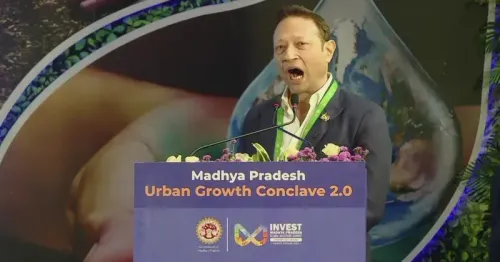
Madhya Pradesh CM Dr. Mohan Yadav has reaffirmed a sustained drive to develop Indore, Ujjain, and Bhopal as full metropolitan cities, flagging the vision at the MPUrbanGrowthConclave on 29 October 2026.
Key Takeaways
Mohan Yadav publicly committed to developing Indore, Ujjain, and Bhopal as metropolitan cities at the MPUrbanGrowthConclave on 29 October 2026 .
Indore already exceeds India's one-million-population metropolitan threshold; Ujjain and Bhopal are in the high-growth zone.
Both Indore and Bhopal were selected under the Smart Cities Mission (2015) , giving them a head start on integrated urban infrastructure.
The three cities form a roughly 200-kilometre corridor across central Madhya Pradesh, with strategic potential for economic decentralisation.
CM Yadav's use of the word satatprayas ('continuous efforts') signals a long-term policy commitment rather than a one-time announcement.
Project timelines, funding allocations, and master plans from the conclave are the key deliverables to watch.
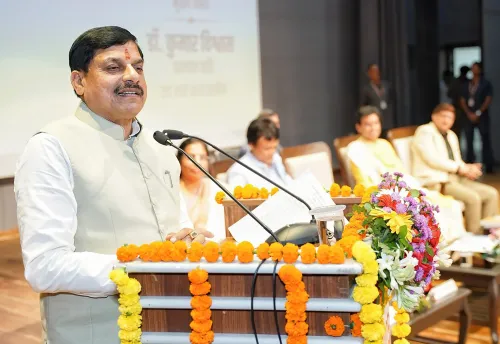
Three cities, one ambitious blueprint — Madhya Pradesh Chief Minister Dr. Mohan Yadav has signalled a sustained push to develop Indore, Ujjain, and Bhopal as full-scale metropolitan centres, anchoring the vision at the #MPUrbanGrowthConclave on Thursday, 29 October 2026.
Three Cities, One Corridor
The trio forms a roughly 200-kilometre urban corridor cutting through the heart of Madhya Pradesh. Indore — the state's commercial engine and India's perennial cleanliness champion — anchors the western end. Bhopal, the state capital, holds the administrative and institutional weight. And Ujjain, one of Hinduism's holiest cities and the site of the Kumbh Mela, bridges heritage with the kind of pilgrim-driven footfall that makes urban planners sit up straight.
CM Yadav's post, written in Hindi — 'Indore-Ujjain-Bhopal ko metropolitan city ke roop mein viksit karne ki disha mein satatprayas' — translates to 'continuous efforts in the direction of developing Indore-Ujjain-Bhopal as metropolitan cities'. The word satatprayas — 'continuous efforts' — signals this is a long-game commitment, not a single announcement.
What Metropolitan Status Actually Means
India classifies urban agglomerations with a population above one million as metropolitan areas, unlocking a different tier of infrastructure funding, planning authority, and investor attention. Indore already crosses that threshold. Ujjain and Bhopal are in the growth zone. Metropolitan designation typically triggers integrated master planning, dedicated development authorities, and eligibility for large-scale central government schemes.
Both Indore and Bhopal were selected under the Smart Cities Mission (2015) for integrated urban infrastructure upgrades — giving them a head start on digital utilities, transit corridors, and civic tech. The current push appears to build on that foundation, scaling it toward full metropolitan governance architecture.
Decentralisation as National Strategy
Madhya Pradesh's three-city play fits a broader national pattern: states developing secondary and tertiary cities to absorb migration pressure that would otherwise overwhelm Delhi, Mumbai, and Bengaluru. Economic decentralisation — spreading jobs, housing, and institutions across more cities — has become a policy priority as India's urban population moves toward 600 million by mid-century.
For the Indore-Ujjain-Bhopal corridor, the strategic case is compelling. Connectivity infrastructure between the three — roads, proposed metro rail studies, and freight logistics — could position central India as a genuine counterweight to the western and southern coastal corridors. Project timelines, funding allocations, and master plans from the conclave will be the real test of how fast intent converts to concrete.
Point of View
Broadening the coalition of stakeholders behind the plan. The real signal to watch is whether the conclave produces binding master plans and Central funding commitments, or remains at the level of aspirational framing. Metropolitan designation without matched fiscal architecture has historically stalled similar drives in other states.
NationPress
29 Oct 2026
Frequently Asked Questions
What is the MPUrbanGrowthConclave?
The MPUrbanGrowthConclave is a state-level event focused on urban development policy in Madhya Pradesh, where CM Dr. Mohan Yadav outlined plans to develop Indore, Ujjain, and Bhopal as metropolitan cities.
What does it mean for a city to be declared a metropolitan city in India?
In India, a city or urban agglomeration with a population exceeding one million is classified as a metropolitan area, unlocking higher-tier infrastructure funding, dedicated development authorities, and eligibility for major central government urban schemes.
Why is Ujjain included in the metropolitan development plan alongside Indore and Bhopal?
Ujjain is a major religious and heritage centre in Madhya Pradesh, hosting large-scale events like the Kumbh Mela. Its inclusion reflects a strategy to link pilgrimage-driven economic activity with the commercial and administrative strengths of Indore and Bhopal along a connected urban corridor.
Are Indore and Bhopal already part of the Smart Cities Mission?
Yes, both Indore and Bhopal were selected under India's Smart Cities Mission launched in 2015, making them eligible for integrated urban infrastructure upgrades and giving them a policy head start toward metropolitan-scale development.
What are the next steps after the MPUrbanGrowthConclave?
Key outcomes to watch include the release of project timelines, Central and state funding allocations, and integrated master plans for the Indore-Ujjain-Bhopal corridor that would convert the metropolitan vision into binding urban policy.