CM Mohan Yadav Pledges Stronger MP-Andhra Cultural Ties
Synopsis
Madhya Pradesh CM Dr. Mohan Yadav pledged on 17 October 2026 to strengthen the state's civilisational bonds with Andhra Pradesh, calling on businesspersons, entrepreneurs, and artists from both states to jointly deepen cultural and economic ties.
Key Takeaways
Mohan Yadav , Chief Minister of Madhya Pradesh , publicly committed to reinvigorating cultural and economic ties with Andhra Pradesh on 17 October 2026 .
The CM invoked 'thousands of years' of shared affinity between the two states as the historical foundation for deeper modern cooperation.
Three specific constituencies were named as agents of this partnership: businesspersons, entrepreneurs, and artists .
The statement fits a broader pattern of Indian state CMs pursuing bilateral inter-state cooperation in trade, tourism, and the arts independently of the Centre.
No specific events, MoUs, or institutional mechanisms were announced — the declaration sets intent, with concrete steps yet to follow.
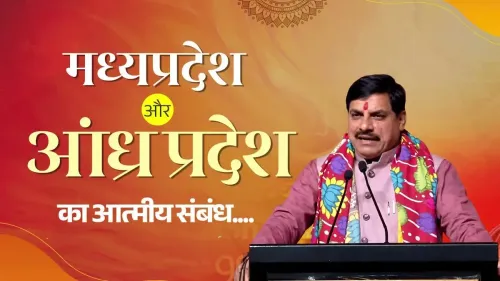
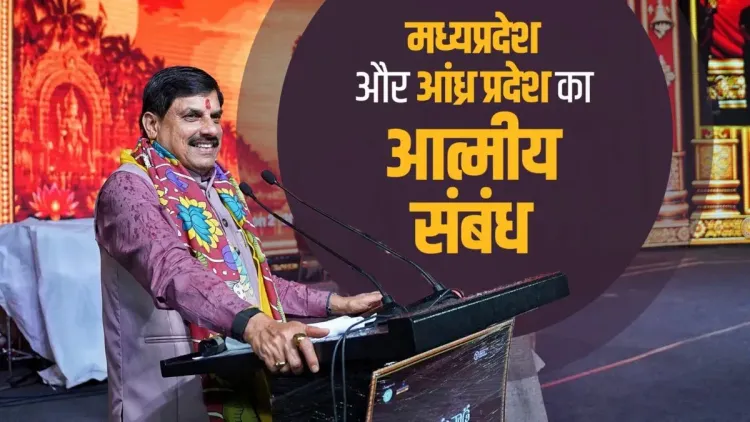
Thousands of years of shared heritage are getting a fresh push. Madhya Pradesh Chief Minister Dr. Mohan Yadav declared on Saturday, 17 October 2026 that Madhya Pradesh and Andhra Pradesh will deepen their civilisational bonds — channelling the energy of business communities, entrepreneurs, and artists to translate ancient ties into modern partnerships.
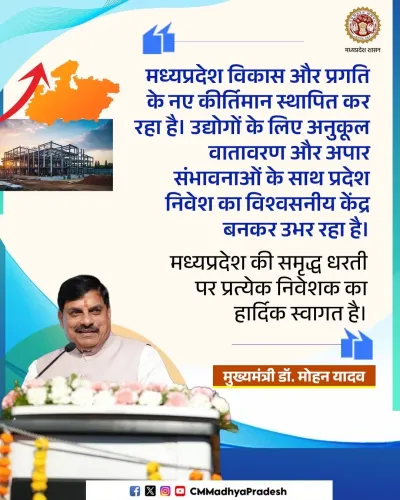
In his post, the Chief Minister wrote: 'मध्यप्रदेश एवं आंध्र प्रदेश के बीच हजारों वर्षों से आत्मीयता के संबंध रहे हैं' — 'Madhya Pradesh and Andhra Pradesh have shared bonds of affection for thousands of years. We will infuse new energy into the cultural relations of both states and strengthen these ties further through the cooperation of businesspersons, entrepreneurs, and artists.'
A Civilisational Thread Running South to North
Madhya Pradesh, at India's geographic heart, and Andhra Pradesh, anchored on the southeastern coast, sit at opposite poles of the subcontinent — yet their historical overlap is layered and deep. Buddhist trade routes, Deccan Plateau dynasties, and shared devotional traditions once stitched these regions into a single cultural fabric. Dr. Yadav's framing leans squarely into that longue durée, invoking 'thousands of years' as a foundation rather than a slogan.
In India's federal architecture, state-to-state cooperation in trade, tourism, and the arts operates largely without a central mandate — making chief ministerial intent the primary catalyst. When a sitting CM publicly commits to bilateral engagement, it signals not just goodwill but a potential pipeline: joint cultural festivals, trade delegations, and investment memorandums of understanding. The three pillars Dr. Yadav names — businesspersons, entrepreneurs, and artists — cover both the economic and the soft-power tracks simultaneously.
Where Business and Culture Converge
The pairing is deliberate. Cultural diplomacy between Indian states has historically unlocked economic corridors: shared festivals draw tourism, artist exchanges build brand recognition, and entrepreneur networks follow cultural familiarity. By naming all three constituencies in one breath, Dr. Yadav is sketching a framework, not just a sentiment.
Madhya Pradesh has in recent years positioned itself as an investment-friendly state, hosting global investor summits and expanding its industrial footprint. Andhra Pradesh, rebuilding aggressively after its 2014 bifurcation, has courted technology and manufacturing investment across the coastal belt. A structured bilateral conversation between the two states could find real common ground — in agro-processing, textiles, heritage tourism, and the creative economy.
The next test is whether this public statement is followed by concrete institutional steps: a joint cultural calendar, a business delegation, or a formal MoU. Intent has been declared. The architecture is yet to be built.
Point of View
Outward-looking state. For a CM who took office in late 2023 and has sought to expand MP's economic footprint, inter-state cultural diplomacy is a low-friction, high-visibility lever. The explicit inclusion of entrepreneurs and artists alongside businesspersons signals an attempt to build people-to-people infrastructure, not just top-level declarations. Whether this crystallises into institutional agreements — joint festivals, trade corridors, or MoUs — will determine if the statement becomes policy or remains aspiration.
NationPress
18 Oct 2026
Frequently Asked Questions
What did MP CM Mohan Yadav say about Andhra Pradesh?
CM Dr. Mohan Yadav stated that Madhya Pradesh and Andhra Pradesh share bonds of affection spanning thousands of years, and pledged to strengthen these cultural and economic ties through cooperation among businesspersons, entrepreneurs, and artists from both states.
What is the historical connection between Madhya Pradesh and Andhra Pradesh?
The two states share deep historical ties rooted in ancient trade routes, Deccan Plateau dynastic history, and shared devotional and cultural traditions that linked central and southern India over millennia.
Who is Dr. Mohan Yadav?
Dr. Mohan Yadav is the Chief Minister of Madhya Pradesh and a BJP leader who took office in December 2023.
How do Indian states cooperate on culture and trade without central government involvement?
Under India's federal framework, state governments can independently pursue bilateral cooperation in trade, tourism, and the arts — through MoUs, joint cultural events, and trade delegations — without requiring a central mandate.
What could come next from CM Yadav's MP-Andhra outreach?
Potential follow-up steps include joint cultural festivals, business and trade delegations, artist exchange programmes, and formal memorandums of understanding between the two state governments.