CM Mohan Yadav Calls for Conservation Pledge on World Environment Day
Synopsis
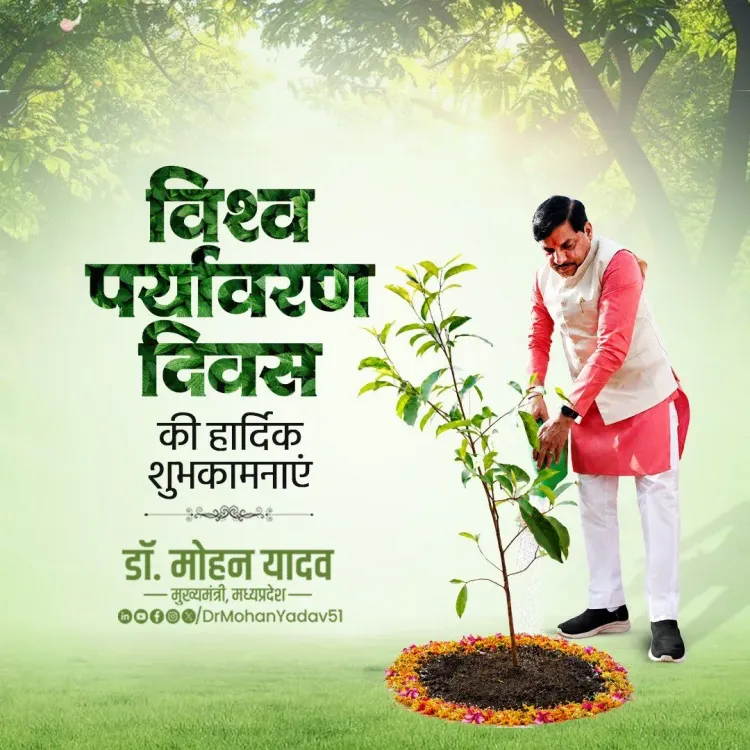
On World Environment Day, 5 June 2026, Madhya Pradesh Chief Minister Dr. Mohan Yadav invoked Indian tradition to call for a public pledge on protecting water, forests, and land, urging citizens to plant trees and raise environmental awareness.
Key Takeaways
Madhya Pradesh Chief Minister Dr.
Mohan Yadav posted a World Environment Day message on 5 June 2026 .
He called on citizens to pledge conservation of water, forests, and land ( jal, jangal, zameen ).
The appeal rooted environmental action in Indian cultural tradition and the concept of coexistence with nature.
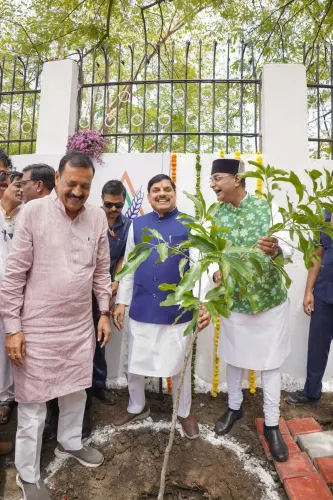
Yadav urged people to plant trees and adopt a nature-friendly lifestyle .
Madhya Pradesh has one of India's largest forest covers and multiple tiger reserves, giving the message particular state-level resonance.
World Environment Day has been observed globally every 5 June since the UN General Assembly designated it in 1972 .
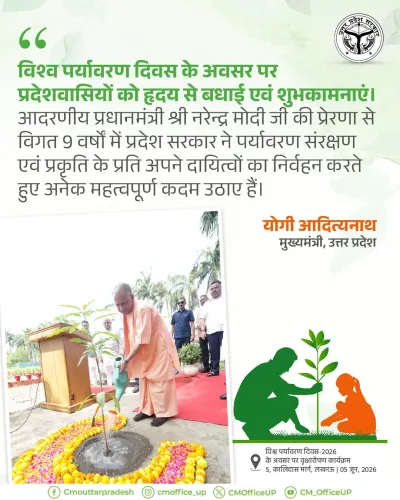
Madhya Pradesh Chief Minister Dr. Mohan Yadav on Friday, 5 June 2026, marked World Environment Day by calling on citizens to pledge the protection of water, forests, and land, urging them to plant trees and adopt nature-friendly lifestyles. The appeal, posted on his official X account, drew on Indian cultural tradition to frame environmental stewardship as a civilisational responsibility.
Context
In his post, Dr. Yadav wrote: 'भारतीय परंपरा ने हमें प्रकृति के साथ सहअस्तित्व का मार्ग दिखाया है' ['Indian tradition has shown us the path of coexistence with nature']. He described trees, rivers, mountains, and wildlife as the very foundation of human life, grounding his environmental message in a distinctly Indian philosophical framework rather than purely policy language.
He further urged people to plant trees for a 'clean and green environment,' adopt a nature-compatible lifestyle, and spread awareness among others — a call that aligns with broader national campaigns on afforestation and ecological consciousness.
Policy Backdrop
World Environment Day has been observed globally every 5 June since it was designated by the United Nations General Assembly in 1972, following the landmark Stockholm Conference on the Human Environment. India has been an active participant in the day's observances for decades, with state and central governments regularly anchoring it to domestic conservation targets.
Madhya Pradesh holds one of the largest forest covers among all Indian states and is home to several prominent tiger reserves, making forest and wildlife conservation a core part of the state's identity. India's National Action Plan on Climate Change, launched in 2008, includes a dedicated national mission on afforestation, providing a long-standing policy framework within which state-level pledges such as Dr. Yadav's sit.
The National Forest Policy of 1988 also emphasised balancing conservation with the livelihood needs of forest-dependent communities — a tension that remains relevant in Madhya Pradesh, where large tribal and rural populations depend on forest resources.
Stakeholders and Impact
The message is directed broadly at residents of Madhya Pradesh and the wider public, but carries particular significance for forest-dependent communities across the state's tribal belts, where environmental health directly governs livelihoods. Conservation appeals by the Chief Minister on high-visibility global occasions can also set the tone for state forest department priorities in the months that follow.
BJP-led state governments have consistently used World Environment Day to link India's traditional ecological values — reverence for rivers, trees, and mountains — with modern conservation goals, presenting cultural continuity as a driver of environmental action rather than framing it solely as a regulatory or scientific challenge.
What's Next
Observers will watch for follow-up announcements from the Madhya Pradesh government on state-level plantation drives, water conservation scheme updates, or forest protection targets in the weeks ahead. Chief Minister Dr. Yadav's message, while ceremonial in form, may signal the direction of forthcoming environmental policy communications from Bhopal as the monsoon season approaches — traditionally the period when large-scale tree-plantation campaigns are launched across Indian states.
Point of View
Forests as living systems — with contemporary conservation goals, lending cultural legitimacy to policy priorities. For a state like Madhya Pradesh, where forest cover and biodiversity are both an ecological asset and a political talking point, such messaging reinforces the government's green credentials ahead of the monsoon plantation season. The framing of 'coexistence with nature' as an Indian civilisational value, rather than a Western-imported environmentalism, is a deliberate rhetorical choice that resonates with the party's broader cultural nationalism. The real test will be whether the symbolic appeal translates into measurable state-level action on afforestation targets and water body conservation.
NationPress
21 Oct 2026
Frequently Asked Questions
Why did CM Mohan Yadav post about World Environment Day?
Chief Minister Dr. Mohan Yadav posted on World Environment Day, observed every 5 June, to call on citizens to pledge conservation of water, forests, and land and to plant trees for a cleaner environment.
When is World Environment Day celebrated?
World Environment Day is celebrated every year on 5 June. It was established by the United Nations General Assembly in 1972 following the Stockholm Conference on the Human Environment.
What did Mohan Yadav say on World Environment Day 2026?
He said Indian tradition has shown the path of coexistence with nature, described trees, rivers, mountains, and wildlife as the foundation of life, and urged people to plant trees, adopt a nature-friendly lifestyle, and spread awareness.
What is Madhya Pradesh's role in India's forest conservation?
Madhya Pradesh has one of the largest forest covers among Indian states and hosts several major tiger reserves, making it a key state in India's national forest and wildlife conservation efforts.
What is jal jangal zameen in Indian environmental policy?
'Jal, jangal, zameen' — meaning water, forest, and land — is a phrase widely used in Indian environmental and tribal rights discourse to capture the three natural resources most critical to rural and forest-dependent communities.