CM Yogi: 60% of India's Expressways Now in UP
Synopsis
UP Chief Minister Yogi Adityanath claimed on 3 July 2026 that 60 per cent of India's expressways now lie in Uttar Pradesh, crediting the BJP's 'double engine government' for the state's rapid infrastructure expansion under the Bharatmala framework since 2017.
Key Takeaways
CM Yogi Adityanath claimed on 3 July 2026 that 60% of India's expressways are located in Uttar Pradesh .
The claim is attributed to the 'double engine government' — simultaneous BJP rule at the Centre and in UP .
The Agra-Lucknow Expressway ( 341 km ) and Purvanchal Expressway ( 341 km ) are among the flagship corridors completed since 2017 .
Bharatmala Pariyojana , launched in 2015 , has been the Central policy framework enabling this expansion.
Key corridors still under development include the Delhi-Dehradun and Gorakhpur-Siliguri expressways.
The logistics sector and UP 's 24 crore -plus residents are the primary beneficiaries of improved road connectivity.
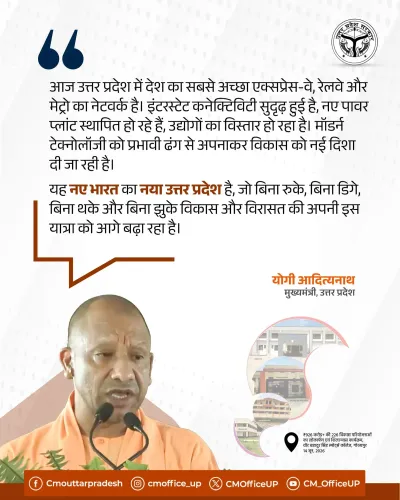
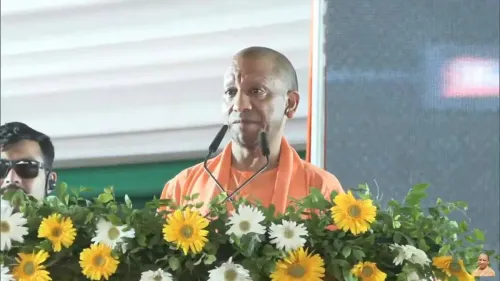
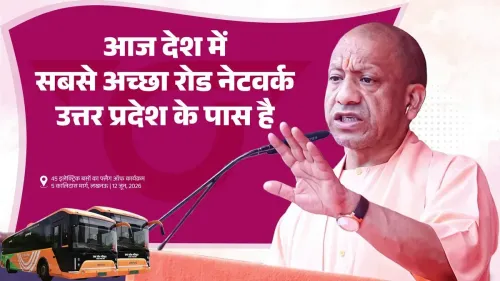
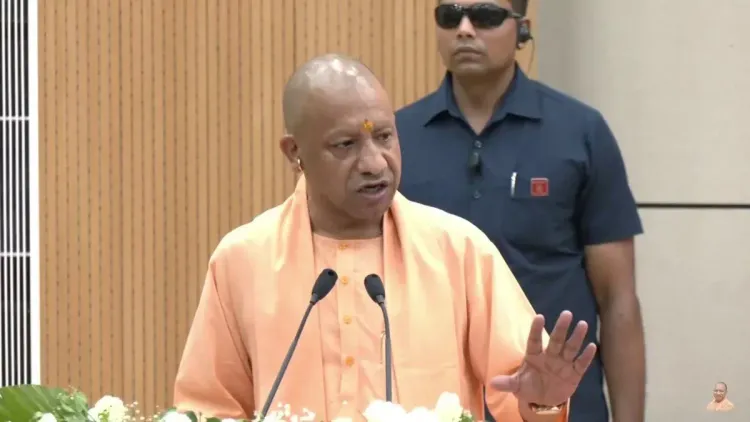
Uttar Pradesh Chief Minister Yogi Adityanath on Friday, 3 July 2026, claimed that 60 per cent of India's expressways are now located in Uttar Pradesh, attributing the achievement to the 'double engine government' — the BJP's political framing for simultaneous governance at the Centre and in the state.
Posting on X, the Chief Minister wrote, 'आज देश के 60% एक्सप्रेस-वे यूपी में हैं... यह डबल इंजन सरकार की ताकत है...' — translated: 'Today, 60% of the country's expressways are in UP... this is the strength of the double engine government.'
Context
Uttar Pradesh has seen a significant expansion of access-controlled expressway infrastructure since 2017, when Yogi Adityanath assumed office as Chief Minister. The state's expressway network includes major greenfield corridors built or commissioned during this period, making it one of the most connected states by this metric.
The claim of 60 per cent of national expressways being located in UP is made by the Chief Minister in his post; the precise share cannot be independently verified from available public records as of the post date. The figure is being cited as a political and governance milestone.
Policy Backdrop
The expressway expansion in Uttar Pradesh has been closely linked to the Bharatmala Pariyojana, the Central government's national highway development programme launched in 2015, which prioritised expressways, economic corridors, and border connectivity across India.
Among the landmark projects, the Agra-Lucknow Expressway (341 km) was inaugurated in 2017 as the first major greenfield expressway completed under the current state government. The Purvanchal Expressway (341 km), linking Lucknow to Ghazipur in eastern UP, was opened in 2021. Several additional corridors, including segments of the Delhi-Dehradun and Gorakhpur-Siliguri expressways, have been under development in subsequent years.
The 'double engine government' framing has been a consistent BJP narrative, arguing that states governed by the BJP alongside a BJP-led Central government benefit from faster fund release, policy alignment, and project execution — particularly in infrastructure.
Stakeholders and Impact
The primary beneficiaries of Uttar Pradesh's expanding expressway network include the state's 24 crore-plus residents and the national logistics sector. Improved road connectivity reduces freight costs, cuts travel times, and integrates industrial clusters and agricultural hinterlands with major economic centres.
For the logistics sector, access-controlled expressways lower per-kilometre operating costs for heavy vehicles compared to conventional national highways. UP's geographic centrality — bordering nine states — amplifies the national significance of its road infrastructure. Farmers in eastern UP, long underserved by connectivity, have seen improved market access through the Purvanchal Expressway corridor.
What's Next
Attention will remain on the completion timelines for the remaining segments of the Delhi-Dehradun Expressway and the Gorakhpur-Siliguri Expressway, both of which pass through or originate in Uttar Pradesh. Progress on these corridors will determine whether the state consolidates or extends its lead in national expressway coverage.
At the national level, the next Union Budget is expected to carry updates on Bharatmala Phase-II allocations, which could further shape the pace of expressway construction in UP and other states. The Chief Minister's post signals that expressway development will remain a central plank of the BJP's governance narrative in the state ahead of future electoral cycles.
Point of View
The messaging shifts the electoral conversation from law-and-order, which dominated UP's earlier BJP campaigns, to development and connectivity. The framing also reinforces the Centre-state synergy argument at a time when opposition-ruled states routinely contest the equitable distribution of Bharatmala funds. Whether or not the 60 per cent figure withstands independent audit, its deployment signals that infrastructure is now the BJP's primary governance credential in UP heading into the next political cycle.
NationPress
3 Jul 2026
Frequently Asked Questions
How many expressways does Uttar Pradesh have in 2026?
Chief Minister Yogi Adityanath claimed on 3 July 2026 that Uttar Pradesh accounts for 60 per cent of India's expressways, though the precise count and independent verification of this share is not available from public records as of the post date.
What is the 'double engine government' in India?
'Double engine government' is a BJP political phrase describing states where the BJP governs simultaneously at the Centre and in the state government, which the party argues enables faster infrastructure project approvals, fund releases, and execution.
What is Bharatmala Pariyojana?
Bharatmala Pariyojana is a Central government national highway and expressway development programme launched in 2015, focused on building economic corridors, inter-corridors, ring roads, and border connectivity roads across India.
Which are the major expressways in Uttar Pradesh?
Key expressways in Uttar Pradesh include the Agra-Lucknow Expressway (341 km, inaugurated 2017), the Purvanchal Expressway (341 km, opened 2021), and corridors under development such as the Delhi-Dehradun and Gorakhpur-Siliguri expressways.
What is the Purvanchal Expressway?
The Purvanchal Expressway is a 341-km access-controlled corridor linking Lucknow to Ghazipur in eastern Uttar Pradesh, opened in 2021, aimed at improving connectivity and logistics in the historically underserved eastern region of the state.