CM Yogi Backs Modi's Viksit Bharat Vision on Independence Day
Synopsis
On Independence Day 2026, UP CM Yogi Adityanath backed PM Modi's Red Fort address, framing it as a defining proclamation of the Viksit Bharat 2047 vision built on seven development streams — from manufacturing and defence to green economy and soft power.
Key Takeaways
UP CM Yogi Adityanath publicly endorsed PM Narendra Modi 's Independence Day 2026 address on 15 August 2026 .
The address was framed around seven streams of national strength : manufacturing, agriculture, innovation, Gati Shakti, defence, green economy, blue economy, and soft power.
CM Yogi highlighted the Viksit Bharat 2047 goal — transforming India into a developed economy by the centenary of independence — as the speech's central resolve.
Youth and women were named as the foundational pillars of India's nation-building effort.
The post invoked Atmanirbhar Bharat and PM Gati Shakti , linking the 2026 address to policy frameworks introduced in 2020 and 2021 respectively.
CM Yogi called on every citizen to put 'national interest above self' in contributing to a developed, self-reliant India.
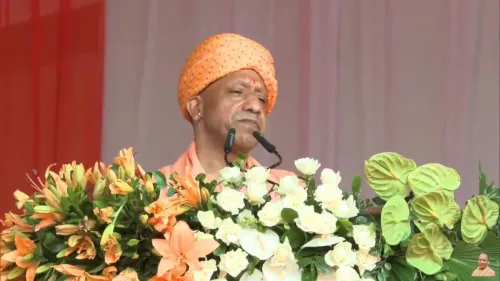
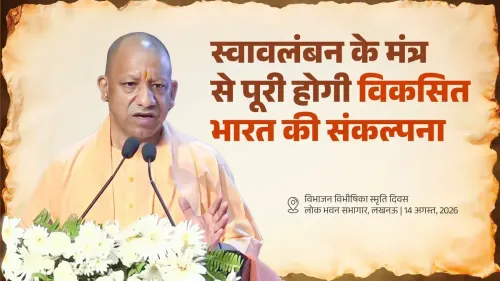
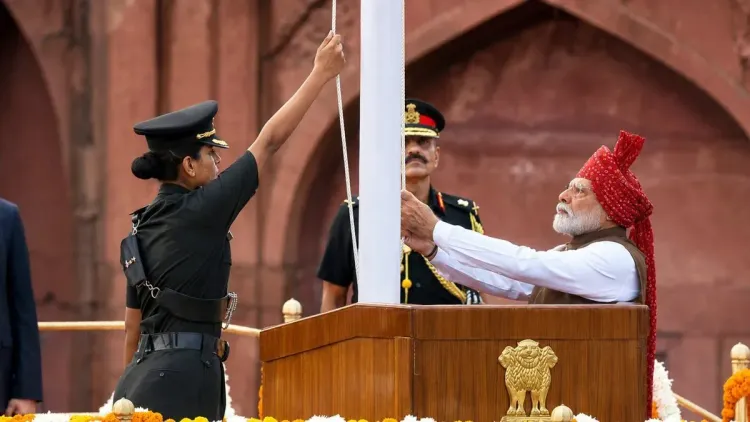
On Independence Day, 15 August 2026, Uttar Pradesh Chief Minister Yogi Adityanath threw his full weight behind Prime Minister Narendra Modi's address from the Red Fort, calling it a 'powerful proclamation' of India's resolve to become a developed nation by 2047. The message was unmistakable: the country's most populous state is aligning itself squarely with a 25-year national mission.
Seven streams, one vision: what Modi's address laid out
CM Yogi's post distilled the Prime Minister's speech around what he called the 'shakti ki sapt dhara' — seven streams of national strength. The seven sectors named are manufacturing, agriculture, innovation, Gati Shakti, defence, green economy, blue economy, and India's soft power — a sweep that mirrors the multi-sectoral framing that has defined the central government's development agenda since 2014.
PM Gati Shakti, the National Master Plan for multi-modal connectivity launched in October 2021, features explicitly in that list — a signal that infrastructure integration remains a live priority heading into the second half of the decade. So does Atmanirbhar Bharat, the self-reliance campaign introduced in May 2020, which underpins the manufacturing and defence planks.
'Nation above self': Yogi's call to every Indian
Beyond endorsing the Prime Minister's roadmap, CM Yogi used the post as a mobilisation message, urging every citizen to participate in building a 'developed, self-reliant and glorious India' with the spirit of 'swayam se upar rashtrahit' — national interest above self. The framing is deliberate: it ties the everyday citizen's sense of duty to a constitutional-scale ambition.
The post singled out youth and women — yuva shakti and matru shakti — as the twin foundations of nation-building. Both groups have been central to the BJP's political and policy messaging, from Skill India to the PM Vishwakarma scheme, and their prominence here reinforces a pattern visible across successive Independence Day addresses and Union Budget documents.
UP's stake in the 2047 countdown
For Uttar Pradesh, India's largest state by population and a critical driver of national GDP growth targets, the alignment with the Viksit Bharat timeline is more than rhetorical. State budgets in recent years have drawn directly from central schemes across infrastructure, green energy, and agricultural reform — the same pillars CM Yogi is now publicly reaffirming.
The post closes with a 'Jai Hind' — three syllables that, on this date, carry the full weight of 79 years of independence. The question now is how the seven-stream vision translates into state-level allocations when the next UP budget cycle opens.
Point of View
Yogi signals that UP's policy agenda will continue to mirror the Centre's priorities, making the state a key implementation laboratory for the Viksit Bharat mission. The emphasis on youth and women as nation-builders also tracks a broader BJP electoral strategy of mobilising these demographics through targeted welfare and skilling schemes. Watch whether the next UP budget explicitly maps expenditure heads to the seven-stream framework — that would convert today's rhetoric into a measurable governance commitment.
NationPress
15 Aug 2026
Frequently Asked Questions
What is Viksit Bharat 2047?
Viksit Bharat 2047 is India's national goal to become a fully developed economy by 2047 , the centenary of independence. PM Modi first prominently outlined the vision in his Independence Day 2022 address, and it has anchored successive national policy documents and budget speeches since then.
What did CM Yogi Adityanath say about PM Modi's Independence Day 2026 speech?
CM Yogi called PM Modi's address a 'powerful proclamation' of the Viksit Bharat resolve, highlighting the speech's focus on seven development streams — manufacturing, agriculture, innovation, Gati Shakti, defence, green economy, blue economy, and India's soft power — and its call to put national interest above self.
What is PM Gati Shakti?
PM Gati Shakti is the National Master Plan for multi-modal connectivity launched in October 2021 . It aims to integrate infrastructure planning across ministries and departments to reduce logistics costs and accelerate economic growth.
What is Atmanirbhar Bharat?
Atmanirbhar Bharat (Self-Reliant India) is a campaign announced by PM Modi in May 2020 to boost domestic manufacturing, reduce import dependence, and build economic resilience across sectors including defence, agriculture, and technology.
Why is Uttar Pradesh significant to the Viksit Bharat mission?
As India's most populous state, Uttar Pradesh is a critical driver of national growth targets. Its state budgets have increasingly aligned with central schemes in infrastructure, green energy, and agriculture — the same pillars at the heart of the Viksit Bharat 2047 framework.