CM Yogi: Every Nagar Nigam in UP Doing Something New
Synopsis
Chief Minister Yogi Adityanath has stated that every municipal corporation in Uttar Pradesh is actively pursuing new initiatives, signalling the state government's focus on competitive innovation across all 17 nagar nigams as part of wider urban governance reforms.
Key Takeaways
CM Yogi Adityanath's office shared his statement on June 19, 2026 that every nagar nigam in Uttar Pradesh is doing something new.
Uttar Pradesh has 17 nagar nigams covering major cities including Lucknow, Kanpur, Varanasi, Agra and Prayagraj .
Urban local bodies in India derive constitutional status from the 74th Constitutional Amendment Act of 1992 .
Several UP cities were selected under the Smart Cities Mission (2015) for technology-enabled urban projects.
The Yogi administration has emphasised competitive performance metrics among nagar nigams since taking office in March 2017 .
Municipal performance rankings and upcoming budget allocations will determine the next phase of urban reform in the state.
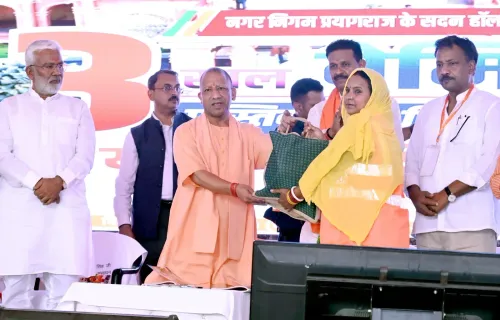
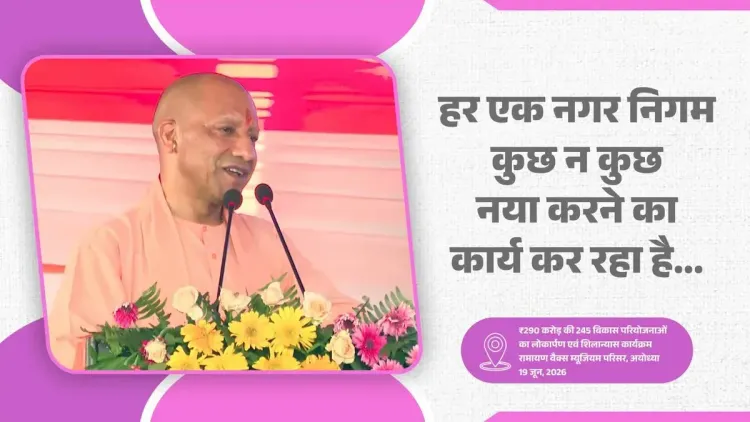
The Chief Minister's Office of Uttar Pradesh on Friday, June 19, 2026 shared a statement from Chief Minister Yogi Adityanath acknowledging that every municipal corporation in the state is actively pursuing innovation in urban governance and civic service delivery.
The post quoted CM Yogi Adityanath as saying, 'Uttar Pradesh ka har nagar nigam kuch na kuch naya karne ka karya kar raha hai' — 'Every municipal corporation of Uttar Pradesh is doing something new.' The remark signals the state government's intent to position its urban local bodies as engines of grassroots administrative reform.
Context
Uttar Pradesh has 17 nagar nigams — municipal corporations spread across major cities including Lucknow, Kanpur, Varanasi, Agra, Prayagraj and others. These bodies are constitutionally empowered under the 74th Constitutional Amendment Act of 1992, which granted urban local bodies a formal role in planning and delivery of civic services. CM Yogi's statement reflects a broader push to make these institutions more proactive and performance-oriented.
Policy Backdrop
The Smart Cities Mission, launched in 2015, selected several Uttar Pradesh cities for technology-driven urban development projects implemented through municipal corporations. The state has since encouraged nagar nigams to adopt competitive performance benchmarks in areas such as solid waste management, e-governance portals and property tax administration. This competitive framework has been a recurring theme under the Yogi administration, which took charge in March 2017.
Municipal bodies in UP have also been nudged to improve their rankings in national urban governance indices, which assess parameters ranging from sanitation to financial sustainability. The state government has periodically reviewed inter-municipal performance to identify and replicate best practices across cities.
Stakeholders and Impact
The primary beneficiaries of improved nagar nigam performance are the urban residents of Uttar Pradesh — a population spread across some of India's most densely populated cities. Better civic service delivery directly affects daily life: cleaner streets, faster grievance redressal, improved infrastructure and more transparent local taxation.
Municipal officials and elected ward councillors are also key stakeholders, as the state's emphasis on innovation places greater accountability on local administrative machinery. Recognition of nagar nigam initiatives can also influence resource allocation in future state budgets and urban development schemes.
What's Next
The state government is expected to continue monitoring nagar nigam performance through structured review mechanisms. Upcoming state budget cycles and the next municipal elections cycle in Uttar Pradesh are likely to shape how resources and political attention are directed toward urban local bodies. Any formal ranking or awards framework for high-performing nagar nigams could emerge as a concrete follow-up to CM Yogi's stated appreciation of municipal innovation. The broader national push to strengthen third-tier governance institutions makes UP's municipal reform trajectory one to watch closely.
Point of View
Amplified by the official CMO account, is a deliberate signal that the state government views municipal corporations not merely as service providers but as competitive units of governance reform — a framing that serves both administrative and political purposes ahead of future municipal elections. The statement fits a pattern of the Yogi administration using public acknowledgement to incentivise local bodies, creating a culture of visible performance without necessarily tying recognition to specific verified outcomes. More broadly, it reflects the national trajectory since 1992 of pushing urban local bodies toward greater autonomy and accountability, a project that remains uneven across Indian states. Whether this translates into measurable improvements in civic services for UP's urban residents will depend on the follow-through in budget allocations and independent performance audits.
NationPress
19 Sept 2026
Frequently Asked Questions
What did CM Yogi Adityanath say about nagar nigams in UP?
CM Yogi Adityanath stated that every municipal corporation in Uttar Pradesh is actively doing something new, highlighting a culture of innovation across all nagar nigams in the state.
How many nagar nigams are there in Uttar Pradesh?
Uttar Pradesh has 17 nagar nigams, or municipal corporations, covering major cities such as Lucknow, Kanpur, Varanasi, Agra and Prayagraj.
What is the role of nagar nigams in India?
Nagar nigams are urban local bodies constitutionally empowered under the 74th Amendment Act of 1992 to manage civic services, infrastructure and local governance in cities.
Which UP cities are part of the Smart Cities Mission?
Several Uttar Pradesh cities were selected under the Smart Cities Mission launched in 2015, with municipal corporations implementing technology-enabled urban development projects.
What reforms has the Yogi government introduced for UP municipal corporations?
Since March 2017, the Yogi administration has encouraged nagar nigams to adopt competitive performance benchmarks in areas such as waste management, e-governance and property tax administration, and has periodically reviewed inter-municipal performance.