CM Yogi hails Lok Sabha passage of exam anti-cheat amendment bill
Synopsis
The Lok Sabha passed the Public Examinations (Prevention of Unfair Means) Amendment Bill, 2026, strengthening India's 2024 anti-paper-leak law. UP Chief Minister Yogi Adityanath hailed the move as historic, crediting PM Modi's leadership and calling it a decisive protection for millions of young exam aspirants.
Key Takeaways
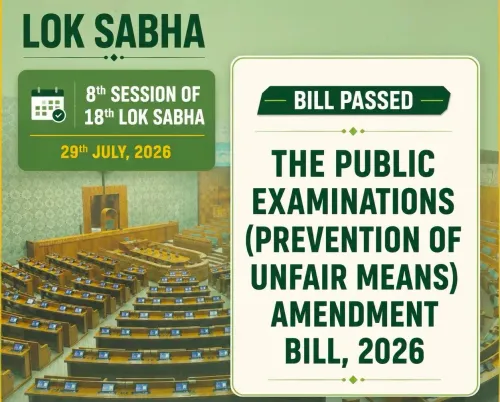
The Lok Sabha passed the Public Examinations (Prevention of Unfair Means) Amendment Bill, 2026 on 29 July 2026 .
CM Yogi Adityanath called the passage a 'historic decision' and a 'powerful protection' for crores of young Indians.
The bill amends the original Public Examinations (Prevention of Unfair Means) Act, 2024 , which was enacted after multiple high-profile paper leaks in national exams.
The amendment aims to make the exam system more transparent, impartial, and credible and to ensure strict action against those involved in paper leaks.
The bill must still pass the Rajya Sabha and receive enforcement rules before taking full effect.
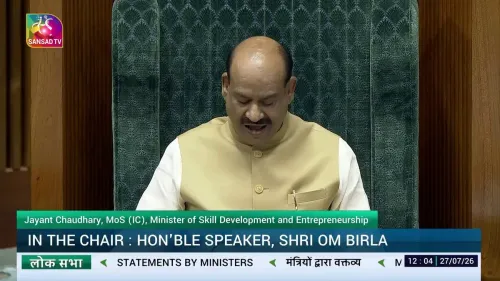
Millions of young Indians who have sat through sleepless nights preparing for competitive exams got a legislative shield on Wednesday, 29 July 2026, when the Lok Sabha passed the 'Public Examinations (Prevention of Unfair Means) Amendment Bill, 2026' — and Uttar Pradesh Chief Minister Yogi Adityanath was among the first to mark the moment as historic.
Posting on X, CM Yogi called the bill's passage 'ऐतिहासिक निर्णय' — a historic decision — and framed it as 'a powerful protection of the dreams, hard work, and talent of crores of young Indians.' He credited the legislation to the 'far-sighted leadership' of Prime Minister Narendra Modi and offered him a formal salutation for the step.
What the amendment strengthens
The 2026 bill builds on the Public Examinations (Prevention of Unfair Means) Act, 2024, which Parliament enacted after a wave of high-profile paper leaks rattled national-level recruitment and entrance tests. That original law established a framework of penalties and oversight mechanisms for examination malpractice — a framework the amendment now seeks to tighten further.
CM Yogi's post specifically cited three goals the revised law is meant to achieve: making the examination system more transparent, impartial, and credible; ensuring 'strict action' against those found guilty of paper leaks; and restoring — and deepening — the trust of young aspirants in public examinations.
A recurring wound that law is trying to close
Examination fraud is not a new problem in India. Successive governments have faced public fury over leaked question papers for high-stakes tests — from state-level police recruitment drives to central government entrance exams. Each scandal erases years of preparation for lakhs of honest candidates. The 2024 Act was a direct policy response to that pressure; the 2026 amendment signals that the legislative intent is to keep sharpening the instrument rather than treat the original law as a final word.
The bill must still clear the Rajya Sabha before it can become law, and the Union government will need to issue enforcement rules. Those two steps will determine whether the legislative promise translates into operational deterrence on the ground.
For every aspirant who has ever watched a paper leak erase their chance at a fair shot, the question is simple: will the teeth be sharp enough to bite?
Point of View
With its enormous pool of competitive exam aspirants, is ground zero for the anger that paper leaks generate. By aligning visibly with the reform, he reinforces the party's 'clean governance' narrative ahead of future electoral cycles. The real test, however, will be in enforcement — India has a long history of strong laws and weak implementation in this domain.
NationPress
30 Jul 2026
Frequently Asked Questions
What is the Public Examinations (Prevention of Unfair Means) Amendment Bill 2026?
It is a bill passed by the Lok Sabha on 29 July 2026 that amends the 2024 Public Examinations Act to further strengthen measures against paper leaks, exam fraud, and malpractice in government recruitment and entrance tests.
What did CM Yogi Adityanath say about the exam anti-cheat bill?
CM Yogi called the Lok Sabha passage a 'historic decision' that provides powerful protection to the dreams and hard work of crores of young Indians, and credited PM Modi's leadership for the move.
What was the original Public Examinations Act 2024?
The Public Examinations (Prevention of Unfair Means) Act, 2024 was enacted by Parliament to address rampant paper leaks and irregularities in national-level competitive exams, establishing a framework of penalties and oversight.
Is the exam anti-cheat amendment bill now a law?
Not yet. The bill passed the Lok Sabha on 29 July 2026 but must still be approved by the Rajya Sabha and receive presidential assent before it becomes law.
How does this bill help exam aspirants in India?
The bill aims to make competitive examinations more transparent and fair by imposing stricter penalties on those who leak papers or engage in malpractice, protecting honest candidates from having their efforts undermined.