CM Yogi Honours Skilled Youth on World Youth Skills Day
Synopsis
On World Youth Skills Day 2026, Uttar Pradesh Chief Minister Yogi Adityanath felicitated youth in Lucknow who achieved self-reliance through the state's Skill Development Mission and ITI training, underscoring UP's push to link vocational education with employment and entrepreneurship outcomes.
Key Takeaways
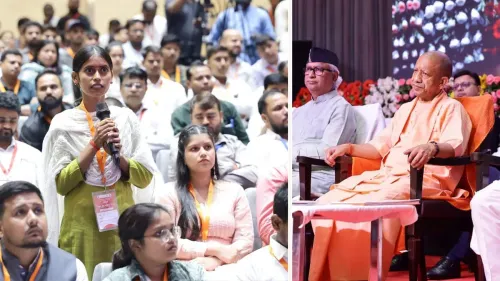
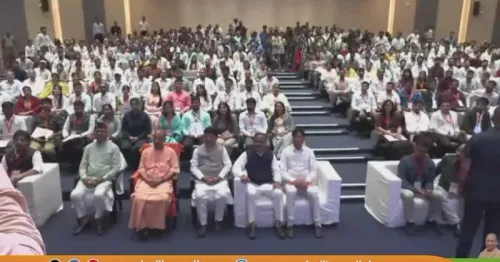
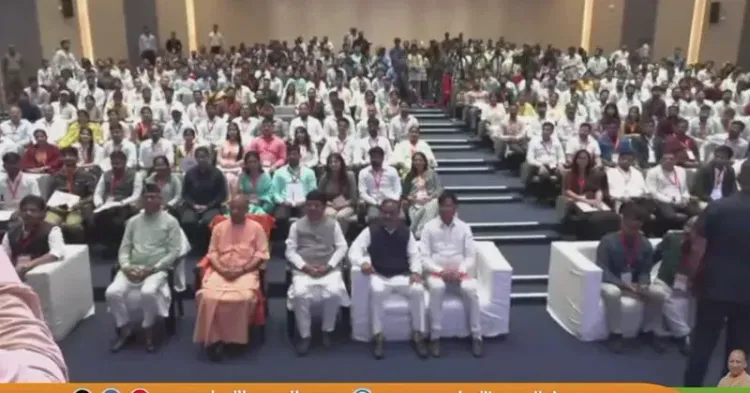
CM Yogi Adityanath attended a felicitation ceremony in Lucknow on 15 July 2026 , coinciding with World Youth Skills Day .
The event honoured youth who became self-reliant through employment and entrepreneurship after completing training under the UP Skill Development Mission and government ITIs .
The Uttar Pradesh Skill Development Mission was established in 2013 and has been expanded under the current administration to scale vocational training and industry linkages.
The initiative aligns with the national Skill India Mission (launched 2015 ) and the Atmanirbhar Bharat framework, targeting self-employment and reduced out-migration of UP youth.
Future focus areas include ITI modernisation budgets and new industry MoUs for apprenticeship absorption.
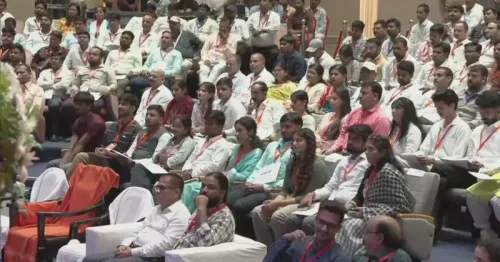
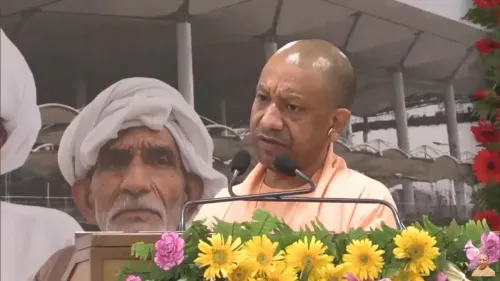
Uttar Pradesh Chief Minister Yogi Adityanath attended a felicitation ceremony in Lucknow on Wednesday, 15 July 2026, honouring young men and women who achieved self-reliance through employment and entrepreneurship after training under the state's Skill Development Mission and Industrial Training Institutes (ITIs). The event was held on the occasion of World Youth Skills Day 2026, the United Nations-designated annual observance that spotlights youth employability worldwide.
Context
CM Yogi's post — 'kaushal vikas mission evam ITI se prashikshan prapt kar rozgar evam udyamita se aatmanirbhar bane yuvaon ke samman samaroh' ('a felicitation ceremony for youth who became self-reliant through employment and entrepreneurship after training from the Skill Development Mission and ITIs') — signals the state government's intent to publicly celebrate measurable skilling outcomes. Holding the ceremony on 15 July, the globally recognised date for youth skills, amplifies its symbolic weight and aligns state action with an international policy conversation.
World Youth Skills Day was established by the United Nations to draw attention to the strategic importance of equipping young people with skills for employment, decent work, and entrepreneurship. Uttar Pradesh, home to one of India's largest youth populations, has consistently used the date as a platform to showcase its vocational training pipeline.
Policy Backdrop
The Uttar Pradesh Skill Development Mission was constituted in 2013 and subsequently expanded under the current administration to cover a wider range of trades, certification pathways, and industry linkages. It operates alongside the national Skill India Mission, launched in 2015 with an ambition to train over 400 million people, providing a federal scaffolding of funding and curriculum standards.
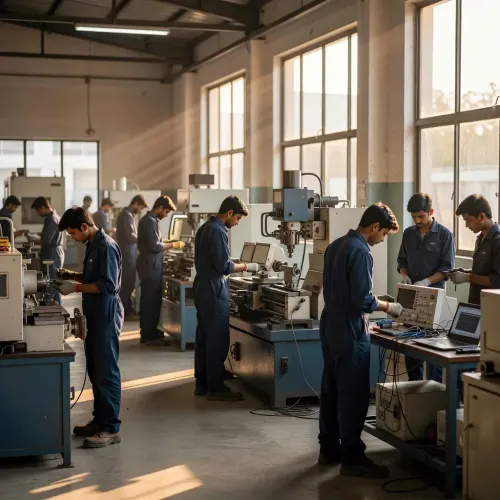
ITIs — government Industrial Training Institutes — form the backbone of this architecture, offering hands-on diplomas in technical trades ranging from electrical work and plumbing to information technology and fashion design. Under the Yogi Adityanath government, the state has steadily scaled ITI seat capacity and introduced industry partnerships to improve post-training absorption into jobs and apprenticeships.
The broader policy logic mirrors the Atmanirbhar Bharat ('self-reliant India') framework, which repositions vocational skilling not merely as employment support but as a driver of micro-entrepreneurship and reduced dependence on urban wage labour — a priority for a state that has historically seen significant out-migration of working-age youth to other states.
Stakeholders and Impact
The direct beneficiaries recognised at the ceremony are ITI graduates and Skill Development Mission trainees who have transitioned into employment or set up their own enterprises. Public felicitation of such individuals serves a dual purpose: it validates the training ecosystem's outcomes and provides peer role models to encourage fresh enrolments.
For the broader youth demographic in Uttar Pradesh, the ceremony reinforces the message that state-backed vocational pathways can lead to tangible economic independence. Employers and industry bodies that participate in apprenticeship or placement linkages with ITIs also have a stake in the visibility such events generate, as they signal a reliable pipeline of certified, job-ready workers.
What's Next
Attention will now turn to state budget allocations for ITI modernisation — particularly upgrades to equipment, curriculum relevance, and digital infrastructure — as well as any new memoranda of understanding with industry partners for structured apprenticeship absorption. The scale and quality of such commitments in the coming months will determine whether the felicitation ceremony translates into a durable expansion of the skilling ecosystem or remains a symbolic annual event.
As Uttar Pradesh positions itself as an investment and manufacturing destination, the alignment between its skilling output and the demands of incoming industries will be a key metric for policymakers and youth alike.
Point of View
Lending global framing to what is essentially a domestic skilling push. It reflects the BJP government's consistent strategy of anchoring welfare delivery in the language of self-reliance and entrepreneurship rather than dependency. For Uttar Pradesh — a state whose economic narrative has long been dominated by agrarian distress and out-migration — showcasing ITI and mission graduates as self-made entrepreneurs is a deliberate counter-image. The ceremony's real test lies in whether it is backed by measurable data on placement rates and enterprise survival, which the state has yet to publish comprehensively.
NationPress
15 Jul 2026
Frequently Asked Questions
What is World Youth Skills Day and why is it observed on 15 July?
World Youth Skills Day is a United Nations-designated annual observance held on 15 July to highlight the importance of equipping young people with skills for employment, decent work, and entrepreneurship. It was established by the UN General Assembly to draw global attention to youth employability challenges.
What is the UP Skill Development Mission?
The Uttar Pradesh Skill Development Mission is a state government programme established in 2013 that provides vocational training, certification, and job placement support to youth across the state. It has been expanded under CM Yogi Adityanath to include more trades and industry partnerships.
What are ITIs and what training do they offer?
Industrial Training Institutes (ITIs) are government-run institutions across India that offer hands-on technical diplomas in trades such as electrical work, plumbing, information technology, and fashion design. They form the backbone of India's formal vocational education system.
How does UP's skilling push connect to Atmanirbhar Bharat?
Uttar Pradesh's skilling initiatives mirror the national Atmanirbhar Bharat ('self-reliant India') framework, which repositions vocational training as a driver of micro-entrepreneurship and self-employment, reducing dependence on wage labour and out-migration to other states for work.
What will be the next steps after the World Youth Skills Day ceremony in Lucknow?
Observers will watch for state budget allocations for ITI modernisation — including equipment upgrades and digital infrastructure — and new memoranda of understanding with industry partners for structured apprenticeship and job placement programmes in Uttar Pradesh .