CM Yogi calls Shravan a month for service, conservation
Synopsis
UP Chief Minister Yogi Adityanath marked the start of Shravan 2026 by linking Shiva's iconography to a civic call for water conservation, cleanliness, tree protection and community service — framing environmental goals inside Sanatan cultural tradition.
Key Takeaways
CM Yogi Adityanath posted the Shravan message on 3 August 2026 , at the start of the sacred monsoon month.
He called on UP residents to observe Shravan as a month of service, cleanliness, water conservation, environmental enrichment and social participation .
The message drew on Shaivite iconography — the Ganga, the crescent moon, the serpent, Nandi — to argue for co-existence with nature.
He acknowledged farmers (annadata) whose labour yields 'green prosperity' during the monsoon season.
The appeal aligns with existing national programmes: Namami Gange (2015) and Swachh Bharat Mission (2014).
CM Yogi described these values as 'the foundation of a prosperous, secure and developed Uttar Pradesh '.
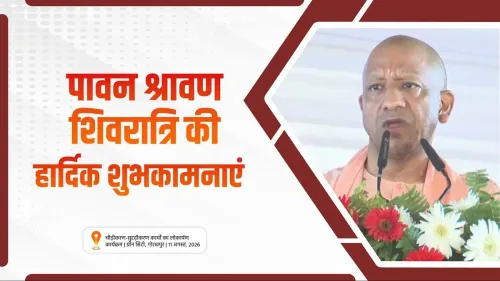
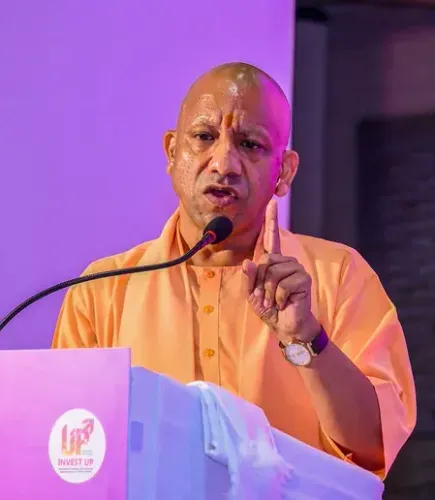
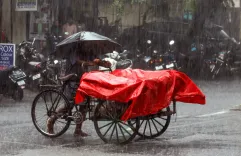
As the sacred month of Shravan begins, Uttar Pradesh Chief Minister Yogi Adityanath has tied the ancient rhythms of monsoon and Shiva worship to a pointed civic call — urging every resident of the state to treat August 2026 as a month of water conservation, cleanliness, tree protection, and community participation.
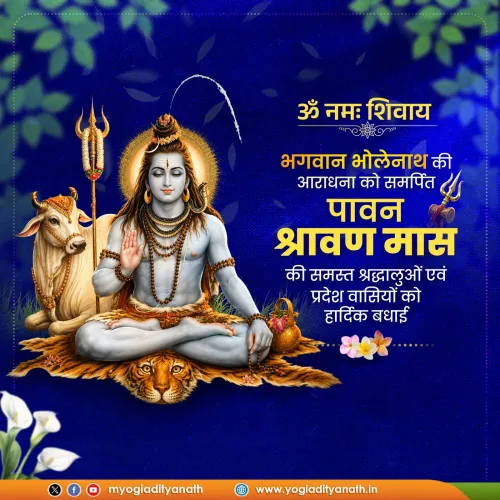
In a message posted on Monday, 3 August 2026, CM Yogi wrote: 'श्रावण माह को सेवा, स्वच्छता, जल संरक्षण, पर्यावरण संवर्धन और सामाजिक सहभागिता का माह बनाने का संकल्प लें' — 'Let us resolve to make the month of Shravan one of service, cleanliness, water conservation, environmental enrichment and social participation.' He added: 'Honour every drop. Protect every sapling. This is the true message of Shravan.'
Shiva as a symbol of co-existence with nature
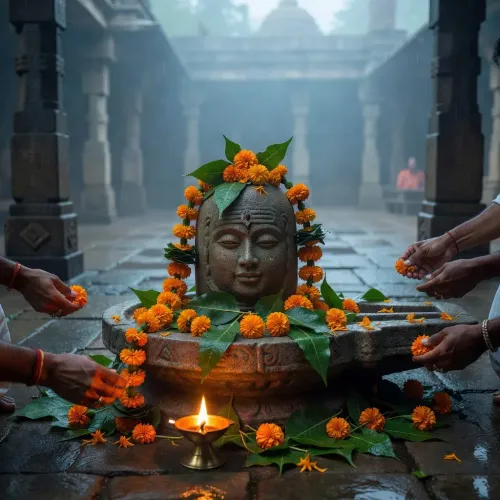
The CM's message drew a deliberate line between Shaivite iconography and ecological responsibility. He noted that Mahadev — the Devadhidev — is himself a deity of nature-awareness: the Ganga flowing from his matted locks, the crescent moon on his brow, the serpent at his throat, and Nandi alongside his attendants all carry a message of co-existence with the natural world. The framing is deliberate — it roots a modern conservation ask inside a tradition that millions in Uttar Pradesh observe with deep personal devotion every Shravan.
He also saluted the annadata — the farmer — whose labour, he said, 'begins to bear fruit as green prosperity' in this season of renewal. Shravan, arriving with the monsoon, is the month when fields turn, rivers swell, and the agricultural calendar pivots. The message acknowledged that natural and cultural cycles are inseparable in rural Uttar Pradesh.
A familiar bridge between faith and state priorities
The appeal is not made in a vacuum. The Namami Gange programme, launched in 2015, has been the central federal effort to rejuvenate the Ganga and its tributaries — a river that flows through Uttar Pradesh and sits at the heart of Shaivite devotion. The Swachh Bharat Mission, also launched in 2014, provided the national scaffolding for cleanliness drives that state governments have repeatedly amplified through local cultural moments. CM Yogi's Shravan message is the latest iteration of a well-established Uttar Pradesh government practice: framing environmental and social goals inside Hindu religious narratives to maximise citizen uptake.
The CM closed with a declaration that these values — service, restraint, harmony — are not only Shravan's message but 'the foundation of a prosperous, secure and developed Uttar Pradesh.' Governance aspiration and spiritual calendar, fused into a single sentence.
Whether the message is followed by concrete state campaigns on water conservation or afforestation during Shravan 2026 will be the real measure of its intent.
Point of View
Cleanliness, afforestation — are packaged inside a religious idiom that resonates with the party's core electorate in rural Uttar Pradesh. By invoking Shiva as 'a deity of nature-awareness,' the CM sidesteps the clinical language of policy and reaches directly into devotional sentiment. The approach has a proven track record in UP, where Namami Gange and Swachh Bharat were both amplified through religious festivals. The real test is whether Shravan 2026 produces measurable state campaigns, or whether this remains a well-crafted seasonal message.
NationPress
17 Sept 2026
Frequently Asked Questions
What did CM Yogi Adityanath say about Shravan month?
CM Yogi called on UP residents to make Shravan 2026 a month of service, cleanliness, water conservation, environmental enrichment and social participation, connecting these goals to Shiva's iconography and the natural cycle of the monsoon.
Why is Shravan important in Uttar Pradesh?
Shravan is a sacred Hindu month dedicated to the worship of Lord Shiva, observed widely across Uttar Pradesh with fasts, temple visits and the Kanwar Yatra pilgrimage. It also coincides with the monsoon season, making it agriculturally and ecologically significant.
How does CM Yogi connect Shiva with environmental conservation?
CM Yogi pointed to Shaivite symbols — the Ganga flowing from Shiva's locks, the crescent moon, the serpent, and Nandi — as messages of co-existence with nature, using them to argue that conservation is rooted in Sanatan tradition.
What government programmes support water conservation in Uttar Pradesh?
The central Namami Gange programme, launched in 2015, is the primary initiative for rejuvenating the Ganga and its tributaries in UP. The Swachh Bharat Mission, launched in 2014, underpins cleanliness drives that the state government amplifies during festivals.
What is the significance of Yogi Adityanath's Shravan message for UP development?
CM Yogi explicitly described the values of service, restraint and harmony as 'the foundation of a prosperous, secure and developed Uttar Pradesh,' framing cultural observance as directly linked to the state's long-term development goals.