CM Yogi Plants Maulshree Sapling in Gorakhpur Under Vriksharopan Mahayagya-2026

Synopsis
Uttar Pradesh Chief Minister Yogi Adityanath planted a Maulshree sapling in Gorakhpur on 12 July 2026 under the state's Vriksharopan Mahayagya-2026 campaign, continuing a series of annual mass afforestation drives the UP government has run since 2017.
Key Takeaways
CM Yogi Adityanath participated in a tree-plantation event in Gorakhpur on 12 July 2026 .
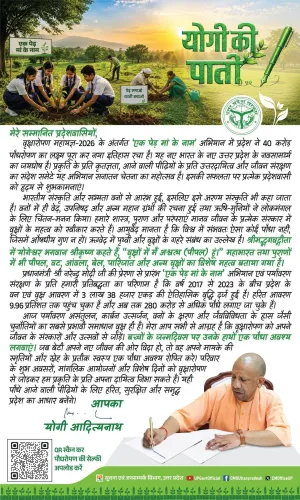
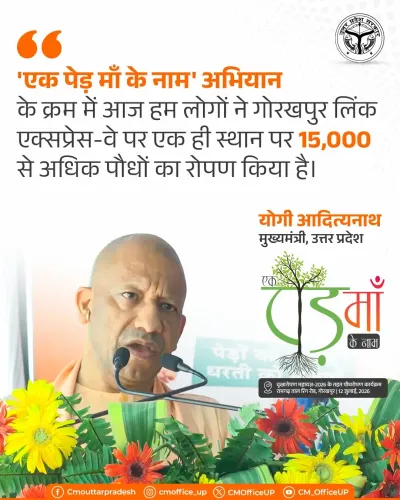
The drive is part of Vriksharopan Mahayagya-2026 , the Uttar Pradesh government's statewide afforestation campaign.
The species planted was Maulshree ( Mimusops elengi ), an evergreen tree valued in religious and urban greening programmes.
Gorakhpur is the historic seat of the Gorakhnath Math , lending cultural significance to the choice of venue.
The UP government has run annual mass plantation drives since 2017 , setting multi-million sapling targets each year.
Sapling survival-rate audits and district-wise targets for the remainder of the 2026 campaign are awaited.
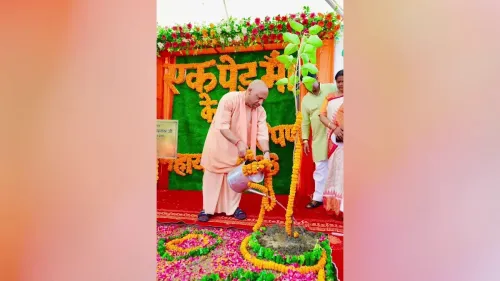
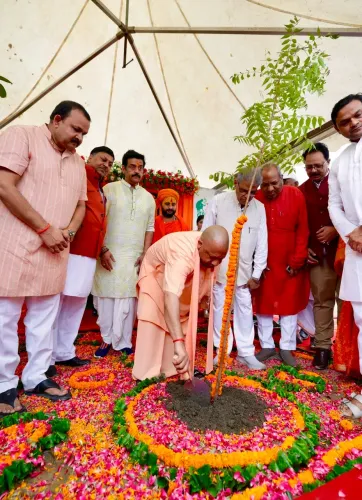
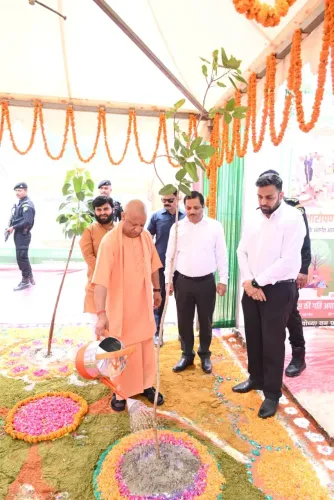
Uttar Pradesh Chief Minister Yogi Adityanath on Sunday, 12 July 2026 participated in a tree-plantation drive in Gorakhpur, planting a Maulshree sapling as part of the state government's Vriksharopan Mahayagya-2026 campaign.
Context
The Chief Minister shared the activity on social media, posting in Hindi: 'Vriksharopan Mahayagya-2026 ke antargat Gorakhpur mein Maulshree ka paudharopan' ('Maulshree plantation in Gorakhpur under Vriksharopan Mahayagya-2026'). The post was accompanied by an image of the plantation event. Gorakhpur, a major city in eastern Uttar Pradesh, is also the historic seat of the Gorakhnath Math, of which Yogi Adityanath is the head, making it a symbolically significant venue for such drives.
Maulshree (Mimusops elengi) is a culturally significant evergreen tree widely planted in religious and urban greening programmes across northern India. Its selection for this event reflects the campaign's dual emphasis on environmental value and cultural resonance.
Policy Backdrop
The Vriksharopan Mahayagya-2026 is the latest in a series of annual mass tree-plantation campaigns run by the Uttar Pradesh government. Since 2017, the state has organised large-scale afforestation drives under successive Van Mahotsav programmes, each setting multi-million sapling targets across districts.
These campaigns have consistently been framed around twin objectives: raising the state's recorded forest and tree cover, and reinforcing a connection between environmental stewardship and the cultural identity of the region. High-visibility participation by senior leadership — including the Chief Minister — has been a recurring feature of each cycle.
Stakeholders and Impact
The primary stakeholders in the Vriksharopan Mahayagya-2026 campaign include local residents of Gorakhpur and surrounding districts, the Uttar Pradesh Forest Department, and urban local bodies responsible for maintaining planted saplings. Mass plantation drives of this kind aim to improve urban green cover, reduce heat-island effects, and boost biodiversity in densely populated areas.
The choice of Maulshree — an evergreen species valued for shade, fragrance, and longevity — signals a focus on long-term canopy development rather than fast-growing but short-lived species. Survival rates of saplings planted in previous drives have been a recurring point of scrutiny for the state's forest administration.
What's Next
Attention will now turn to district-wise plantation targets for the remainder of the 2026 campaign and any official audits of sapling survival rates. The UP Forest Department is expected to release progress updates as the monsoon season — traditionally the preferred window for tree plantation in northern India — advances through July and August 2026.
The broader success of Vriksharopan Mahayagya-2026 will ultimately be measured not by the number of saplings planted on a single day, but by independently verified survival and growth data collected in the months that follow.
Point of View
Even as independent scrutiny of sapling survival rates has remained limited. The real test of the campaign's environmental impact will come from post-monsoon survival audits rather than from the plantation numbers alone.
NationPress
10 Oct 2026
Frequently Asked Questions
What is Vriksharopan Mahayagya-2026?
Vriksharopan Mahayagya-2026 is a statewide mass tree-plantation campaign organised by the Uttar Pradesh government, continuing a series of annual afforestation drives that the state has run since 2017 with multi-million sapling targets.
Why did CM Yogi plant a Maulshree tree in Gorakhpur?
CM Yogi Adityanath planted a Maulshree sapling in Gorakhpur as part of Vriksharopan Mahayagya-2026; Gorakhpur is both his political base and the seat of the Gorakhnath Math, making it a symbolically significant venue for the drive.
What is a Maulshree tree?
Maulshree, known botanically as Mimusops elengi, is a culturally significant evergreen tree widely planted in temple gardens and urban greening programmes across northern India, valued for its shade, fragrance, and longevity.
How long has Uttar Pradesh been running tree-plantation campaigns?
The Uttar Pradesh government has organised annual mass tree-plantation drives since 2017, framed around Van Mahotsav and similar programmes, each setting progressively larger sapling targets across the state's districts.
What happens after saplings are planted in these UP campaigns?
After plantation, the UP Forest Department is expected to conduct survival-rate audits and track district-wise progress; these post-monsoon assessments are considered the key measure of a campaign's actual environmental impact.