CM Yogi proposes Rapid Rail link from Lucknow to Kanpur via Unnao
Synopsis
Uttar Pradesh Chief Minister Yogi Adityanath on 18 June 2026 announced a new rapid rail proposal for the Lucknow–Unnao–Kanpur corridor. The initiative aims to boost inter-city connectivity in one of the state's most congested and economically vital routes, building on UP's experience with RRTS-model projects.
Key Takeaways
CM Yogi Adityanath announced a new rapid rail proposal for the Lucknow–Unnao–Kanpur corridor on 18 June 2026 .
The proposed route covers approximately 80 kilometres , linking Uttar Pradesh's capital with its largest industrial city via Unnao district.
The proposal follows the RRTS model already operational in the National Capital Region , in which UP is an existing partner.
No Detailed Project Report (DPR) or central government sanction has been confirmed as of the announcement date.
Key next steps include DPR preparation, submission to the Ministry of Housing and Urban Affairs or Railways , and potential inclusion in state or central budget allocations.
Primary beneficiaries include daily commuters, industrial workers, and traders across the Kanpur–Unnao–Lucknow economic corridor.
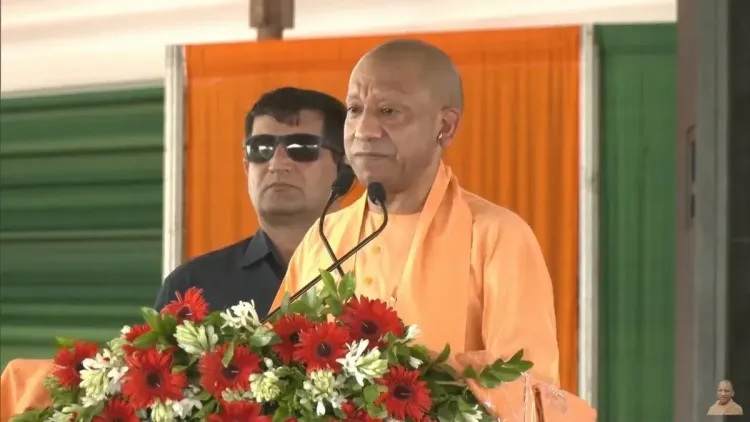
Uttar Pradesh Chief Minister Yogi Adityanath on Thursday, 18 June 2026, announced a new proposal for a rapid rail corridor connecting Lucknow to Kanpur via Unnao, signalling the state government's intent to extend high-speed regional transit beyond the National Capital Region into Uttar Pradesh's industrial heartland.
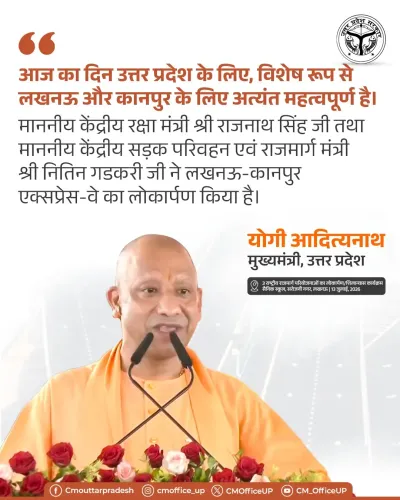
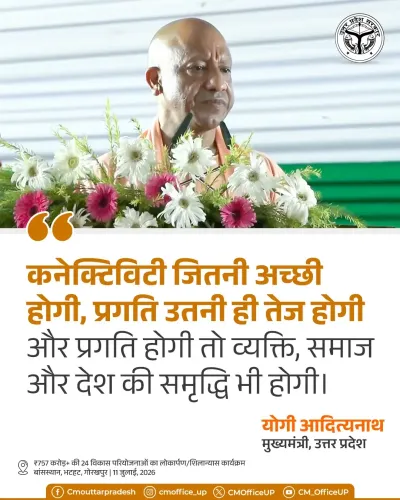
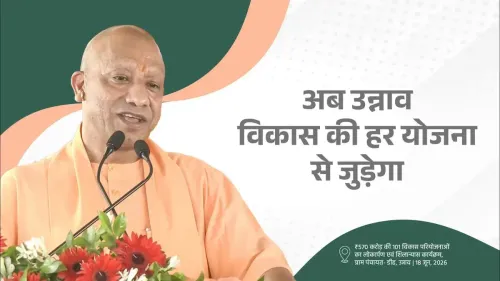
In his post on X, the Chief Minister stated — 'हम लोग लखनऊ से उन्नाव होते हुए कानपुर तक रैपिड रेल के एक नए प्रस्ताव को…' ('We are working on a new proposal for rapid rail from Lucknow through Unnao to Kanpur…') — framing the initiative as part of the state's broader push for multi-modal urban connectivity.
Context
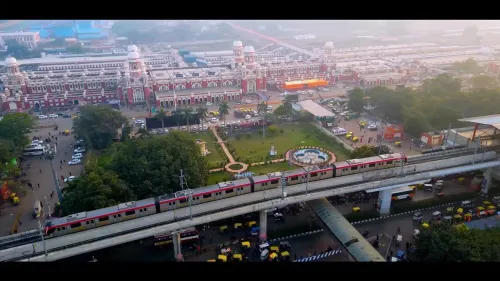
The Lucknow–Unnao–Kanpur corridor is one of Uttar Pradesh's most congested inter-city routes, carrying heavy volumes of commuter, industrial, and freight traffic daily. Kanpur, the state's largest industrial city, and Lucknow, its administrative capital, are roughly 80 kilometres apart, with Unnao district sitting midway on the route. Reducing travel time between these centres has long been identified as a priority for unlocking economic activity along the corridor.
The announcement comes as Uttar Pradesh has steadily expanded its urban transit ambitions, beginning with the sanction of the Lucknow Metro in 2014 and subsequent planning for metro extensions toward Kanpur. A dedicated rapid rail proposal would represent a step up in both speed and inter-city reach.
Policy Backdrop
The Regional Rapid Transit System (RRTS) model, developed and operated by the National Capital Region Transport Corporation (NCRTC), has demonstrated the viability of high-speed regional rail in India, with corridors in the NCR already operational or under construction. Uttar Pradesh has been a partner in the Delhi–Meerut RRTS corridor, giving the state government direct institutional familiarity with the planning and funding mechanisms involved.
Proposals of this nature typically require the preparation of a Detailed Project Report (DPR), followed by submission to the Ministry of Housing and Urban Affairs or the Ministry of Railways for technical and financial appraisal. Central co-funding, often structured as a grant-loan mix, is standard for such projects. No DPR or central sanction has been publicly confirmed for this specific proposal as of the date of the announcement.
Stakeholders and Impact
The primary beneficiaries of a Lucknow–Unnao–Kanpur rapid rail link would be the estimated millions of daily commuters, industrial workers, and traders who move between the three centres. Kanpur's leather, textile, and chemical industries draw a large workforce from surrounding districts, and faster, affordable connectivity could reduce logistics costs and commute times significantly.
Unnao, which hosts its own industrial clusters and has seen rapid residential growth as a satellite zone between the two cities, stands to gain from improved access to both Lucknow's services and Kanpur's employment base. Urban planners have noted that rapid transit investment along such corridors can also catalyse planned township development and ease pressure on road infrastructure.
What's Next
The immediate next step will be the commissioning or submission of a Detailed Project Report to assess alignment, ridership projections, land acquisition requirements, and cost estimates. Inclusion of the project in Uttar Pradesh's state budget or in a central government urban transport scheme would be a key indicator of how quickly the proposal moves from announcement to implementation.
Observers will also watch for any formal coordination with NCRTC or a new special-purpose vehicle, as well as timelines for public consultations and environmental clearances. The Yogi Adityanath government has consistently used infrastructure announcements ahead of both state legislative sessions and electoral cycles, making the pace of follow-through a metric that stakeholders and citizens will track closely.
Point of View
Particularly along corridors that connect the state's administrative and industrial cores. By invoking the RRTS model — already lent credibility by NCR operations — the Chief Minister positions this as a replicable, centrally supported initiative rather than a standalone state venture, which strengthens its case for Union government co-funding. The Lucknow–Kanpur axis is also politically significant, spanning constituencies that have been fiercely contested in recent assembly and parliamentary elections, meaning the proposal carries electoral weight alongside its economic rationale. The real test will be whether a DPR is commissioned and funded within the current budget cycle, or whether the announcement remains at the proposal stage through the next electoral calendar.
NationPress
18 Sept 2026
Frequently Asked Questions
What is the Lucknow to Kanpur rapid rail proposal announced by CM Yogi?
CM Yogi Adityanath announced on 18 June 2026 a new rapid rail corridor proposal linking Lucknow to Kanpur via Unnao , aimed at providing high-speed inter-city connectivity across roughly 80 kilometres in Uttar Pradesh . The proposal is modelled on the Regional Rapid Transit System (RRTS) framework and is at an early stage pending a Detailed Project Report .
What is the RRTS and how does it relate to Uttar Pradesh?
The Regional Rapid Transit System (RRTS) is a national initiative for high-speed regional rail corridors, developed by the National Capital Region Transport Corporation (NCRTC) . Uttar Pradesh is already a partner in the Delhi–Meerut RRTS corridor, giving the state direct experience with the model that CM Yogi is now proposing to extend to the Lucknow–Kanpur route.
When will the Lucknow–Kanpur rapid rail project start construction?
No construction timeline has been announced. The proposal is at an early stage; the immediate next steps are preparation of a Detailed Project Report (DPR) and submission to the Ministry of Housing and Urban Affairs or Ministry of Railways for appraisal and funding approval.
Which districts does the proposed rapid rail corridor pass through?
The proposed corridor would run from Lucknow , the state capital, through Unnao district, and terminate at Kanpur , Uttar Pradesh's largest industrial city, covering a route of approximately 80 kilometres .
Who will benefit from the Lucknow–Unnao–Kanpur rapid rail link?
The primary beneficiaries would be daily commuters, industrial workers employed in Kanpur's leather, textile, and chemical industries, traders, and residents of Unnao district who currently rely on congested road and rail connections between the three centres.