CM Yogi Meets 14-Member Singapore Delegation in Lucknow
Synopsis
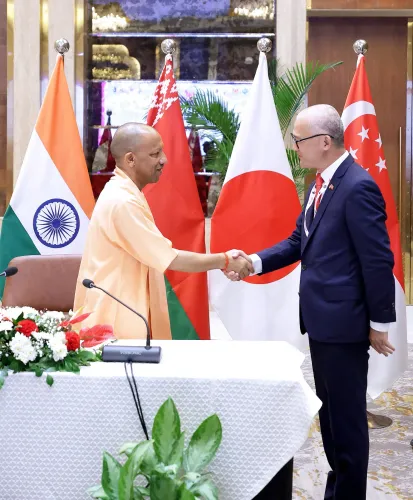
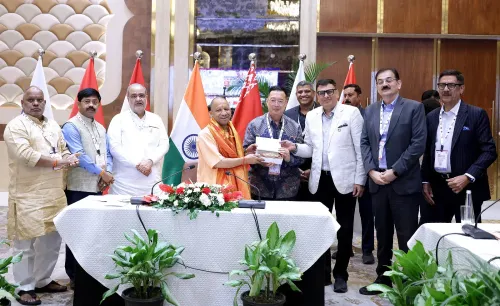
Chief Minister Yogi Adityanath met a 14-member Singapore Business Federation delegation in Lucknow on 28 October 2026, signing MoUs in agri-food processing and sustainable waste management, with investors expressing intent across logistics, semiconductors, data centres and green energy.
Key Takeaways
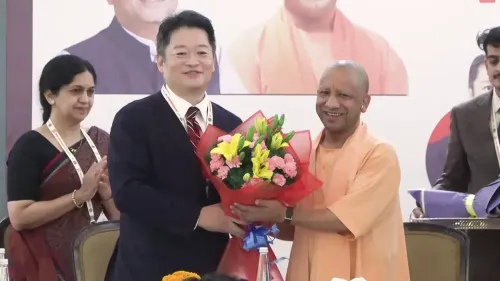
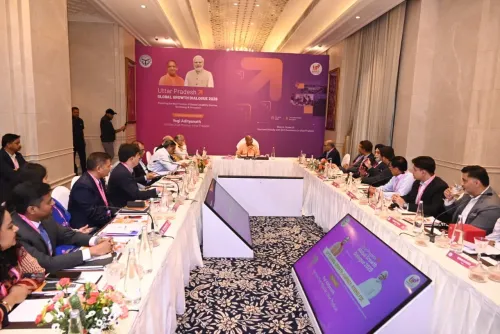
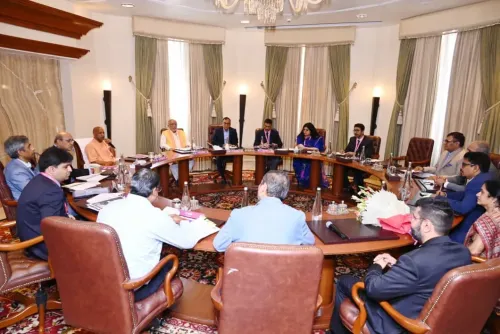
14-member delegation led by the Singapore Business Federation met CM Yogi Adityanath in Lucknow on 28 October 2026 .
MoUs exchanged in agriculture and food processing and sustainable waste management .
Delegation expressed investment interest in logistics, semiconductors, data centres, green energy, urban planning, and hospitality .
Meeting builds on UP's Global Investors Summit 2023 , which attracted commitments exceeding Rs 33 lakh crore .
Bilateral engagement anchored in the India-Singapore Comprehensive Economic Cooperation Agreement of 2005 .
MoU implementation timelines and follow-up project announcements remain the critical next milestone.
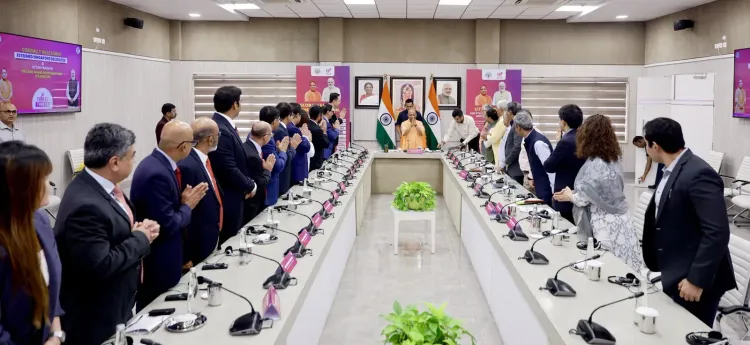
A high-level business delegation from Singapore walked into the Uttar Pradesh Chief Minister's Office in Lucknow on Wednesday, 28 October 2026 — and walked out with MoUs signed and a wishlist of sectors stretching from semiconductors to green energy. The Chief Minister's Office of Uttar Pradesh announced that Chief Minister Yogi Adityanath held a structured investment meeting with a 14-member delegation led by the Singapore Business Federation, exchanging memoranda of understanding in agriculture and food processing as well as sustainable waste management.
Singapore's Sector Wishlist for UP
The delegation did not arrive with polite pleasantries alone. According to the CMO post, the Singapore Business Federation-led group expressed firm interest in investing across six strategic sectors: logistics, semiconductors, data centres, green energy, urban planning, and hospitality. That breadth signals a serious commercial intent — Singapore's strength in each of those domains is well established at a global level, making the interest commercially credible rather than exploratory.
The two MoUs formalised at Wednesday's meeting targeted agri-food processing and sustainable waste management — sectors where Uttar Pradesh holds raw material scale and Singapore companies bring processing technology and capital efficiency. Food processing, in particular, aligns with the state's agricultural heartland; UP is among India's largest producers of sugarcane, wheat and vegetables.
The Pattern Behind the Meeting
This engagement does not come from nowhere. Uttar Pradesh's Global Investors Summit in 2023 generated investment commitments exceeding Rs 33 lakh crore across manufacturing and services — one of the largest single-state investment mobilisation exercises in Indian history. Wednesday's Singapore delegation is part of the follow-through architecture that state governments build after such summits: bilateral outreach to specific investor communities to convert intent into on-ground projects.
The broader India-Singapore economic relationship rests on a foundation laid by the India-Singapore Comprehensive Economic Cooperation Agreement of 2005, which opened structured pathways for FDI, services trade, and talent mobility. Singapore has since channelled capital into Indian infrastructure, logistics parks, and technology clusters — and UP's pitch for data centres and semiconductor facilities maps directly onto Singapore's own export strengths in those domains.
Why Lucknow is Courting Global Capital So Aggressively
Since 2017, Uttar Pradesh has pursued a deliberate industrial transformation — building single-window clearance mechanisms, dedicated investor desks, and a political communication apparatus that ensures every high-value meeting is visible. The state's shift from being perceived as administratively difficult to actively investment-friendly is central to CM Yogi Adityanath's economic governance narrative.
Singapore entities repeatedly shortlist Indian states for logistics corridors and green energy projects that mirror infrastructure models proven in Southeast Asia. For UP, landing a Singapore data-centre or semiconductor-adjacent project would be a landmark — these are capital-intensive, long-tenure investments that anchor ecosystems rather than single factories.
The real test, as always, arrives after the signatures dry: whether MoU commitments translate into ground-breaking ceremonies. The next major UP investment event and India-ASEAN bilateral economic dialogues will be the pressure-test for Wednesday's handshakes.
Point of View
Ecosystem-building investments. For CM Yogi, every high-profile foreign delegation visit also serves a domestic political signal — that UP is 'open for business' — ahead of future electoral cycles. The Singapore Business Federation's willingness to lead a 14-member delegation to Lucknow, rather than defaulting to Delhi or Mumbai, itself marks a shift in where global capital sees India's next growth frontier.
NationPress
28 Oct 2026
Frequently Asked Questions
What MoUs did UP sign with the Singapore delegation on 28 October 2026?
Uttar Pradesh signed MoUs in the sectors of agriculture and food processing, and sustainable waste management with leading global companies represented in the Singapore Business Federation-led delegation.
Which sectors did the Singapore Business Federation express interest in for UP investment?
The delegation expressed interest in logistics, semiconductors, data centres, green energy, urban planning, and hospitality in Uttar Pradesh.
How large was the Singapore business delegation that met CM Yogi?
The delegation comprised 14 members and was led by the Singapore Business Federation, Singapore's peak industry body.
What is the India-Singapore economic agreement that underpins this investment push?
The India-Singapore Comprehensive Economic Cooperation Agreement, signed in 2005, provides the foundational framework for bilateral trade, investment and services between the two countries.
How does this Singapore meeting relate to UP's 2023 Global Investors Summit?
UP's Global Investors Summit 2023 generated investment commitments exceeding Rs 33 lakh crore; bilateral outreach meetings like Wednesday's Singapore session are part of the state's follow-up strategy to convert those commitments into on-ground projects.