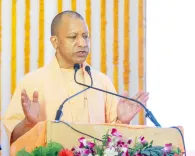
CM Yogi's UP Sets New Standards in Welfare, Security, Services
Synopsis
The Chief Minister's Office of Uttar Pradesh declared on 8 June 2026 that the state under CM Yogi Adityanath is establishing new paradigms in public welfare, security, and convenience — a governance claim framed ahead of the 2027 assembly elections.
Key Takeaways
The Chief Minister's Office of Uttar Pradesh posted on 8 June 2026 asserting new governance benchmarks under CM Yogi Adityanath .
The three pillars cited are jankallyan (public welfare), jansuraksha (public security), and jansuvidhaa (public convenience).
Yogi Adityanath has led Uttar Pradesh since March 2017 and was re-elected in 2022 .
The state government has pursued anti-mafia operations, police reforms, direct benefit transfers, and infrastructure expansion since 2017.
Uttar Pradesh is India's most populous state with over 24 crore residents across 75 districts .
The 2027 assembly elections make governance messaging from the CMO politically significant in the coming months.
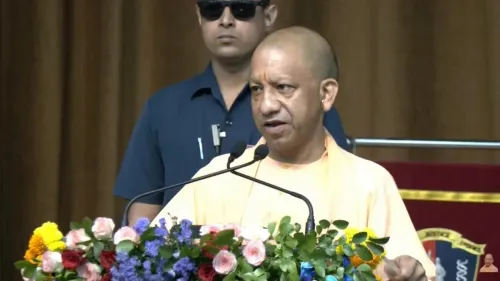
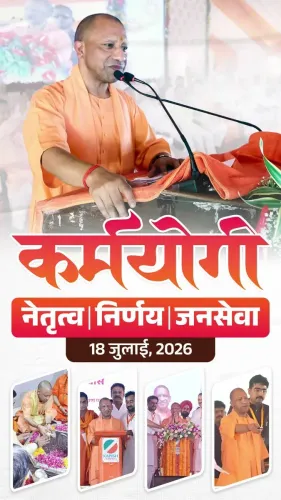
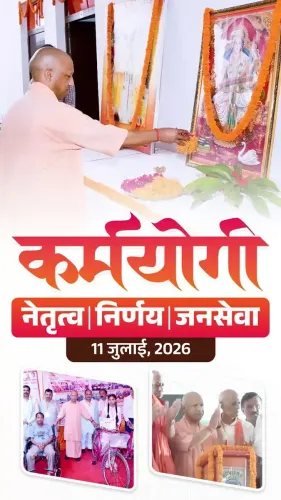
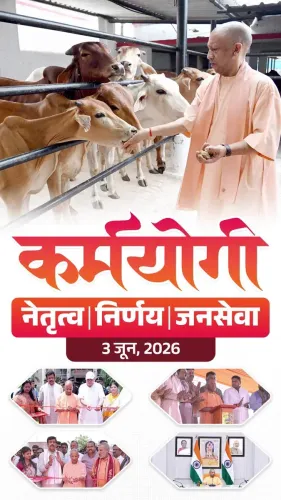
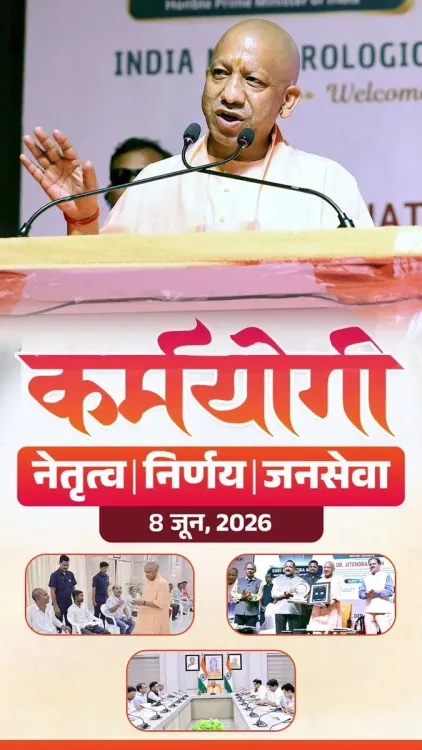
The Chief Minister's Office of Uttar Pradesh on Monday, 8 June 2026 declared that Uttar Pradesh under the leadership of Chief Minister Yogi Adityanath is establishing new benchmarks in public welfare, public security, and public convenience — a broad governance claim shared via the office's official X account.
The post, written in Hindi, stated: 'Mukhyamantri @myogiadityanath ji ke netritva mein naya Uttar Pradesh jankallyan, jansuraksha, jansuvidhaa ke naye pratiman sthapit kar raha hai' — meaning, 'Under the leadership of Chief Minister Yogi Adityanath, the new Uttar Pradesh is establishing new paradigms of public welfare, public security, and public convenience.'
Context
Yogi Adityanath has served as Chief Minister of Uttar Pradesh since March 2017, when the Bharatiya Janata Party swept to power in the state. He was re-elected in 2022, making him one of the longest-serving chief ministers in the state's recent history. The official CMO account regularly uses social media to broadcast governance milestones and frame the administration's record for the public.
The three pillars cited — jankallyan (public welfare), jansuraksha (public security), and jansuvidhaa (public convenience) — have been recurring themes in the state government's official communication since 2017, serving as an overarching narrative for its administrative agenda.
Policy Backdrop
Since assuming office, the Yogi Adityanath government launched a series of anti-mafia operations and police reforms aimed at improving law and order across Uttar Pradesh, which is India's most populous state. These efforts were presented as foundational to restoring public security in a state that had long struggled with organised crime and administrative inefficiency.
After the 2022 re-election, the government continued rolling out welfare schemes focused on direct benefit transfers to eligible beneficiaries and expanded infrastructure projects across urban and rural areas. The administration has consistently aligned its messaging with the national-level 'double-engine government' narrative, linking state and central BJP administrations as complementary forces driving development.
Stakeholders and Impact
Uttar Pradesh has a population exceeding 24 crore, making governance outcomes here consequential for a significant share of India's citizenry. Welfare scheme delivery, policing effectiveness, and civic infrastructure directly affect the daily lives of residents across 75 districts in the state.
State police forces, district administrations, and welfare delivery agencies are the primary institutional actors responsible for translating these stated governance goals into measurable outcomes. Civil society groups and opposition parties have periodically called for transparent, verifiable data on crime rates and scheme utilisation to assess progress against such claims.
What's Next
With the 2027 Uttar Pradesh assembly elections on the horizon, governance communication from the CMO is expected to intensify. Release of state crime statistics, welfare scheme utilisation reports, and any mid-term administrative reviews will be closely watched as indicators of whether the benchmarks claimed in posts such as this one are backed by verifiable data.
The broader pattern of official social media messaging from BJP-governed states suggests this post is part of a sustained, coordinated effort to shape the public narrative around administrative performance well ahead of the electoral cycle.
Point of View
Invoking three broad welfare pillars without citing specific metrics — a strategy that keeps the message aspirational and difficult to contest. The framing of a 'new Uttar Pradesh' directly contrasts with the pre-2017 era, a rhetorical device the BJP has deployed consistently across two terms to anchor voter memory. With the 2027 assembly elections approaching, such messaging will likely escalate in frequency and specificity as the government seeks to convert administrative claims into electoral capital. The absence of concrete data in the post, however, leaves the narrative open to challenge from opposition parties demanding verifiable outcomes.
NationPress
26 Oct 2026
Frequently Asked Questions
What did the UP Chief Minister's Office post about on 8 June 2026?
The Chief Minister's Office of Uttar Pradesh posted that the state under CM Yogi Adityanath is establishing new benchmarks in public welfare, public security, and public convenience.
What are jankallyan, jansuraksha, and jansuvidhaa?
These are Hindi terms meaning public welfare, public security, and public convenience respectively — the three governance pillars cited in the CMO's post as areas where Uttar Pradesh is setting new standards.
How long has Yogi Adityanath been Chief Minister of Uttar Pradesh?
Yogi Adityanath has served as Chief Minister of Uttar Pradesh since March 2017 and was re-elected for a second term in 2022.
What governance initiatives has the Yogi Adityanath government undertaken?
Since 2017, the government has conducted anti-mafia operations, police reforms, direct benefit transfer schemes, and infrastructure expansion projects across the state's 75 districts.
Why is the UP CMO's governance messaging significant in 2026?
With the Uttar Pradesh assembly elections scheduled for 2027, governance communication from the CMO in 2026 is seen as part of a broader effort to shape public perception of the administration's record ahead of the electoral cycle.