CMO Karnataka Celebrates Mysuru Dasara 2026 as Naada Habba
Synopsis
The Chief Minister's Office of Karnataka marked Mysuru Dasara 2026 on October 21, calling the ten-day state festival Naada Habba 'the glory of art — a celebration of culture,' reaffirming the event's status as Karnataka's premier cultural and heritage showcase.
Key Takeaways
The Chief Minister's Office of Karnataka officially marked Mysuru Dasara 2026 on October 21, 2026 .
The CMO invoked the festival's Kannada title Naada Habba — 'State Festival' — and celebrated it as 'the glory of art, the festival of culture.' Mysuru Dasara is a ten-day celebration centred on the procession of Goddess Chamundeshwari , with roots stretching back over 400 years to the Wadiyar dynasty.
The Karnataka government designates and funds Dasara annually, using it to showcase classical music, dance, folk arts, and crafts .
The festival is Karnataka's largest cultural tourism event, boosting revenue for Mysuru's local communities and artisans .
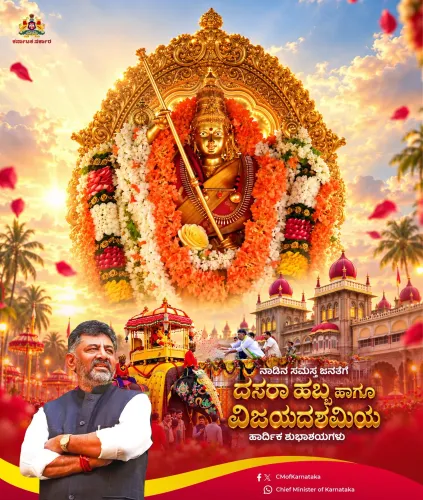
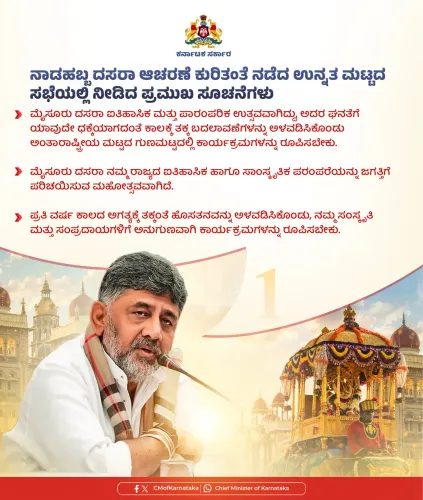
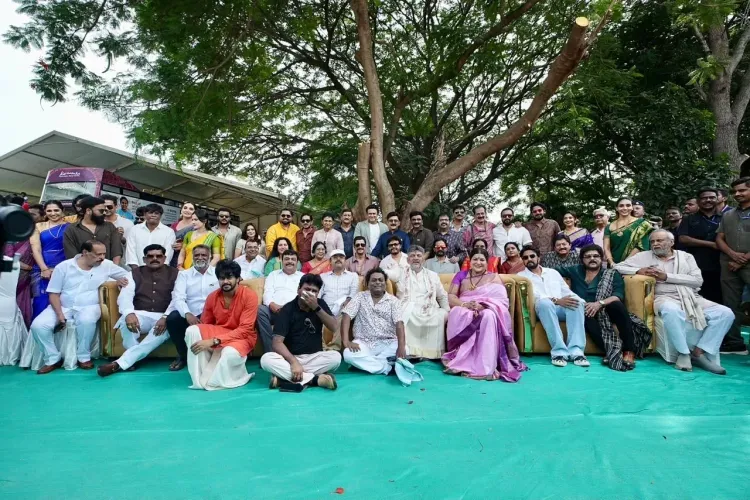
Colour, culture, and centuries of royal heritage converge once again in Mysuru — the Chief Minister's Office of Karnataka marked the occasion of Mysuru Dasara 2026 on Wednesday, October 21, 2026, hailing the festival with the evocative Kannada phrase 'ಕಲೆಯ ವೈಭವ - ಸಂಸ್ಕೃತಿಯ ಉತ್ಸವ' — 'The glory of art — a celebration of culture' — and invoking its beloved title, Naada Habba, the State Festival of Karnataka.
What 'Naada Habba' means to Karnataka
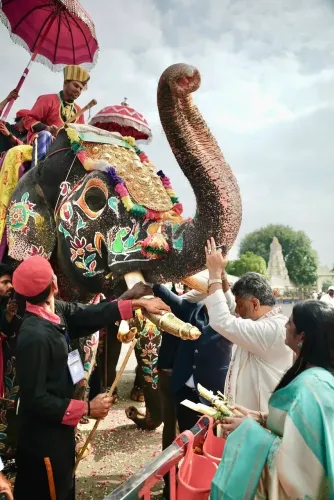
Mysuru Dasara is not simply a festival — it is Karnataka's most consequential annual cultural statement. The ten-day celebration centres on the procession of Goddess Chamundeshwari through the streets of Mysuru, drawing tens of thousands of pilgrims, tourists, and artists from across India and abroad. The Karnataka government formally designated Dasara as Naada Habba — literally 'the state's own festival' — in recognition of its unifying, pan-Karnataka identity that transcends caste, region, and language.
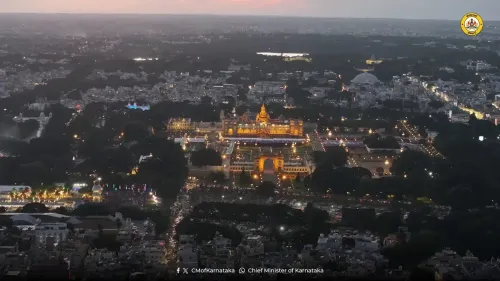
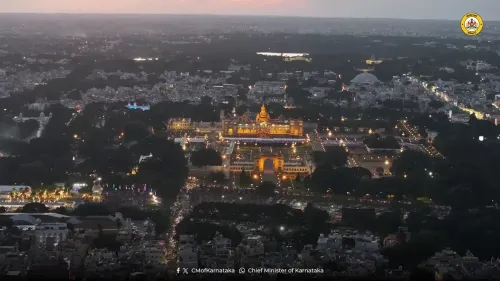
Successive state administrations have committed dedicated budget allocations to the event, funding elaborate tableaux, classical music and dance performances, folk-art showcases, and the lighting of the iconic Mysuru Palace, whose illuminated silhouette has become the visual shorthand for the festival worldwide.
Art, heritage, and a state's soft power on display
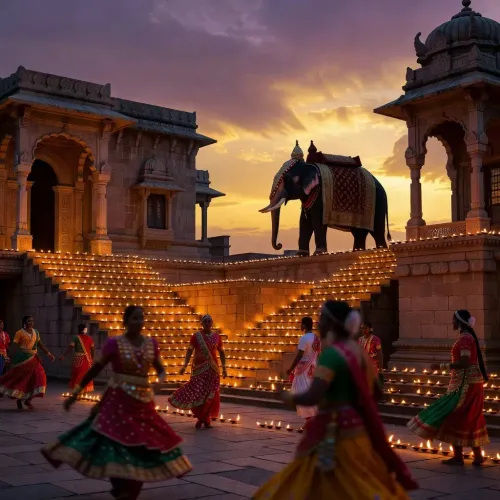
At its heart, Dasara is Karnataka's flagship platform for the performing and visual arts — a stage where Carnatic music, Bharatanatyam, Yakshagana, and Dollu Kunitha share billing with craft exhibitions and literary events. For Mysuru's local communities and artisans, the festival represents the single largest economic and cultural moment of the year, compressing tourism revenue, handicraft sales, and national visibility into one ten-day window.
The phrase chosen by the CMO — 'the glory of art, the festival of culture' — signals the state government's framing of the 2026 edition as a celebration of Karnataka's living heritage at its most vibrant.
Mysuru's enduring identity as a royal cultural capital
The Dasara tradition in Mysuru traces its roots back more than 400 years to the Wadiyar dynasty, whose royal family continues to play a ceremonial role in the celebrations even today. That unbroken thread of continuity — from a medieval Deccan kingdom to a modern Indian state — is precisely what makes Naada Habba something more than pageantry. It is living proof that state-level cultural patronage can keep tradition breathing and economically relevant at the same time.
The Karnataka government's annual investment in Dasara has helped position Mysuru as one of South India's premier cultural tourism destinations, with the festival consistently ranking among the country's most-watched public events.
Point of View
' the CMO signals that the Karnataka government views Dasara not merely as a religious event but as a state-building exercise in soft power and heritage tourism. This is consistent with a broader pattern among Indian state governments of leveraging flagship festivals to consolidate regional identity and attract cultural tourism revenue. For Karnataka, Naada Habba also serves a political function: it projects an inclusive, arts-forward image of the state that transcends the political divides of any given electoral cycle. The annual state investment in Dasara is, in effect, a recurring bet that cultural spectacle and heritage preservation can double as economic policy.
NationPress
21 Oct 2026
Frequently Asked Questions
What is Mysuru Dasara 2026?
Mysuru Dasara 2026 is the annual ten-day state festival of Karnataka, held in Mysuru in October, celebrating the victory of good over evil through the procession of Goddess Chamundeshwari, cultural performances, and the illumination of Mysuru Palace.
What does 'Naada Habba' mean?
'Naada Habba' is a Kannada phrase meaning 'State Festival' — the official designation given to Mysuru Dasara by the Karnataka government to recognise it as the state's premier cultural celebration.
Who organises Mysuru Dasara?
The Karnataka state government organises and funds Mysuru Dasara, with dedicated annual budget allocations for cultural programmes, infrastructure, and the royal procession.
How old is the Dasara tradition in Mysuru?
The Dasara tradition in Mysuru spans more than 400 years, originating under the Wadiyar dynasty, whose royal family continues to play a ceremonial role in the modern celebrations.
Why is Mysuru Dasara important for Karnataka tourism?
Mysuru Dasara is Karnataka's largest cultural tourism event, drawing visitors from across India and abroad, generating significant revenue for local artisans, traders, and the hospitality sector in Mysuru.